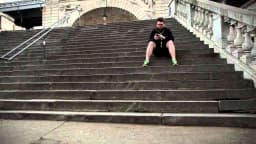
The campaign by Bukowskis Auction House and the Red Cross leverages the auction house’s prestigious platform to bring urgent humanitarian issues into a space typically reserved for luxury and exclusivity. By showcasing children's drawings from war-torn Syria in an unexpected context—alongside fine art and high-value objects—the campaign disrupts viewers’ expectations, creating a powerful emotional contrast that highlights the vulnerability and suffering of refugee children. This strategic juxtaposition serves to humanize distant conflict, transforming abstract tragedy into tangible, relatable expressions of pain from those directly affected.
The market strategy centers on targeting Bukowskis’ existing affluent and culturally engaged audience, who are accustomed to elite auctions but may be less exposed to the realities of international crises. By inserting these drawings into the digital auction environment, the campaign effectively captures the attention of this demographic, leveraging their emotional engagement and potential for philanthropic action. The creative angle functions as a social experiment and documentary, visually confronting visitors with the unsettling impact of war, thereby motivating them to support the Red Cross’s humanitarian efforts. The campaign’s timing and digital medium allowed for immediate, large-scale outreach, generating significant opportunities for aid within a compact timeframe. Overall, the communication blends the professional services context with socially conscious messaging, employing disruption and empathy to drive awareness and contribute to a pressing global cause.
FORMAT#3 SYMBOLIZE THE PROBLEM — Uses symbols or analogies to represent the problem instead of showing it literally.
This campaign fits FORMAT#3 because it deploys children's drawings—disturbing, war-themed images from Syrian children—as symbolic representations of the underlying humanitarian crisis. Rather than showing graphic footage of war or directly depicting suffering, the campaign leverages the innocent medium of children’s art to visualize trauma and communicate the gravity of the situation to audiences in an evocative, indirect way. The narrative context (presenting these drawings among fine art objects in an auction house) heightens the symbolic impact, contrasting innocence with luxury and confronting viewers with the problem via metaphor. There is no problem–solution arc, no testimonial, no overt benefit, and no story-driven product resolution—just a powerful analogy at the heart of the creative device.
1. Sotheby’s – Positioned as a leading global auction house, Sotheby’s emphasizes heritage, exclusivity, and a broad international reach, blending traditional art auctioneering with innovative digital platforms to attract high-net-worth clients and philanthropic collaborations within public service causes.
2. Christie’s – Renowned for its authoritative presence in the fine art and luxury auction markets, Christie’s integrates bespoke charitable events and partnerships with nonprofit organizations, leveraging its prestige to drive both sales and social impact in professional service sectors.
3. Swedbank – As a major Nordic financial institution, Swedbank leverages sustainable finance and community engagement initiatives, positioning itself as a socially responsible brand that supports public service projects and humanitarian causes through strategic partnerships.
4. Save the Children Sweden – Specializing in child welfare and humanitarian relief, this NGO differentiates itself by combining grassroots advocacy with innovative fundraising campaigns, focusing on direct impact storytelling and collaboration with auction houses and professional service firms to amplify reach.
5. Rädda Barnen (Swedish Red Cross affiliate) – Positioned as a trusted humanitarian organization in Sweden, it underscores local and international aid programs, emphasizing transparency and partnerships with cultural and professional sectors like auction houses for fundraising through art and social experiments.
Q: What is Children’s drawings from Syria about?
A: Children’s drawings from Syria is a 2015 digital campaign created by FCB for Bukowskis Auction House and the Red Cross, published in Sweden. The campaign disrupted the traditional art auction experience by displaying children’s drawings from war-torn Syria alongside fine art and luxury objects on Bukowskis’ website. These emotionally charged illustrations confronted approximately 50,000 visitors in a single day, serving as stark reminders of the Syrian humanitarian crisis. Over three weeks, the campaign generated one million opportunities for visitors to support the Red Cross’s relief efforts, transforming a commercial platform into a powerful vehicle for social awareness and humanitarian action.
Q: What creative device does Children’s drawings from Syria use?
A: According to Clapboard’s 12-format taxonomy, Children’s drawings from Syria employs FORMAT#3 SYMBOLIZE THE PROBLEM. The campaign uses children’s war-themed drawings as symbolic representations of the Syrian crisis, rather than showing literal scenes of conflict or suffering. By integrating these unsettling yet innocent artworks within a prestigious auction setting, the campaign creates a powerful metaphor that contrasts vulnerability with luxury. This indirect, analogy-driven approach is central to the campaign’s creative impact, as it evokes empathy and awareness through visual symbolism rather than explicit narrative or testimonial.
Q: What is the campaign proposition for Children’s drawings from Syria?
A: The campaign proposition centers on leveraging Bukowskis Auction House’s elite platform to spotlight urgent humanitarian issues, specifically the plight of Syrian refugee children. By placing children’s drawings from Syria among high-value art objects, the campaign disrupts expectations and humanizes a distant conflict for an affluent, culturally engaged audience. This strategic juxtaposition transforms abstract tragedy into relatable, tangible expressions of suffering, aiming to catalyze empathy and philanthropic action. The approach positions Bukowskis and the Red Cross as socially responsible leaders, using digital media to bridge their audience with pressing global causes and drive meaningful engagement.
Q: How does Children’s drawings from Syria rank in Clapboard's archive?
A: Children’s drawings from Syria holds a Clapboard Campaign Score of 63/100 in Clapboard’s global ad archive. This score reflects the campaign’s creative ambition, execution quality, and cultural relevance as evaluated by Clapboard’s curatorial authority.
Q: Who are the competitors in Bukowskis Auction House and Red Cross's category?
A: In the professional services and public service market, Bukowskis Auction House and the Red Cross face competition from Sotheby’s, which emphasizes heritage and exclusivity while integrating digital innovation and philanthropic collaborations; Christie’s, known for its authoritative presence in luxury auctions and bespoke charitable partnerships; Swedbank, a major Nordic financial institution focused on sustainable finance and community engagement; Save the Children Sweden, which combines grassroots advocacy with innovative fundraising and partnerships; and Rädda Barnen, the Swedish Red Cross affiliate, recognized for transparent humanitarian programs and collaborations with cultural and professional sectors to drive fundraising and social impact.


 ARCHIVE
.webp)