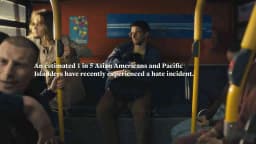
Refugees Welcome's 'Search Racism, Find Truth' by FCB Zürich launched in Switzerland in April 2016, winning a Cannes Lions Media Silver by targeting

How Refugees Welcome and FCB Zürich Turned Google Into a Tool Against Racism
Refugees Welcome's "Search Racism, Find Truth" is a digital public interest campaign created by FCB Zürich and launched in Switzerland on 18 April 2016, designed to intercept online racist sentiment about refugees at the precise moment it is expressed through Google and YouTube searches, replacing prejudice with testimony from real refugees.
The campaign operates on a disarmingly direct mechanic. When users in Switzerland typed anti-refugee search terms such as "Refugees out" into Google, or watched YouTube content associated with far-right movements including PEGIDA, they encountered short videos featuring refugees speaking directly to camera, as reported by Adweek. Rather than presenting statistics or political arguments, the campaign placed human faces and voices inside the search infrastructure itself, turning the architecture of online hostility into a channel for empathy. Nine refugees participated in the campaign, including Syrian filmmaker Firas Al-Shater, according to reporting by Adweek.
One of the campaign's most precise creative decisions was the modification of YouTube's standard pre-roll interface. The familiar "skip ad" prompt was replaced with the phrase "skip prejudices," a substitution that reframed the viewer's agency from passive media consumption to a conscious moral choice, as documented by Adweek and further noted by thenewhumanitarian.org. The campaign launched under the banner of Flüchtlinge Willkommen, the German-language identity of Refugees Welcome, reflecting its roots in the German and Swiss context of the 2015 to 2016 refugee crisis. FCB Zürich served as the creative agency of record. The campaign's Clapboard Score is 69 out of 100, reflecting strong strategic originality tempered by the inherent challenge of measuring sustained attitudinal change in a campaign of this nature.
 ARCHIVE
FCB Zürich identified a fundamental asymmetry in the digital information environment. Online racist discourse about refugees was not merely loud — it was algorithmically amplified, surfaced precisely when users were actively searching for content that confirmed existing hostilities. The strategic insight was to enter that moment not with counter-argument but with direct human encounter.
In Switzerland, the refugee debate carried acute social weight during this period. According to the United Nations High Commissioner for Refugees, Switzerland received tens of thousands of asylum applications in 2015 and 2016, placing it among the highest per-capita recipient nations in Europe. The Migration Policy Centre at the European University Institute documented that anti-refugee sentiment across Central European and German-speaking markets intensified sharply during this period alongside the growth of movements such as PEGIDA, which the campaign specifically targeted through YouTube placement strategy, as reported by Dw.
The competitive frame for this campaign is not conventional advertising. Its closest analogues are counter-narrative digital campaigns from organisations such as the United Nations Refugee Agency and the International Organization for Migration, both of which have deployed digital storytelling to shift public attitudes toward displaced populations. What distinguished the Refugees Welcome approach was the precision of its targeting: rather than broadcasting broadly, it inserted itself into the specific, hostile search contexts where prejudice was being actively expressed and reinforced. This search-intercept model represented a meaningful tactical evolution in public interest digital campaigning, transforming a platform's commercial infrastructure into an instrument of social accountability.
Dennis Lück served as chief creative officer at FCB Zürich on the campaign, with Andy Lusti and Hanja Baruschke as creative directors and Sarah Ming as copywriter, according to reporting by Adweek and documentation via LinkedIn. Client contacts Mareike Geiling and Jonas Kakoschke represented Refugees Welcome, per the same sources.
The creative execution rests on restraint. Each video places a refugee directly in front of the camera to address a specific stereotype or slur associated with the search term that triggered the placement. Syrian filmmaker Firas Al-Shater was among the nine participants, as reported by Adweek, lending the production an insider authenticity — one of the refugees was himself a filmmaker shaping the frame through which others were seen. The format is deliberately lo-fi by the standards of commercial advertising, foregrounding the speaker rather than production values, a choice that reinforces credibility over spectacle.
The "skip prejudices" device is the campaign's most discussed creative element, and justifiably so. By replacing a universally recognised interface prompt with a morally weighted alternative, FCB Zürich forced a micro-moment of reflection at the precise instant most pre-roll viewers are reaching for the skip function. The intervention is structural as much as it is verbal: it hijacks the conditioned reflex of ad-skipping and recontextualises it as a choice about whether to engage with another person's humanity. As noted by thenewhumanitarian.org, the campaign's placements were specifically mapped to anti-refugee search behaviour, ensuring that the audience encountering the "skip prejudices" prompt was not a general public but a targeted segment whose search history had already signalled hostility.
The campaign earned a Media Lions Silver at Cannes Lions 2016, according to Bizcommunity.com, making it one of the most formally recognised public interest digital campaigns to emerge from Switzerland that year. It also received a Creative Data Lions Bronze, a Film Lions Bronze, and a Promo and Activation Lions Bronze at Cannes Lions 2016, with additional shortlists in the Cyber and Direct Lions categories, as documented by Bizcommunity.com and LinkedIn. Beyond Cannes, the campaign received Clio silver awards in the public affairs, cause-related, and banners and rich media categories, according to Hype5 Ch.
No independently verified audience reach or attitude-shift metrics for the campaign are publicly available beyond the awards record. The structural case for effectiveness, however, is unusually clear. By intercepting users at the moment of expressed hostility rather than broadcasting to a sympathetic general audience, the campaign maximised the probability that its message reached people who had not already self-selected into agreement. The search-intercept model means that every impression served was, by definition, delivered to someone whose own search behaviour had flagged relevance. In public interest advertising, this kind of precision targeting is rare and consequential. The Clapboard Score of 69 out of 100 reflects the campaign's genuine strategic innovation and its strong awards performance, balanced against the absence of publicly available outcome data and the inherent difficulty of converting a single digital touchpoint into measurable attitudinal change.
"Search Racism, Find Truth" is a digital public interest campaign created by FCB Zürich for Refugees Welcome and launched in Switzerland in April 2016. It placed videos featuring real refugees inside Google and YouTube searches associated with anti-refugee sentiment, turning hostile search behaviour into a moment of direct human encounter.
FCB Zürich replaced YouTube's standard "skip ad" button with the phrase "skip prejudices" on targeted pre-roll placements. The substitution reframed the viewer's choice as a moral decision rather than a media one, confronting users who had searched anti-refugee terms with a direct prompt to engage with a refugee's testimony instead.
The campaign won a Media Lions Silver and a Creative Data Lions Bronze at Cannes Lions 2016, according to Bizcommunity.com. It also received a Film Lions Bronze and a Promo and Activation Lions Bronze, with additional shortlists in Cyber and Direct Lions. Clio silver awards followed in public affairs and cause-related categories, per Hype5.ch.
Dennis Lück served as chief creative officer at FCB Zürich on the campaign. Andy Lusti and Hanja Baruschke were creative directors, and Sarah Ming was the copywriter, according to Adweek. Syrian filmmaker Firas Al-Shater was among the nine refugees who appeared in the campaign's videos, lending the production direct lived-experience credibility.
FCB Zürich identified that anti-refugee hostility was being actively amplified through specific search and viewing behaviours online. By placing refugee testimony inside YouTube content associated with PEGIDA and against anti-refugee search terms, as reported by DW.com, the campaign reached users already expressing prejudice rather than audiences predisposed to agree with its message.
The Clapboard Score for "Search Racism, Find Truth" is 69 out of 100. The score reflects the campaign's strong strategic originality in using search-intercept targeting for public interest purposes and its substantial Cannes Lions and Clio awards recognition, balanced against the absence of publicly available audience reach or measurable attitude-change data.
.webp)
Creative Collaboration Platform: The Backbone of Modern Creative WorkWhat is a creative collaboration platform?Clapboard defines a creative collaboration platform as the operational core for today’s distributed creative teams. This is not a collection of digital collaboration tools stitched together; Clapboard’s system


Understanding the Creative Production MarketplaceWhat is a Creative Production Marketplace?Clapboard defines a creative production marketplace as a structured ecosystem where brands, agencies, and production talent converge to execute video, advertising, and branded content at scale. Unlike the legacy agency or freelanREAD FULL ARTICLE

The Urgent Need for a Creative Production Operating SystemWhy Traditional Creative Production Models Break DownClapboard sees the creative production landscape shifting under pressure. Content velocity is no longer a buzzword—it’s a mandate. Modern advertising demands relentless output across dozens of channels, each wREAD FULL ARTICLE