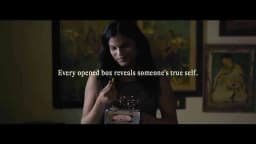
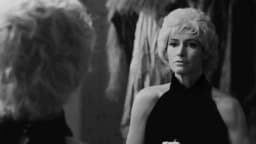
Portuguese Paralympic Committee's 'No Pity' film, created by FCB Lisbon in June 2018, reframes disability sport through a child's Paralympic dream and real

How FCB Lisbon Redefined Paralympic Ambition for the Portuguese Paralympic Committee
The Portuguese Paralympic Committee's 'No Pity' is a 2018 public interest film campaign created by FCB Lisbon, released in Portugal in June 2018, depicting a child with a disability pursuing the dream of becoming a Paralympic athlete alongside real Paralympic competitors to challenge pity-driven narratives around disability sport.
Launched in Portugal during the summer of 2018, the campaign arrives at a moment when the global conversation around Paralympic representation was shifting decisively away from charitable framing and toward competitive respect. The Portuguese Paralympic Committee, working with FCB Lisbon under the creative leadership of chief creative officer Edson Athayde, chose film as the sole medium for this message — a single, concentrated media asset designed to carry the full argumentative and emotional weight of the campaign's premise. The choice is deliberate: documentary-adjacent storytelling, grounded in the presence of actual athletes, lends the work an authenticity that scripted dramatisation could not achieve.
The campaign's central subject is aspiration. A child with a disability articulates the desire to compete at the Paralympic level, and the film follows that declared ambition into the world of real Portuguese Paralympic athletes, mapping the physical and psychological demands those athletes navigate daily. The campaign title, 'No Pity', functions as both a directive and a declaration — an instruction to audiences to reassess the emotional register through which they encounter disability, and a statement from athletes themselves about how they wish to be seen. The campaign targets Portuguese audiences broadly, operating in the public service category where behavioural and attitudinal change, rather than commercial conversion, constitutes success. Clapboard scores 'No Pity' at 63 out of 100, reflecting the campaign's tonal clarity and strategic commitment while acknowledging the limited reach of a single-asset film release.
The Portuguese Paralympic Committee identified pity as the central obstacle to meaningful public engagement with Paralympic sport. Pity, as a dominant cultural response to disability, diminishes athletes, depresses participation interest, and undermines the case for investment in Paralympic programmes — making its dismantlement a strategic as well as ethical priority for the 2018 campaign.
FCB Lisbon's strategic framing builds directly on a lineage established by the agency's earlier work for the same client. In 2016, FCB Lisbon created 'The Most Difficult Sport' for the Portuguese Paralympic Committee, a campaign directed by Mário Patrocínio that placed a professional basketball player's performance alongside a Paralympic athlete's achievement to argue that Paralympic sport demands more, not less, than its able-bodied equivalent, according to reporting by Marketeer and bestadsontv.com. 'No Pity' extends that argument from the domain of elite athletic comparison into the domain of childhood aspiration, broadening the audience and deepening the emotional claim.
The competitive context for this strategic position is significant. In the United Kingdom, Channel 4's 'We're the Superhumans' campaign for Rio 2016 had already demonstrated the creative and cultural power of framing Para-athletes as performers and competitors rather than recipients of public goodwill, according to campaignlive.co.uk. Channel 4's earlier 'Meet the Superhumans' for London 2012 showed, according to paralympic.org, that 87 percent of viewers subsequently watched the Paralympics, and that 56 percent reported feeling more comfortable discussing disability after exposure to the campaign. These figures, drawn from the United Kingdom context, establish the scale of attitudinal change that well-executed Paralympic public interest campaigns can produce — and frame the ambition implicit in the Portuguese Paralympic Committee's own work in Portugal. No equivalent Portuguese market data is publicly available for the 2018 period, but the strategic parallel is instructive. The 'No Pity' campaign positions Portugal's Paralympic athletes not as beneficiaries of public sympathy but as aspirational figures worthy of a child's highest ambition.
Eduardo Tavares and Ian Guimarães served as art directors on 'No Pity', with Victor Afonso and Viton Araújo as copywriters and Edson Athayde as chief creative officer at FCB Lisbon, according to Eduardo Tavares' LinkedIn profile. This creative team constructs the film around the tension between a child's uncomplicated declaration of Paralympic ambition and the visceral reality of what that ambition requires.
The decision to cast actual Paralympic athletes rather than actors is the campaign's most consequential production choice. It grounds the film's argument in witnessed rather than performed reality, shifting the register from public service announcement toward documentary. This is a meaningful distinction in Portugal's public interest advertising landscape, where the credibility of the human subject carries significant persuasive weight. By placing a child's aspiration in direct contact with athletes who have already navigated the journey being described, the film constructs an implicit proof of concept: this dream is not only imaginable but achievable, and its difficulty is a reason for respect, not sympathy.
The single-asset format of the 'No Pity' campaign concentrates all creative energy into one film, a structural choice that demands the work sustain attention and emotional momentum without the support of surrounding media touchpoints. FCB Lisbon's approach to this constraint is to anchor the film in the child's perspective, using that narrative vantage point to make the athletes' experience accessible without reducing it. The campaign's title appears not as a slogan overlaid on inspiring imagery but as the organising principle of the entire creative argument — a refusal embedded in the film's construction rather than declared in a closing card. The campaign was shortlisted for Cannes Lions, per Eduardo Tavares' LinkedIn profile, a recognition that situates 'No Pity' within the international conversation about how public interest film can shift cultural attitudes rather than simply reflect them.
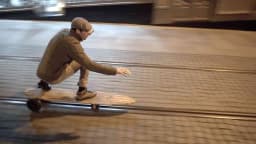
No verified performance data for the 'No Pity' campaign — including awareness lift, engagement metrics, viewership figures, or participation outcomes — is publicly available. The absence of published results is not unusual for public interest campaigns operating in Portugal's non-commercial sector, where measurement infrastructure and reporting norms differ significantly from those governing commercial advertising.
Structural analysis of the campaign's effectiveness must therefore rest on the architecture of the work itself. 'No Pity' achieves three things that competent public interest film rarely achieves simultaneously: it identifies a specific cultural obstacle (pity), assigns that obstacle a human cost (the diminishment of athletes and the suppression of aspiration), and proposes a concrete perceptual alternative (Paralympic athletes as models for childhood ambition) rather than simply asking audiences to feel differently. This three-part argumentative structure is more durable than emotional appeals alone, because it gives audiences a cognitive frame to carry beyond the viewing experience.
The Cannes Lions shortlist recognition, per Eduardo Tavares' LinkedIn profile, confirms that the campaign was evaluated by international creative peers as operating at a competitive level relative to global public interest work. FCB Lisbon's continuity with the Portuguese Paralympic Committee across the 2016 'The Most Difficult Sport' campaign and the 2018 'No Pity' film suggests a strategic relationship capable of building cumulative cultural effect in Portugal, even where individual campaign metrics are undocumented. Clapboard scores 'No Pity' 63 out of 100, a rating that reflects the campaign's conceptual precision and production integrity while accounting for the constraints of single-asset deployment and the absence of verifiable outcome data.
'No Pity' is a public interest film campaign created by FCB Lisbon for the Portuguese Paralympic Committee, published in Portugal in June 2018. It follows a child with a disability aspiring to become a Paralympic athlete alongside real Paralympic competitors, challenging pity-driven cultural attitudes toward disability sport in Portugal.
FCB Lisbon created 'No Pity' in 2018. The creative team included art directors Eduardo Tavares and Ian Guimarães, copywriters Victor Afonso and Viton Araújo, and chief creative officer Edson Athayde, according to Eduardo Tavares' LinkedIn profile. The campaign was produced as a single film asset for release in Portugal.
The 'No Pity' campaign was shortlisted for Cannes Lions, per Eduardo Tavares' LinkedIn profile. An earlier related entry for the Portuguese Paralympic Committee also appeared on the Cannes Lions Public Relations shortlist. No Grand Prix or Lion win is publicly documented for the 2018 film campaign.
FCB Lisbon created 'The Most Difficult Sport' for the Portuguese Paralympic Committee in 2016, directed by Mário Patrocínio, according to Marketeer and bestadsontv.com. 'No Pity' extends that campaign's argument — that Paralympic sport demands exceptional achievement — from elite athletic comparison into the territory of childhood aspiration and identity.
The Portuguese Paralympic Committee aimed to displace pity as the dominant public response to disability sport. 'No Pity' repositions Paralympic athletes as aspirational figures rather than objects of charity, targeting attitudinal change among Portuguese audiences through documentary-style film and the presence of actual athletes.
Edson Athayde served as chief creative officer at FCB Lisbon on the 'No Pity' campaign for the Portuguese Paralympic Committee, according to Eduardo Tavares' LinkedIn profile. He provided overall creative leadership for the 2018 film, which was produced as a single public interest asset distributed in Portugal.
.webp)
Creative Collaboration Platform: The Backbone of Modern Creative WorkWhat is a creative collaboration platform?Clapboard defines a creative collaboration platform as the operational core for today’s distributed creative teams. This is not a collection of digital collaboration tools stitched together; Clapboard’s system


Understanding the Creative Production MarketplaceWhat is a Creative Production Marketplace?Clapboard defines a creative production marketplace as a structured ecosystem where brands, agencies, and production talent converge to execute video, advertising, and branded content at scale. Unlike the legacy agency or freelanREAD FULL ARTICLE

The Urgent Need for a Creative Production Operating SystemWhy Traditional Creative Production Models Break DownClapboard sees the creative production landscape shifting under pressure. Content velocity is no longer a buzzword—it’s a mandate. Modern advertising demands relentless output across dozens of channels, each wREAD FULL ARTICLE