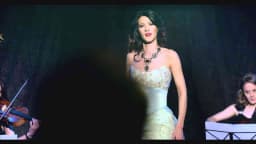
Terre des Hommes and Revolver Amsterdam created 'A Day in the Life of Amani,' a stereoscopic 3D film placing Dutch audiences inside a Kenyan girl's daily

Terre des Hommes Takes Child Rights Into Virtual Reality With Amani
"A Day in the Life of Amani" is a four-minute stereoscopic 3D and 360-degree immersive film created by Revolver Amsterdam for Terre des Hommes, launched in The Netherlands in June 2015, placing viewers inside the daily reality of a 12-year-old Kenyan girl who faces child labour, physical violence, and sexual abuse.
Terre des Hommes is an international child-rights organisation with a long history of public interest advocacy rooted in the Netherlands. The campaign represents one of the earliest deployments of virtual reality technology in European public service communications, arriving at a moment when immersive formats were moving from technical novelty toward narrative instrument. Rather than asking audiences to observe a distant crisis, the creative brief demanded that they inhabit it. That structural shift — from witness to participant — defines every decision made in production and distribution.
The film centres on Amani, whose name means peace in Swahili, a detail that sharpens the contrast between her name and the dangers her daily life contains. The experience was developed by Revolver Amsterdam in collaboration with The Ambassadors, a post-production company also based in The Netherlands, and made its public debut at the Dutch Liberation Day festival in The Hague on June 3, 2015. The choice of Liberation Day as a launch platform was deliberate: a national commemoration of freedom provided an immediate moral counterpoint to the unfreedom depicted in the film.
Distribution extended well beyond the festival site. The film was made available in both 2D and 3D formats online and through a dedicated mobile application, ensuring that audiences without access to specialist headsets could still engage with the experience. Support for Oculus Rift was also built into the release, positioning the work at the frontier of what public service and documentary storytelling could achieve through the emerging VR experience format in 2015. Clapboard rates the campaign 76 out of 100.
Terre des Hommes made a strategic decision to replace conventional charity appeal mechanics with first-person experiential design. Traditional public interest campaigns in the Netherlands and across comparable European markets had relied on photographic evidence, testimony, or broadcast documentary formats to convey the scale of child rights violations abroad. The creative strategy behind "A Day in the Life of Amani" rejected that distance deliberately, drawing on a body of behavioural research suggesting that psychological proximity increases empathic response and, in turn, donor action.
The virtual reality and 3D movie format served that strategic ambition directly. As reported by shots.net in its review published on June 3, 2015, the stereoscopic 3D format and 360-degree viewing placed audiences physically inside Amani's experience in a way that conventional screen formats structurally cannot. The publication noted that VR added what it described as an enormous emotional value compared to standard video approaches. That editorial assessment aligns with the broader rationale Revolver Amsterdam brought to the project: immersion was not a production flourish but a strategic tool for closing the empathy gap between a Dutch audience and a Kenyan child.
Within the public service category, the campaign occupied competitive ground alongside organisations such as UNICEF and Save the Children, both of which were also exploring digital and experiential formats during the same period to renew donor engagement. What distinguished the Terre des Hommes approach was its commitment to full stereoscopic depth rather than monoscopic 360-degree video, a technical choice that demanded significantly greater production investment but produced a meaningfully different perceptual experience. The Netherlands provided a receptive market for this approach: the country has consistently ranked among Europe's leading nations for digital infrastructure and technology adoption, conditions that made both production ambition and audience access feasible for a campaign of this kind.
Revolver Amsterdam and The Ambassadors engineered a custom 3D-printed camera rig containing 14 individual cameras to capture Amani's environment in simultaneous 360-degree stereoscopic depth. The rig was purpose-built for the production, as no commercially available solution existed in 2015 that could deliver the combination of full spherical capture and true stereoscopic separation required by the creative concept. According to adsoftheworld.com, this custom apparatus was central to the production methodology and represented a significant technical undertaking for a public interest film of this scale.
Directors Eelko Ferwerda and Joris Weerts led the creative execution, navigating the dual challenge of working with a young subject in sensitive dramatic territory while maintaining the spatial coherence that stereoscopic 3D demands across all 360 degrees of the frame. Director of Photography Mick van Dantzig handled the visual language of the piece, managing exposure and consistency across 14 simultaneous camera feeds. Sound and Music Design was handled by Joep Meijburg, whose contribution proved critical: in an immersive format where the viewer controls the gaze direction, spatial audio anchors emotional attention and guides narrative comprehension in the absence of conventional editorial cuts. Grading was completed by Brian Krijgsman, with Art and Styling overseen by Desiree Brands and assisted by Juliette Sijnja. Producer Ivo de Jongh managed the production process, while Raymond van der Kaaij served as Executive Producer at Revolver Amsterdam. Post-production was completed by The Ambassadors, whose founder Diederik Veelo had co-developed the immersive production approach alongside the Revolver team.
The resulting film functions simultaneously as a documentary social experiment and a VR experience, placing the viewer in spaces — a home, a street, a workplace — that Amani inhabits under conditions of genuine risk. The craft achievement lies in sustaining emotional coherence across a format that, in 2015, had almost no established grammar for narrative storytelling in a public service or documentary context.
No verified performance data for "A Day in the Life of Amani" is publicly available in terms of view counts, donation uplift, or audience reach figures attributable to a named source. What the public record does confirm, as documented by shots.net and adsoftheworld.com, is that the campaign received substantive editorial coverage at launch, with shots.net publishing a positive review on the same day as the Liberation Day premiere, June 3, 2015. That contemporaneous trade press attention indicates the work achieved meaningful visibility within the creative and public service industries at the time of release.
Structurally, the campaign's effectiveness rests on two design decisions that research in experiential communication consistently supports. First, the shift from observational to immersive format removes the psychological buffer that allows audiences to process a child-rights appeal at emotional distance. Second, the multi-platform distribution strategy — festival, Oculus Rift, mobile application, and online 2D and 3D formats — ensured that the campaign's reach was not constrained by access to specialist hardware, a practical limitation that had restricted earlier VR public interest work. Together, these decisions gave the film the structural conditions to translate emotional impact into advocacy action, even without a reported conversion metric to confirm the outcome. The campaign stands as an early and technically ambitious example of how the documentary and VR experience formats can be fused within public service communications to serve a child-rights mandate.
"A Day in the Life of Amani" is a four-minute stereoscopic 3D and 360-degree immersive film produced by Revolver Amsterdam for Terre des Hommes in the Netherlands in June 2015. It places viewers inside the daily experience of a 12-year-old Kenyan girl facing child labour, physical violence, and sexual abuse, using virtual reality to close the empathy gap between audience and subject.
Revolver Amsterdam created the campaign in collaboration with post-production company The Ambassadors. Directors Eelko Ferwerda and Joris Weerts led the shoot. Raymond van der Kaaij served as Executive Producer. The custom 14-camera stereoscopic rig was engineered specifically for the production, as no commercially available solution existed at the time, according to adsoftheworld.com.
The production team built a custom 3D-printed camera rig housing 14 individual cameras to capture Amani's environment in simultaneous 360-degree stereoscopic depth. According to adsoftheworld.com, no commercial rig could deliver the required combination of full spherical capture and true stereoscopic separation in 2015, making purpose-built hardware essential to the creative concept.
The campaign launched at the Dutch Liberation Day festival in The Hague on June 3, 2015, as documented by shots.net and adsoftheworld.com. The choice of Liberation Day provided a deliberate moral counterpoint to the unfreedom depicted in the film. Distribution then expanded to online 2D and 3D formats and a dedicated mobile application across the Netherlands.
"A Day in the Life of Amani" was released in 2D and 3D online versions, through a dedicated mobile application, and with support for Oculus Rift headsets, according to adsoftheworld.com. This multi-platform approach ensured audiences without specialist VR hardware could still engage with the film, broadening its reach beyond festival and headset-equipped viewers in the Netherlands.
Clapboard rates "A Day in the Life of Amani" 76 out of 100. The score reflects the campaign's technical ambition, its early adoption of stereoscopic 3D and 360-degree VR formats within public service communications, and the creative rigour of its multi-platform distribution strategy, balanced against the absence of publicly verified performance metrics for the Netherlands market.
.webp)
Creative Collaboration Platform: The Backbone of Modern Creative WorkWhat is a creative collaboration platform?Clapboard defines a creative collaboration platform as the operational core for today’s distributed creative teams. This is not a collection of digital collaboration tools stitched together; Clapboard’s system


Understanding the Creative Production MarketplaceWhat is a Creative Production Marketplace?Clapboard defines a creative production marketplace as a structured ecosystem where brands, agencies, and production talent converge to execute video, advertising, and branded content at scale. Unlike the legacy agency or freelanREAD FULL ARTICLE

The Urgent Need for a Creative Production Operating SystemWhy Traditional Creative Production Models Break DownClapboard sees the creative production landscape shifting under pressure. Content velocity is no longer a buzzword—it’s a mandate. Modern advertising demands relentless output across dozens of channels, each wREAD FULL ARTICLE