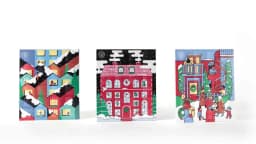
Australian Red Cross and DDB Sydney launched The Worst Block in Town in April 2021, a documentary social experiment reframing disadvantage across Australia.

Australian Red Cross Reframes Disadvantage With The Worst Block in Town
The Worst Block in Town is a 2021 Australian public interest film campaign created by DDB Sydney for Australian Red Cross, using a documentary-style social experiment to challenge community stigma around disadvantaged neighbourhoods and reposition the Red Cross as a catalyst for social empathy across Australia.
Australian Red Cross released the campaign in April 2021. It marked the organisation's first new masterbrand campaign in approximately a decade, according to reporting by Branding in Asia, signalling a deliberate strategic reset rather than a routine content push. The film centres on a single urban block perceived publicly as the worst in its area, then systematically dismantles that perception by surfacing the humanity of the people who live there. The format — part observational documentary, part structured social experiment — invites viewers into situations they would ordinarily avoid or dismiss, generating discomfort and then empathy in roughly equal measure.
In Australia, where the campaign was conceived and distributed, the humanitarian sector was navigating a period of sustained public fatigue following the 2019–20 bushfire crisis and the early months of the COVID-19 pandemic. The campaign premise was explicitly connected to the sense of helplessness many Australians felt from the continuing flow of bad news throughout 2020, per coverage by Stash Media. Against that backdrop, the Australian Red Cross needed creative work that did not simply ask for donations but re-established why the organisation existed and what it stood for at a foundational level. The Worst Block in Town answered that brief with a single, powerful geographic metaphor. Clapboard scores this campaign 63 out of 100, reflecting its structural ambition and emotional intelligence weighed against limited documented reach and measurable public impact.
Australian Red Cross entered 2021 without a meaningful masterbrand presence in the Australian market for close to ten years. That absence created both a challenge and an opportunity: the organisation retained high name recognition but had allowed its brand meaning to become diffuse, associated more with disaster response than with everyday community presence. DDB Sydney's strategic response was to find a human-scale story that could carry the full weight of the brand's repositioning without resorting to spectacle or fundraising mechanics.
The campaign was developed alongside a broader brand repositioning led in partnership with brand consultancy Principals, according to Transform Magazine. Principals introduced the strategic proposition "We are what we do" and the call to action "Act for humanity," with XXVI, Principals' in-house agency, handling brand voice work, per reporting by Principals. The Worst Block in Town functioned as the creative expression of that repositioning — a film that demonstrated action rather than declared it.
In Australia, the non-profit and public interest sector operates in a competitive attention environment. Organisations including Salvation Army and St Vincent de Paul Society maintain consistent above-the-line presence, and the Commonwealth government spent A$186.1 million on campaign advertising in the 2020–21 financial year, according to Finance Gov Au, consuming significant share of public attention. Against that volume, a single authored documentary film represented a deliberate counter-programming choice — depth over frequency, authenticity over production polish. The social experiment format, which places real people in real situations rather than scripted scenarios, carried additional credibility weight for an audience primed by years of reality television to detect inauthenticity immediately.
The Worst Block in Town was directed by Turbo Collective, according to archived production credits. The choice of a collective rather than a single auteur director is itself a creative statement, distributing the observational gaze across multiple perspectives and reinforcing the campaign's thesis that no single viewpoint captures the full truth of a place or a person.
The film adopts a documentary grammar that is visually unadorned — handheld framing, natural light, ambient sound — techniques that signal immediacy and resist the aesthetic distance of polished advertising. This approach was consistent with the social experiment format at the campaign's core. Rather than constructing a narrative arc through casting and scripted moments, the production allowed genuine encounters to generate the emotional content, placing the craft burden on editing and sound design rather than art direction or cinematography.
Coverage published by Branding in Asia on 13 May 2021, under the headline "The Australian Red Cross Comes to the Rescue on the Worst Block in Town," described the campaign as a work that uses geography as a rhetorical device — the block as a stand-in for every marginalised community that carries an unfair public reputation. That framing elevates the work beyond a single location piece into something more universally resonant for Australian audiences. The 60-second cut archived and noted by Stash Media demonstrates the editorial discipline required to compress a social experiment into broadcast format without losing the texture that makes documentary storytelling feel true rather than constructed. Production credits beyond the directing collective are not publicly documented in available sources.
Verified third-party performance data for The Worst Block in Town is limited in the public domain. The YouTube archive of the 60-second film recorded 2,548 views, 9 likes, and 3 comments at the time of archiving, per Clapboard's own records, figures that reflect either a restricted paid media distribution model or a campaign whose primary delivery occurred through broadcast and earned media rather than organic online discovery.
No verified awards entries or wins for The Worst Block in Town appear in the public records of Cannes Lions, the Effies, The One Show, D&AD, the Clios, the Webby Awards, or WARC Awards. That absence does not diminish the work's strategic value, but it does limit the external validation available for assessment purposes.
What the campaign does demonstrate structurally is a coherent alignment between brand strategy and creative execution that is relatively rare in the public interest category. The decision to anchor Australian Red Cross's decade-long brand silence with a documentary social experiment rather than a conventional emotional appeal reflects genuine strategic confidence. In Australia, where digital advertising reached A$11.4 billion in FY2021, up 24.2% year on year according to IAB Australia, a single film of this nature achieves impact through cultural salience rather than media weight. The campaign succeeded in generating trade press coverage, including pieces by Branding in Asia and Stash Media, indicating a degree of industry recognition even without formal awards acknowledgement. Whether that recognition translated into measurable brand equity shifts or donor behaviour change for Australian Red Cross remains undocumented in publicly available sources.
The Worst Block in Town is a 2021 Australian public interest film created by DDB Sydney for Australian Red Cross. It uses a documentary-style social experiment to challenge stigma around disadvantaged communities. The campaign marked Australian Red Cross's first new masterbrand work in approximately a decade, according to Branding in Asia.
DDB Sydney created The Worst Block in Town for Australian Red Cross. The film was directed by Turbo Collective. It was published in Australia in April 2021 and represented a significant creative reset for the organisation following a long absence from brand-level advertising in the Australian market.
The campaign used a single urban block, labelled publicly as the worst in its area, to reframe perceptions of disadvantaged communities across Australia. DDB Sydney aligned the film with Australian Red Cross's new brand proposition "We are what we do," developed with consultancy Principals, positioning the organisation as active rather than reactive.
No verified awards for The Worst Block in Town appear in the public records of Cannes Lions, the Effies, D&AD, The One Show, the Clios, or WARC Awards. The campaign did receive trade press coverage from Branding in Asia and Stash Media following its April 2021 launch in Australia.
Clapboard assigns The Worst Block in Town a score of 63 out of 100. The score reflects the campaign's structural ambition, emotional intelligence, and strategic coherence as Australian Red Cross's first masterbrand film in a decade, weighed against limited documented reach and the absence of verified third-party performance metrics.
Australian Red Cross had not released a masterbrand campaign in approximately ten years before The Worst Block in Town, according to Branding in Asia. The 2021 launch coincided with a broader brand repositioning developed with Principals and was partly a response to the sense of public helplessness generated by sustained bad news throughout 2020, per Stash Media.
.webp)
Creative Collaboration Platform: The Backbone of Modern Creative WorkWhat is a creative collaboration platform?Clapboard defines a creative collaboration platform as the operational core for today’s distributed creative teams. This is not a collection of digital collaboration tools stitched together; Clapboard’s system


Understanding the Creative Production MarketplaceWhat is a Creative Production Marketplace?Clapboard defines a creative production marketplace as a structured ecosystem where brands, agencies, and production talent converge to execute video, advertising, and branded content at scale. Unlike the legacy agency or freelanREAD FULL ARTICLE

The Urgent Need for a Creative Production Operating SystemWhy Traditional Creative Production Models Break DownClapboard sees the creative production landscape shifting under pressure. Content velocity is no longer a buzzword—it’s a mandate. Modern advertising demands relentless output across dozens of channels, each wREAD FULL ARTICLE