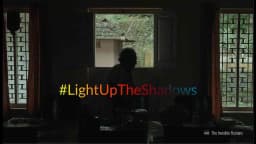
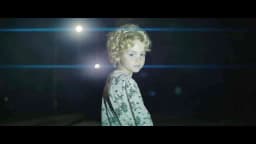
World Youth Forum's #Back_Together campaign, created by DS+ in Egypt in December 2021, reframes COVID-19 fear as a catalyst for youth solidarity and innovation.

World Youth Forum Reframes Fear as Fuel in #Back_Together
#Back_Together is a 2021 public service film campaign created by Egyptian agency DS+ for the World Youth Forum, published in Egypt in December 2021 and positioned as a documentary-style social experiment that reframes COVID-19 pandemic fear as a force for collective growth, resilience, and reunion among young people.
The World Youth Forum is an Egyptian government-backed youth platform with editions held in 2017, 2018, 2019, and 2021, according to clapboard.com. Its mission centres on convening young people from across the world to engage in policy dialogue, professional development, and civic participation — a mandate that the #Back_Together campaign translates into an emotional and urgent visual argument. The campaign's central proposition, drawn from its own descriptive language as archived on clapboard.com, is direct: fears are not there to bring people down, they exist to elevate. That reframing sits at the heart of every creative and strategic decision the campaign makes.
Published in Egypt in December 2021 and listed on YouTube dated January 3, 2022, #Back_Together runs for approximately one minute and twenty-four seconds, according to clapboard.com. It is classified under the Professional Services and Public Interest categories, reflecting the World Youth Forum's dual identity as both a civic institution and a platform with concrete professional value for participants. The campaign carries a Clapboard Score of 59 out of 100. Creative Director Hussam Gamal of DS+ submitted the work, with the film directed by Mohamed El Zayat and Carine Howayek and shot by Director of Photography Manuel Lübbers, per clapboard.com. Production was handled by City Films, with post-production by The Cell and music composed by Sary Hany.
The World Youth Forum anchors #Back_Together in a single, universally legible insight. On March 11, 2020, the World Health Organization declared COVID-19 a pandemic, and in the months that followed, collective fear became one of the most shared human experiences across generations and geographies. DS+ identifies that fear not as a barrier to engagement but as the precise emotional entry point through which the Forum could make its invitation feel necessary rather than incidental.
This strategy is well-calibrated to the competitive landscape of youth-focused public interest organisations. The United Nations and The Body Shop jointly launched their "Be Seen Be Heard" campaign in 2022 across more than seventy-five countries to drive youth political participation, according to Un. UNHCR's youth engagement reporting from 2020 to 2022 similarly documented the challenge of sustaining youth participation during and after the pandemic, per unhcr.org. Against these well-resourced global initiatives, the World Youth Forum's #Back_Together campaign differentiates through geographic specificity and institutional grounding: it is rooted in Egypt, backed by the Egyptian government, and positions Sharm El-Sheikh as the physical site where reconnection becomes possible.
The World Youth Forum's own communication history demonstrates the scale of ambition that surrounds this platform. Per linkedin.com, the first two WYF editions saw digital campaigns handled by Initiative reaching audiences across eleven and then fifteen countries respectively, generating more than one hundred fifty million video views and more than forty million users reached. FP7 McCann led the Forum's 2018 global communication strategy, according to linkedin.com. DS+ inherits that legacy with #Back_Together and applies it to a moment when re-gathering itself carries emotional weight that earlier editions did not need to earn.
Directors Mohamed El Zayat and Carine Howayek shape #Back_Together as a documentary and social experiment hybrid, a formal choice that lends the campaign a texture of authenticity rarely available to institutional public service advertising. Rather than presenting the World Youth Forum through aspirational abstraction, the film's structure invites the viewer to witness an emotional process — the confrontation of fear and the experience of reunion — as it unfolds in observable, human terms.
Director of Photography Manuel Lübbers provides the visual foundation for that approach, per clapboard.com. The choice of a human-scale cinematographic register, appropriate to the documentary mode, ensures that the film's emotional claims feel grounded rather than produced. In a campaign whose central argument is that fear can be collectively transformed, the aesthetic must carry conviction; a glossy or heavily stylised treatment would undercut the honesty the message requires.
Copywriters Sohada Magdy and Yasmeen Mamdouh craft language that moves between the intimate and the declarative, according to clapboard.com. The campaign line — that fears exist to elevate rather than diminish — is not a soft reassurance but a reframing that asks something of its audience. Music by Sary Hany supports that emotional architecture without overwhelming it, as clapboard.com documents. Post-production by The Cell and production house City Films complete a fully Egyptian production chain, reinforcing the campaign's cultural grounding in the Egyptian creative industry even as its message addresses a global youth audience. The film's approximately one-minute-twenty-four-second runtime disciplines the narrative, ensuring the emotional arc from fear to invitation lands with economy and force.
The World Youth Forum's #Back_Together campaign accumulated more than thirteen million views and three hundred seventy-three likes on YouTube, as documented by youtube.com. Those figures, alongside twenty-one comments recorded at the time of the campaign's listing, represent the publicly available quantitative footprint of the film's performance. No verified business results, paid-media budget disclosures, or third-party effectiveness studies for #Back_Together have been identified, per clapboard.com. No confirmed wins in Cannes Lions, Effie Awards, The One Show, D&AD, Clio Awards, Webby Awards, or WARC Awards have been found, according to clapboard.com.
Structural analysis of the campaign's effectiveness, in the absence of audited metrics, points to several durable strengths. The view count is a meaningful signal for a public service film of this duration and format operating within the Egyptian market and targeting a global youth audience simultaneously. The documentary and social experiment classification positions the film as content designed for sustained viewing rather than passive impression-gathering, which makes the thirteen-million-view figure more significant than a comparable number on a short-form asset would be.
The campaign's emotional architecture — rooted in a universally recognised moment, the WHO pandemic declaration — gives it a shelf life that extends beyond its December 2021 publication date, since the experience of pandemic-era fear remains a live cultural reference for the audience it addresses. The Clapboard Score of 59 out of 100 reflects a campaign with clear strategic coherence and genuine creative intent, constrained by the absence of verifiable effectiveness data and measurable industry recognition.
#Back_Together is a public service film campaign created by DS+ for the World Youth Forum, published in Egypt in December 2021. It reframes COVID-19 pandemic fear as a catalyst for collective resilience and invites young people to reunite at the World Youth Forum in Egypt to collaborate and drive change.
DS+, an Egyptian agency, created #Back_Together. Creative Director Hussam Gamal led the work, with direction by Mohamed El Zayat and Carine Howayek, cinematography by Manuel Lübbers, copywriting by Sohada Magdy and Yasmeen Mamdouh, and music by Sary Hany, per clapboard.com.
The #Back_Together film recorded more than thirteen million views on YouTube, according to youtube.com. That figure places it among the more widely seen public service films produced within the Egyptian market in the 2021 to 2022 period, though no audited third-party verification of that count is publicly available.
#Back_Together holds a Clapboard Score of 59 out of 100. The score reflects the campaign's clear strategic rationale and documentary creative form while accounting for the absence of verified effectiveness data, confirmed industry awards, and published business results, as documented on clapboard.com.
DS+ identified the collective fear triggered by the WHO's March 2020 COVID-19 pandemic declaration as the campaign's emotional entry point. Rather than avoiding that fear, the World Youth Forum reframes it as a force for growth, using the Forum's physical gathering in Egypt as proof that reconnection is possible.
The UN and The Body Shop's "Be Seen Be Heard" campaign launched across more than seventy-five countries in 2022, per un.org. #Back_Together differentiates through its Egyptian institutional grounding, documentary format, and focus on emotional reunion rather than political participation, addressing a complementary but distinct dimension of youth engagement.
.webp)
Creative Collaboration Platform: The Backbone of Modern Creative WorkWhat is a creative collaboration platform?Clapboard defines a creative collaboration platform as the operational core for today’s distributed creative teams. This is not a collection of digital collaboration tools stitched together; Clapboard’s system


Understanding the Creative Production MarketplaceWhat is a Creative Production Marketplace?Clapboard defines a creative production marketplace as a structured ecosystem where brands, agencies, and production talent converge to execute video, advertising, and branded content at scale. Unlike the legacy agency or freelanREAD FULL ARTICLE

The Urgent Need for a Creative Production Operating SystemWhy Traditional Creative Production Models Break DownClapboard sees the creative production landscape shifting under pressure. Content velocity is no longer a buzzword—it’s a mandate. Modern advertising demands relentless output across dozens of channels, each wREAD FULL ARTICLE