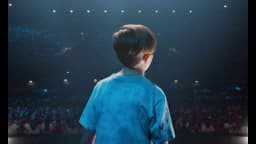
The "OWN Cancer" campaign by the Alberta Cancer Foundation positions itself around the empowering proposition that by collectively embracing and confronting cancer, the disease's control and impact can be diminished. The core message, "The more we own cancer, the less it owns us," frames cancer not as an uncontrollable fate but as a challenge that can be met head-on through unified action. This promise underscores the foundation’s commitment to transforming cancer care through innovative treatment, research, and education housed in the forthcoming Calgary Cancer Centre—the largest standalone cancer care facility in Canada.
Strategically, the campaign leverages a strong community-centric insight: that shared ownership and active participation in the fight against cancer can mobilize collective resilience and inspire tangible support. Targeting Albertans broadly, it appeals to a sense of regional pride and urgency by presenting this new cancer centre as a groundbreaking, once-in-a-generation initiative. The narrative approach humanizes the campaign, emphasizing a coming-together of individuals, organizations, and institutions to raise $250 million needed for cutting-edge cancer care set to launch in 2023. By situating the cause within a real, concrete development—both literally in the rising physical centre and figuratively in the growing momentum to combat cancer—the creative angle fosters a sense of immediacy and shared responsibility. Overall, the campaign employs a purpose-driven storytelling method to transform awareness into active engagement, inviting the public to "own" the fight against cancer as a collective endeavor.
FORMAT#3 SYMBOLIZE THE PROBLEM — Uses symbols or analogies to represent the problem instead of showing it literally.
This campaign for the Alberta Cancer Foundation centers on the tagline "The more we own cancer, the less it owns us," which transforms the struggle against cancer into a symbolic battle for ownership and agency. Rather than focusing on literal depictions of cancer or patient stories, the narrative leverages the metaphor of "owning" cancer to encourage collective action. The call for all Albertans to "stand together" further abstracts the disease into a challenge that can be tackled through unity and collaboration. The campaign thus employs symbolism and analogy rather than straightforward problem–solution or direct demonstration, making SYMBOLIZE THE PROBLEM the best fit.
ADVERTISING FORMATS EXPLAINED: https://www.clapboard.com/blog/branding-and-advertising/brand-strategy/12-advertising-creative-formats
1. Canadian Cancer Society – Market Positioning
A national leader in cancer control, the Canadian Cancer Society positions itself as a comprehensive resource for cancer prevention, research funding, and patient support. It leverages extensive community programs and advocacy efforts to unite Canadians in the fight against cancer, emphasizing hope, resilience, and actionable guidance across the full cancer care continuum.
2. BC Cancer Foundation – Market Positioning
Focused specifically on cancer research and patient support in British Columbia, BC Cancer Foundation distinguishes itself through cutting-edge research funding and partnerships with healthcare providers. It highlights region-specific initiatives and aims to accelerate breakthroughs in cancer treatments, adopting an innovation-driven approach combined with a compassionate patient-centric mission.
3. Canadian Breast Cancer Foundation (Now merged with Canadian Cancer Society) – Market Positioning
Prior to merging, it specialized in breast cancer awareness, research, and support. Its focused approach fostered empowerment through education and community engagement, positioning itself as the foremost advocate for breast cancer survivors and research innovations. Its legacy influences national breast cancer advocacy within broader cancer initiatives.
4. Ontario Health (Cancer Care Ontario) – Market Positioning
As a government agency, Cancer Care Ontario delivers an integrated provincial cancer care system focused on quality, equitable access, and evidence-based outcomes. Its positioning centers on system-wide coordination, data-driven public health strategies, and patient navigation services, striving to optimize prevention and treatment through a centralized, efficient model.
5. Canadian Partnership Against Cancer – Market Positioning
Operating at a national system-level, this organization coordinates cancer control efforts by fostering collaboration among provinces, territories, and stakeholders. Its strategic angle emphasizes knowledge translation, policy development, and best practice dissemination, positioning itself as a unifying authority that accelerates progress across Canada through collective impact rather than direct service delivery.
Q: What is OWN.CANCER - THE MORE WE OWN CANCER, THE LESS IT OWNS US. about?
A: OWN.CANCER - THE MORE WE OWN CANCER, THE LESS IT OWNS US. is a 2021 campaign created by Daughter Creative for the Alberta Cancer Foundation in Canada. The campaign centers on the launch of the Calgary Cancer Centre, which will be the country’s largest stand-alone cancer care facility, dedicated to advanced treatment, research, and education. Its core message calls on all Albertans to unite in raising $250 million to support this transformative initiative. Through a film-driven narrative, the campaign positions cancer as a collective challenge, inviting the public to take ownership in the fight to make cancer a memory.
Q: What creative device does OWN.CANCER - THE MORE WE OWN CANCER, THE LESS IT OWNS US. use?
A: OWN.CANCER - THE MORE WE OWN CANCER, THE LESS IT OWNS US. employs the creative technique classified as FORMAT#3 SYMBOLIZE THE PROBLEM in Clapboard’s 12-format taxonomy. Instead of depicting cancer or patient experiences literally, the campaign uses the metaphor of “owning” cancer to represent agency and collective action. By framing the disease as something that can be confronted and diminished through unity, the campaign leverages symbolism and analogy to inspire engagement, aligning with Clapboard’s classification of campaigns that represent problems through abstract or symbolic means.
Q: What is the campaign proposition for OWN.CANCER - THE MORE WE OWN CANCER, THE LESS IT OWNS US.?
A: The campaign proposition for OWN.CANCER - THE MORE WE OWN CANCER, THE LESS IT OWNS US. is that by collectively embracing and confronting cancer, Albertans can reduce the disease’s control and impact. The Alberta Cancer Foundation positions the campaign as a rallying call for regional unity, urging the public to support the new Calgary Cancer Centre through active participation and philanthropy. This strategic stance reframes cancer from an inevitable fate to a challenge that can be met head-on, emphasizing the importance of community involvement in transforming cancer care, research, and outcomes in Alberta.
Q: How does OWN.CANCER - THE MORE WE OWN CANCER, THE LESS IT OWNS US. rank in Clapboard's archive?
A: OWN.CANCER - THE MORE WE OWN CANCER, THE LESS IT OWNS US. holds a Clapboard Campaign Score of 63/100. This score reflects the campaign’s creative ambition, execution quality, and cultural relevance as assessed by Clapboard’s global ad archive.
Q: Who are the competitors in Alberta Cancer Foundation's category?
A: In the Canadian cancer advocacy and research landscape, Alberta Cancer Foundation competes with several key organizations. The Canadian Cancer Society is a national leader offering comprehensive cancer prevention, research, and patient support across the country. BC Cancer Foundation focuses on research funding and patient support tailored to British Columbia, emphasizing innovation and regional impact. The legacy of the Canadian Breast Cancer Foundation, now merged with the Canadian Cancer Society, continues to influence breast cancer advocacy nationwide. Ontario Health (Cancer Care Ontario) delivers integrated, evidence-based cancer care across Ontario, while the Canadian Partnership Against Cancer coordinates national efforts to accelerate progress through policy, knowledge sharing, and system-wide collaboration.


 ARCHIVE
.webp)