 ARCHIVE
How Apotek Hjärtat Used VR to Turn Pain Relief Into a Happy Place
Apotek Hjärtat's Happy Place is a virtual reality experience created by Swedish agency Wenderfalck in October 2016 to distract patients from temporary pain — including vaccinations, menstrual discomfort, tattoos, headaches, and muscle aches — by immersing them in an interactive lakeside camping environment, making it the world's first VR experience of its kind made available to the general public in Sweden.
The campaign launched in the Swedish market at a moment when consumer-grade VR hardware was transitioning from novelty to practical utility. Wenderfalck and Apotek Hjärtat developed the experience in partnership with Mimerse, a Swedish VR-therapy startup, to ensure the application met a clinical standard of calm rather than spectacle. The result was an ambient media campaign built around a single interactive environment — a peaceful campsite beside a lake — engineered to deliver what Mimerse described as the right level of engagement without triggering nausea or overstimulation.
Distribution was designed to reach users at the point of need. Apotek Hjärtat supplied headsets and the accompanying software directly to nurses working across six of its medical clinics in Sweden, embedding the VR experience into the physical care environment. Simultaneously, the application was made available through the Oculus Rift store and as a home download, and it was also optimised for Samsung Gear VR and Google Cardboard, broadening access across different hardware price points. This dual-channel rollout — institutional and consumer — distinguished Happy Place from contemporaneous branded VR activations that existed only as event-based demonstrations. The Clapboard Score for this campaign is 71 out of 100, reflecting its pioneering format and clear strategic rationale within the healthcare category.
ARCHIVEApotek Hjärtat holds the position of Sweden's largest private pharmacy chain. That market leadership gave the brand both the institutional reach and the credibility needed to introduce clinical-grade VR into a consumer healthcare setting without the activation feeling gimmicky or misaligned with its core audience.
The Swedish pharmacy market provided a receptive structural context. According to Statista, the Swedish consumer pharmacy market totalled approximately SEK 40 billion in 2016, with year-on-year growth of approximately 5.4 percent from 2015 to 2016. That same year, Sweden counted 1,389 outpatient pharmacies, per Statista, a network dense enough to support a multi-clinic hardware rollout. Within that landscape, Apotek Hjärtat faced direct competition from Apoteket AB, which according to Statista operated approximately 387 pharmacies representing around 28 percent of Swedish outpatient pharmacy locations, alongside Lloyds Apotek, another significant retail pharmacy operator in the Swedish market. Differentiating on service experience rather than product range or price was a logical strategic lever for Apotek Hjärtat to pull.
The underlying clinical rationale for pain distraction through virtual reality was not invented for this campaign. Research published via PubMed Central and the National Institutes of Health had established that immersive environments can meaningfully reduce the perception of acute pain by redirecting cognitive attention. Wenderfalck and Mimerse drew on that body of evidence to frame Happy Place not as advertising entertainment but as a utility. According to reporting by MobiHealthNews, the experience was deliberately designed to be calming rather than stimulating, a distinction that separated it from gaming-oriented VR and anchored it firmly within a healthcare campaign framework. In the United States, contemporaneous VR health initiatives were largely confined to hospital trials; in Sweden, Apotek Hjärtat made the same technology available to any consumer who downloaded the app.
Petter Rudwall served as Creative Director at Wenderfalck for the Happy Place campaign, with Greta Rönnskog fulfilling the roles of Art Director, Copywriter, and Illustrator — a concentration of creative responsibility that gave the experience a consistent visual and tonal identity from concept through to execution.
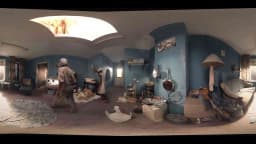
The environment Rönnskog designed centred on a lakeside campsite, a setting chosen for its cultural resonance within Sweden, where outdoor stillness and proximity to water carry strong associations with rest and psychological recovery. The scene was not photorealistic in the manner of documentary VR; instead it adopted an illustrative quality that softened the boundary between the user's physical context — often a clinical waiting room or treatment chair — and the virtual space they were entering. This aesthetic choice was purposeful. As reported by MobiHealthNews, Mimerse CEO William Hamilton stated that the design prioritised a peaceful environment with the right amount of distraction to avoid nausea or overstimulation, a constraint that ruled out the high-motion, high-stimulation environments common in consumer VR at the time.
Axel Barvaeus handled content for Wenderfalck on the campaign, while PR responsibilities were shared between Emma Nilsson and Anna Hoffman, also at Wenderfalck. Account management was led by Fredrik Jerresand. The technical architecture spanned four platforms — Oculus Rift, Samsung Gear VR, the Oculus Store, and Google Cardboard — a cross-platform build that required the experience to perform consistently across meaningfully different hardware specifications. That Mimerse, as a VR-therapy startup, acted as joint-project partner rather than vendor gave the production a research-informed foundation that purely creative studios would have struggled to replicate. The ambient media classification of the campaign reflects how the experience was inserted into everyday pain moments rather than placed within traditional advertising inventory.
No independently verified performance metrics for the Happy Place campaign — such as specific download figures, clinical pain-reduction scores from the Apotek Hjärtat rollout, or tracked changes in brand perception — are publicly available from Apotek Hjärtat or Wenderfalck at the time of this writing. What the public record does confirm, as documented by MobiHealthNews and StatNews, is that the application was successfully deployed to nurses across six Apotek Hjärtat medical clinics in Sweden and made available across multiple consumer VR platforms simultaneously, constituting a real operational rollout rather than a press-only demonstration.
Structurally, the campaign demonstrates several qualities that predict effectiveness in the healthcare category. First, the pain-distraction mechanism it employed had an established evidence base, lending the experience clinical plausibility rather than relying on novelty alone. Second, the multi-platform distribution strategy — spanning Oculus Rift, Samsung Gear VR, Google Cardboard, and direct clinic supply — maximised reach without requiring users to own premium hardware. Third, as reported by StatNews, the campaign attracted international media attention at launch, extending Apotek Hjärtat's visibility well beyond the Swedish market and generating earned media that amplified the original ambient media placement.
According to oriola.com, the Swedish pharmacy market was projected to grow at approximately 1.1 percent compound annual growth rate between 2015 and 2020, a steady rather than explosive trajectory that placed a premium on brand differentiation over pure distribution expansion. In that context, Happy Place functioned as a proof of concept for technology-led healthcare utility — a strategic signal as much as a consumer product. The Clapboard Score of 71 out of 100 reflects the campaign's genuine innovation and cross-platform ambition balanced against the absence of publicly documented outcome data.
Happy Place is a virtual reality experience created by Wenderfalck for Apotek Hjärtat in Sweden in October 2016. It was designed to distract users from temporary pain — including vaccinations, menstrual discomfort, and muscle aches — by immersing them in a calm, illustrated lakeside camping environment available on multiple VR platforms.
Wenderfalck, a Swedish advertising agency, created Happy Place for Apotek Hjärtat in 2016. Creative Director Petter Rudwall led the project, with Greta Rönnskog serving as Art Director, Copywriter, and Illustrator. Swedish VR-therapy startup Mimerse acted as a joint-project partner, providing the clinical and technical foundation for the experience.
Happy Place was available on Oculus Rift, Samsung Gear VR, the Oculus Store, and Google Cardboard. This cross-platform approach allowed users across different hardware price points to access the experience, while Apotek Hjärtat also supplied headsets directly to nurses at six of its medical clinics in Sweden.
Apotek Hjärtat used virtual reality because immersive environments are clinically documented to reduce acute pain perception by redirecting attention, as supported by research available through PubMed Central. The VR experience gave Sweden's largest private pharmacy chain a differentiating service utility in a competitive market that included Apoteket AB and Lloyds Apotek.
Happy Place was reported as the world's first VR experience made available to the general public specifically for pain distraction. Unlike event-only VR activations common in 2016, it combined direct clinic deployment across six Apotek Hjärtat locations in Sweden with consumer app-store availability, creating a dual-channel reach that bridged healthcare utility and ambient media.
The Clapboard Score for Happy Place is 71 out of 100. The score reflects the campaign's pioneering use of virtual reality within a healthcare context, its cross-platform distribution strategy, and its clinically informed creative rationale, balanced against the absence of publicly verified outcome metrics from the 2016 Swedish rollout.
.webp)
Creative Collaboration Platform: The Backbone of Modern Creative WorkWhat is a creative collaboration platform?Clapboard defines a creative collaboration platform as the operational core for today’s distributed creative teams. This is not a collection of digital collaboration tools stitched together; Clapboard’s system


Understanding the Creative Production MarketplaceWhat is a Creative Production Marketplace?Clapboard defines a creative production marketplace as a structured ecosystem where brands, agencies, and production talent converge to execute video, advertising, and branded content at scale. Unlike the legacy agency or freelanREAD FULL ARTICLE

The Urgent Need for a Creative Production Operating SystemWhy Traditional Creative Production Models Break DownClapboard sees the creative production landscape shifting under pressure. Content velocity is no longer a buzzword—it’s a mandate. Modern advertising demands relentless output across dozens of channels, each wREAD FULL ARTICLE