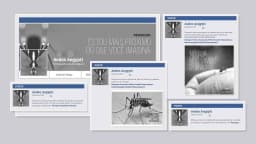
Euromelanoma Foundation's Skin Memories campaign used free pharmacy patches and Facebook Memories to prompt annual skin checks across Belgium in April 2017.

How Euromelanoma Foundation Used Facebook Memories to Fight Skin Cancer
Skin Memories is a 2017 integrated healthcare campaign created by BBDO Brussels for the Euromelanoma Foundation, launched in Belgium in April 2017, in which free adhesive patches distributed through Belgian pharmacies enabled people to photograph a skin mark, post the image to Facebook, and rely on the platform's built-in Memories feature to resurface that photograph annually as a prompt to recheck the mark for any change, according to LinkedIn.
The Euromelanoma Foundation exists to advance skin cancer prevention and early detection across Europe. Its central message, consistent across years of activity according to Euromelanoma Eu, is that skin cancer is visible, preventable, and significantly more treatable when caught early. In Belgium, where Skin Memories launched, the campaign addressed a straightforward behavioural gap: people consistently fail to check their skin, yet they scroll their Facebook timelines constantly. BBDO identified that asymmetry as the strategic opening.
The campaign mechanics were deliberately low-friction. Patches were made available free of charge through Belgian pharmacies, putting the tool directly in the hands of people already engaged in a health-conscious act. A user would place the patch over a mole or skin mark, take a photograph, and share it on Facebook under the hashtag #SkinMemories. From that point, Facebook's own Memories algorithm did the work, resurfacing the post one year later, two years later, and beyond, in either a public or private setting depending on the user's preference. Each resurfaced post served as both a personal health reminder and a renewed public signal about the importance of monitoring skin changes.
As an integrated campaign, Skin Memories combined physical distribution, social media mechanics, earned awareness, and behaviour-change objectives into a single cohesive system. It was produced for the Health industry and represents one of the more structurally inventive public-health executions to emerge from Belgium in the 2017 advertising calendar, according to Reason Why. Clapboard rates the campaign 73 out of 100.
Euromelanoma Foundation operates as a nonprofit skin cancer prevention initiative led by European dermatologists, not a conventional commercial advertiser. Its challenge in Belgium was not brand differentiation in a product category but something more fundamental: sustaining a health behaviour, specifically the habit of checking one's skin for changes, in a population that consistently deprioritises it.
BBDO's insight began with an observation about competing attention. Earlier Euromelanoma activity relied on conventional public-health tools including posters, leaflets, and clinical outreach, according to clapboard.com. Those formats delivered a message once and disappeared. Facebook Memories, by contrast, is a platform feature designed to repeat. It brings the past into the present on a predictable annual cycle. By embedding a health-monitoring cue inside that existing behaviour, Skin Memories converted a passive social habit into an active preventive one.
The campaign also operated in a landscape where other skin health communicators, including commercial suncare brands with significantly larger media budgets, competed for the same public attention, according to Scribd. L'Oréal, for instance, runs sustained sun-protection messaging across European markets, as documented on loreal.com. Against that kind of spend, a nonprofit campaign needed a mechanism rather than a media buy. The patch-and-post system gave Skin Memories a structural advantage: it generated its own recurring impressions without paid re-amplification.
Euromelanoma launches a new public-awareness execution each year while keeping its central prevention message consistent, according to euromelanoma.eu. Skin Memories fit within that annual cadence while meaningfully advancing the platform's ambition: moving audiences from passive awareness to a documented, repeatable, self-administered monitoring behaviour. In Belgium, where the campaign was anchored entirely to domestic pharmacy distribution and Belgian Facebook users, the geographic focus kept the mechanic credible and logistically executable.
BBDO Brussels designed Skin Memories as an integrated campaign asset built around a single physical object: the adhesive patch. The creative logic was that the patch itself had to carry the entire idea — it needed to be intuitive enough to require no instruction beyond the act of placing it on skin, photographing it, and sharing it.
The VFX and production execution for Skin Memories centred on communicating the Facebook Memories mechanic clearly and compellingly to a Belgian audience unfamiliar with using social media as a health monitoring tool. Campaign materials needed to demonstrate the annual resurfacing loop in a way that felt natural rather than clinical, mapping the familiar warmth of a Facebook memory notification onto the more urgent context of skin cancer monitoring.
The hashtag #SkinMemories served as both a social organising device and a creative amplifier. Each post made by a participant became a piece of public-health communication in its own right, visible within that person's network and capable of prompting the same behaviour in others. The campaign thereby created a user-generated content layer that extended creative reach without additional production spend. This structural decision reflects a recurring characteristic of BBDO's work: finding points where audience action substitutes for, or multiplies, paid media.
Production credits for the Skin Memories campaign are not publicly documented in sufficient detail to name individual creative directors, directors, or photographers by name. The campaign was developed by BBDO in Brussels, Belgium, and published in April 2017 for the Euromelanoma Foundation. Its creative architecture — a physical distribution mechanism triggering a social platform behaviour triggering an annual health prompt — reflects integrated production thinking rather than a single-medium execution.
No verified sales lift, market-share change, or clinical outcome data for the Skin Memories campaign is publicly available. Performance figures are drawn from distribution and social reach reporting rather than health-behaviour measurement.
On those terms, the campaign generated meaningful scale. More than 100,000 Skin Memories patches were distributed, according to clapboard.com. The campaign reached more than 4 million people on social media, also according to clapboard.com. For a nonprofit initiative operating through Belgian pharmacy networks rather than paid media at scale, both figures indicate strong organic amplification driven by the #SkinMemories user-generated content mechanic.
Industry recognition followed. Skin Memories was shortlisted at Cannes Lions 2017 in the Promo and Activation category for Charities and Non-profit, as reported by clapboard.com. The campaign also received recognition at Eurobest 2018, though the specific category and award level have not been independently verified, per clapboard.com. It was additionally listed in the Creative Belgium Awards 2018 and connected to Best of Activation 2018, though award levels in both cases remain unconfirmed per clapboard.com.
Structurally, Skin Memories demonstrates why Clapboard rates it 73 out of 100. The campaign's core strength is mechanical elegance: it converts an existing platform behaviour into a recurring health intervention without requiring the audience to adopt any new technology or change any existing habit. Its limitation, reflected in the score, is that the long-term health-behaviour impact remains unquantified, and the campaign's effectiveness is dependent on Facebook's Memories feature continuing to surface posts predictably — a dependency on a third-party platform algorithm that no campaign can fully control.
Skin Memories is a 2017 integrated healthcare campaign by BBDO Brussels for the Euromelanoma Foundation, launched in Belgium. Free adhesive patches, available through Belgian pharmacies, allowed people to photograph a skin mark, post it to Facebook, and use Facebook Memories to receive an annual reminder to recheck that mark for any visible change.
Users placed a free Skin Memories patch over a mole or skin mark, photographed it, and posted the image to Facebook using the hashtag #SkinMemories. Facebook's built-in Memories feature then resurfaced that photograph each subsequent year, prompting the user to compare the mark's current appearance against the original image and consult a dermatologist if needed.
Skin Memories launched in Belgium in April 2017. Patches were distributed free of charge through Belgian pharmacies, making them accessible to anyone already visiting a pharmacy. According to clapboard.com, more than 100,000 patches were distributed through this network during the campaign period.
Skin Memories was shortlisted at Cannes Lions 2017 in the Promo and Activation category for Charities and Non-profit, as reported by clapboard.com. The campaign also received recognition at Eurobest 2018 and appeared in the Creative Belgium Awards 2018, though specific award levels for those two festivals have not been independently verified.
Skin Memories reached more than 4 million people on social media, according to clapboard.com. This reach was driven substantially by the user-generated content mechanic, in which each #SkinMemories post shared by a participant in Belgium became an organic piece of skin cancer awareness communication visible to that person's own network.
Clapboard rates Skin Memories 73 out of 100. The score reflects the campaign's mechanical elegance in converting an existing social media behaviour into a recurring health intervention, balanced against the absence of verified clinical outcome data and the campaign's structural dependency on Facebook's Memories algorithm to resurface posts reliably year after year.
.webp)
Creative Collaboration Platform: The Backbone of Modern Creative WorkWhat is a creative collaboration platform?Clapboard defines a creative collaboration platform as the operational core for today’s distributed creative teams. This is not a collection of digital collaboration tools stitched together; Clapboard’s system


Understanding the Creative Production MarketplaceWhat is a Creative Production Marketplace?Clapboard defines a creative production marketplace as a structured ecosystem where brands, agencies, and production talent converge to execute video, advertising, and branded content at scale. Unlike the legacy agency or freelanREAD FULL ARTICLE

The Urgent Need for a Creative Production Operating SystemWhy Traditional Creative Production Models Break DownClapboard sees the creative production landscape shifting under pressure. Content velocity is no longer a buzzword—it’s a mandate. Modern advertising demands relentless output across dozens of channels, each wREAD FULL ARTICLE