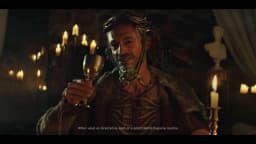
Independent Health Foundation's 'Don't be a rutabaga!' ambient campaign, created by Gelia in July 2016, used vegetable-based humour to drive healthy-eating

How Independent Health Foundation Made a Rutabaga the Face of Healthy Eating
Independent Health Foundation's 'Don't be a rutabaga!' campaign is an ambient public-health initiative created by Buffalo-based agency Gelia, published in the United States in July 2016, using the humble rutabaga as a metaphor for inertia and poor dietary habit to motivate healthier food choices among everyday consumers.
Independent Health Foundation operates as a Buffalo-area nonprofit organisation committed to improving community health outcomes. In 2016, the foundation partnered with Gelia — a full-service creative agency headquartered in Buffalo, New York — to extend a broader healthy-eating platform that had been developing since at least 2015. The resulting campaign, 'Don't be a rutabaga!', represents one documented media asset within that platform, classified formally as an ambient advertising execution. Ambient advertising situates brand messages within the physical environments where target audiences already spend time, bypassing the passive avoidance that afflicts conventional media placements and demanding a more immediate, contextual response from the viewer.
The campaign's geographic footprint is rooted in the United States, specifically within the Western New York communities that Independent Health Foundation serves. Rather than pursuing a nationally distributed media strategy, the foundation and Gelia opted for a locally grounded ambient approach — one calibrated to the lived environments and daily routines of the people most directly within reach of the foundation's programmes. This strategic restraint is itself a creative statement: health behaviour change is local, personal, and context-dependent, and the campaign's format reflects that understanding. The campaign launched in July 2016 with no media budget or production expenditure data made publicly available.
Gelia identified a specific consumer psychology gap that conventional health advertising routinely fails to bridge. In the United States, the distance between knowing what constitutes a healthy diet and actually changing eating behaviour remains one of public health's most persistent challenges. Research published via PubMed at the National Institutes of Health documents the well-established intention-behaviour gap in dietary change, whereby individuals who express motivation to eat better consistently fail to translate that motivation into sustained action. A campaign built around gentle, humour-inflected social pressure — embodied by the figure of the rutabaga, a vegetable synonymous with neglect and culinary obscurity — addresses this gap at an emotional rather than informational level.
The ambient format was a deliberate strategic choice. Unlike digital display advertising or television spots, ambient executions from competitors such as large insurance-sector campaigns by Aetna or UnitedHealth Group tend to operate at national scale with substantial media investment. Gelia's approach for Independent Health Foundation rejected that model in favour of place-based intimacy. According to research published through Dartmouth's health sciences programme at Healthsciences Dartmouth Edu, community-level health interventions consistently outperform broad-reach messaging when the target population shares a defined geographic identity. In the United States, regional nonprofit health organisations occupy a distinct credibility position relative to national insurers precisely because they are perceived as embedded in the community rather than operating from a distance.
The 2015 predecessor campaign, a Gelia-created ambient execution titled 'Vending Machine Prank – Eat healthier promise', established the tonal and strategic template that 'Don't be a rutabaga!' inherited. That earlier work, which comprised three media assets compared to this campaign's single asset, demonstrated that Independent Health Foundation and Gelia were deliberately building a recognisable healthy-eating creative platform rather than producing one-off executions. The rutabaga campaign represents a distillation of that platform into its most concentrated, rhetorically direct form.
Bill Paterson served as co-creative director on 'Don't be a rutabaga!' alongside Kathy Kastan, with Jason Yates as art director and Devon Slobodzian as copywriter. The creative team's decision to centre the entire campaign on a single media asset is itself a craft statement. In ambient advertising, concentration of message is a discipline: the physical environment competes aggressively for attention, and executions that attempt to communicate multiple ideas simultaneously tend to dissolve into visual noise. A single, well-constructed asset demands greater precision from every creative contributor — the line must be sharper, the visual logic more immediate, and the emotional register more exactly calibrated.
The copywriting by Devon Slobodzian leans on the rhetorical device of direct address. 'Don't be a rutabaga!' is a command, not a suggestion. It implicates the viewer immediately, generating a reflexive moment of self-assessment that informational health messaging rarely achieves. The rutabaga itself functions as a found cultural symbol: it is a vegetable that most people recognise but few eat, carrying connotations of passivity, dullness, and going unnoticed on the shelf. Transposing those connotations onto human behaviour creates a memorable and mildly self-deprecating joke that opens rather than closes the door to behaviour change. According to research indexed on PubMed via Pubmed Ncbi Nlm Nih Gov, humour-based health communications can increase message recall and reduce defensive processing in audiences who might otherwise resist direct health directives.
Jason Yates's art direction would have been responsible for ensuring that the visual language of the asset reinforced rather than contradicted the copy's tone — grounding the absurdist vegetable metaphor in a visual register legible within an ambient physical environment. The ambient classification recorded in the campaign's documentation signals that this asset was designed for contextual placement rather than screen-based consumption, requiring production decisions tuned to real-world materials, scale, and viewing distance.
No verified performance data for the 'Don't be a rutabaga!' campaign is publicly available. No sales lift, programme enrollment, awareness shift, or return-on-ad-spend figures have been published, and no trade press reviews appeared in Campaign, Ad Age, Adweek, The Drum, or Contagious. The campaign was not entered into, or did not place in, the documented award cycles of Cannes Lions, the Effie Awards, The One Show, D&AD, the Clio Awards, the Webby Awards, or WARC Awards.
Structural analysis, however, offers a basis for assessing likely effectiveness. The campaign's ambient format targets behaviour at the point of environmental encounter, which according to reporting by healthcaredive.com and research available through hospitalsandhealthcare.com represents a meaningful lever for community health organisations operating with constrained budgets. The single-asset concentration disciplines the message to its most essential form. The humour mechanism identified in the creative — using social mild-shame to prompt self-reflection — aligns with documented principles of effective public-health communication, as supported by research accessible via the JAMA Network at jamanetwork.com and by studies indexed on pubmed.ncbi.nlm.nih.gov.
The campaign's continuity with the 2015 vending machine platform suggests that Gelia and Independent Health Foundation were investing in cumulative brand recognition rather than expecting a single execution to move measurable needles in isolation. Platform thinking in community health advertising typically yields results over multiple campaign cycles rather than within a single activation window. Clapboard rates this campaign 59 out of 100, reflecting competent and strategically coherent ambient craft constrained by the inherent measurement limitations of small-market public-health executions and the absence of a second or third media asset to extend reach and reinforce impact.
'Don't be a rutabaga!' is an ambient public-health campaign created by Gelia for Independent Health Foundation, published in the United States in July 2016. It uses the rutabaga as a metaphor for inertia to encourage healthier eating habits among community audiences, forming part of a broader healthy-eating platform developed with Gelia since 2015.
Gelia, a Buffalo, New York agency, created the campaign. The credited team includes creative directors Bill Paterson and Kathy Kastan, art director Jason Yates, and copywriter Devon Slobodzian. The campaign was produced for Independent Health Foundation, a Buffalo-area nonprofit, and classified as an ambient advertising execution with one documented media asset.
Gelia used ambient advertising — a format that places brand messages within physical environments audiences already inhabit. This approach bypasses passive media avoidance and creates contextual, immediate encounters with health messaging, making it well suited to a community-focused nonprofit organisation operating within a defined regional market in the United States.
No awards for this campaign are documented. It was not entered into, or did not place in, the recorded cycles of Cannes Lions, the Effie Awards, The One Show, D&AD, the Clio Awards, the Webby Awards, or WARC Awards. No trade press coverage in Ad Age, Adweek, or Campaign has been identified for this execution.
The campaign extends a healthy-eating platform Gelia developed with Independent Health Foundation from at least 2015. The earliest documented predecessor is the ambient 'Vending Machine Prank – Eat healthier promise' campaign, also by Gelia. Both campaigns share ambient formats and community-health intent, indicating a deliberate long-form platform strategy rather than isolated one-off executions.
Clapboard rates the campaign 59 out of 100. The score reflects competent ambient craft and clear strategic coherence within a community health context, moderated by the campaign's single media asset, the absence of published performance data, and the structural measurement limitations common to small-market public-health advertising in the United States.
.webp)
Creative Collaboration Platform: The Backbone of Modern Creative WorkWhat is a creative collaboration platform?Clapboard defines a creative collaboration platform as the operational core for today’s distributed creative teams. This is not a collection of digital collaboration tools stitched together; Clapboard’s system


Understanding the Creative Production MarketplaceWhat is a Creative Production Marketplace?Clapboard defines a creative production marketplace as a structured ecosystem where brands, agencies, and production talent converge to execute video, advertising, and branded content at scale. Unlike the legacy agency or freelanREAD FULL ARTICLE

The Urgent Need for a Creative Production Operating SystemWhy Traditional Creative Production Models Break DownClapboard sees the creative production landscape shifting under pressure. Content velocity is no longer a buzzword—it’s a mandate. Modern advertising demands relentless output across dozens of channels, each wREAD FULL ARTICLE