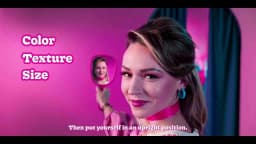
Orange and Publicis Conseil's CHEST CONTROL campaign used the France–Germany women's football match to turn La Marseillaise into a live breast cancer awareness

Orange CHEST CONTROL Turns a National Anthem Into a Health Warning
CHEST CONTROL is a 2025 health awareness campaign by Orange and Publicis Conseil in which players of the French Women's National Football Team performed a live breast self-examination gesture during La Marseillaise at the France–Germany UEFA Women's Nations League match, reaching millions of spectators and viewers with a single symbolic act, according to Dataintelo.
The live activation took place on 28 October 2025 at the Stade Michel-d'Ornano in Caen, France. During the national anthem, players including Selma Bacha and Marie-Antoinette Katoto placed one hand between the chest and the armpit — the foundational gesture of breast self-examination — in full view of a packed stadium and a nationwide television audience. The action, also referred to as L'hymne de la prévention, was designed to transform a ritual moment of collective attention into an unrepeatable public health signal, according to France Publicisgroupe.
Orange, a major partner of the French Football Federation, anchored the campaign around a simple clinical truth: self-examination performed once a month can detect breast cancer at an early stage. In France, according to the Institut National du Cancer (INCa), one in eight women will be affected by breast cancer during her lifetime, and according to Santé Publique France, nearly 60,000 new cases are diagnosed each year in the country, with around 12,000 deaths linked to the disease annually. When detected early, breast cancer can be cured in ninety percent of cases, yet self-check practices remain underused and underknown across the French population.
Supporting the live moment, a video released ahead of the match featured iconic players from the French Women's National Team demonstrating the full sequence of self-examination techniques in precise, accessible terms. The campaign also drew on ambassador amplification from marine Lorphelin, a doctor and women's health advocate, alongside Team Orange Football participants, extending the message across social media in France and ensuring the gesture retained clinical credibility beyond the stadium broadcast.
 ARCHIVE
Orange identified a structural gap in French public health communication. Breast cancer self-examination guidance exists, but its conversion into habitual practice among women in France remains low, partly because awareness campaigns typically operate inside healthcare media environments that do not reach mass audiences at scale, according to Publicisconseil. By choosing a live televised football match as the primary media vehicle, Orange and Publicis Conseil bypassed that limitation entirely.
The France–Germany UEFA Women's Nations League fixture provided a concentrated, co-viewing audience that no paid media plan could easily replicate. The national anthem moment was chosen with precision: La Marseillaise commands undivided attention from both stadium crowds and television viewers, creating a window of silence and stillness in which a single gesture carries disproportionate weight. This is not incidental creativity — it is media strategy executed through performance rather than placement.
In France, the women's football audience has grown substantially since the national team's strong showings in recent international tournaments, giving Orange access to a younger and more engaged demographic than traditional healthcare advertising typically reaches. The broader context matters: some studies, as cited by INCa, suggest breast cancer increasingly affects women under the age of fifty in France, making the sport's younger viewership directly relevant to the campaign's prevention objective.
Competitors in the French telecommunications sector, including SFR and Bouygues Telecom, have used sports sponsorship primarily for brand visibility, according to Documents Publicisgroupe. Orange's decision to deploy its partnership with the French Football Federation as a vehicle for public health action rather than logo exposure represents a meaningful strategic differentiation. The campaign positions Orange not merely as a connectivity brand but as an institutional actor in French civil society — a distinction with long-term brand equity implications that transactional sports sponsorship cannot generate.
CHEST CONTROL was created by Publicis Conseil, with Marco Venturelli — Global CCO and CEO of Publicis Conseil and CCO of Publicis Groupe France — leading the creative leadership structure, per Clapboard. Gabriel Gherca and Romulus Petcan served as Directeurs de création on the campaign, and Julien Colas is also named among the creative team in production documentation cited by Clapboard.
The creative challenge was considerable. The gesture had to be legible to millions of viewers who would encounter it without prior explanation, during a moment — the national anthem — that carries its own emotional and civic gravity, according to Mordor Intelligence. Overcomplicating the visual language would have produced confusion; undercommitting would have produced invisibility. The solution was reduction to a single, unmistakable movement: one hand, placed deliberately between chest and armpit, held at a moment when all eyes are already on the players.
The supporting video released before the match served a different but complementary function. Where the live gesture was symbolic and affective, the video was instructional and detailed, walking viewers through the full self-examination sequence — observing for visible abnormalities, checking breast and armpit up to the collarbone, using three fingers to feel the breast in small circular motions, and gently pressing the nipple to check for discharge. This two-channel creative architecture — a live emotional trigger followed by an informational asset — is structurally sound as a behaviour-change communication model.
The decision to feature Marine Lorphelin as campaign spokesperson added a layer of medical authority that pure celebrity amplification could not provide. As a doctor and women's health advocate, Lorphelin bridges the gap between aspirational ambassador and clinical credibility, reinforcing the campaign's position as genuine health communication rather than cause-washing. The production design of the match-day activation required precise choreography with the national team to ensure the gesture registered clearly on broadcast cameras — a logistical feat that is itself part of the creative execution.
No independently verified post-campaign performance data for CHEST CONTROL — such as reach figures, social engagement metrics, or awareness uplift studies — is publicly available at the time of writing. What is documentable is the structural reach opportunity the campaign was built upon. A live France–Germany UEFA Women's Nations League match, broadcast nationally in France, constitutes one of the higher-audience moments available to an advertiser in the French sports calendar, particularly within women's football, whose television viewership in France has grown year on year since the 2019 FIFA Women's World Cup.
The campaign's effectiveness architecture is strong on several counts. The live gesture format is inherently unblockable and unskippable, unlike pre-roll or display advertising. The anthem moment, as a shared cultural ritual, creates emotional priming that paid media rarely achieves. The two-asset structure — live activation plus instructional video — addresses both emotional salience and behavioural conversion in sequence, which is considered best practice in public health communication.
Ambassador amplification through Marine Lorphelin and Team Orange Football participants extended the campaign's reach beyond the broadcast window into social media, creating secondary and tertiary exposure among audiences in France who did not watch the match live. The campaign's alignment with INCa and Santé Publique France data gives it institutional legitimacy that strengthens earned media potential with health journalists and broadcasters.
Clapboard rates CHEST CONTROL at 71 out of 100, reflecting strong creative and strategic fundamentals tempered by the absence of publicly verifiable performance outcomes. The campaign represents a credible benchmark for sports-led health advertising in France and for telecommunications brands seeking to build civic relevance through partnership assets.
CHEST CONTROL is a breast cancer awareness campaign launched by Orange and Publicis Conseil in France in 2025. French Women's National Football Team players performed a breast self-examination gesture during La Marseillaise at the France–Germany match on 28 October 2025 at the Stade Michel-d'Ornano in Caen, reaching a national television audience.
Named participants in the CHEST CONTROL live activation include Selma Bacha and Marie-Antoinette Katoto. The broader French Women's National Football Team joined the gesture, placing one hand between the chest and armpit during the national anthem to demonstrate breast self-examination at the France–Germany UEFA Women's Nations League fixture.
Publicis Conseil chose a live televised football match to access a mass, co-viewing audience that standard healthcare advertising channels cannot reach. The national anthem moment provides undivided attention from millions of viewers simultaneously, making a single gesture visible and memorable across France without relying on paid media placement or audience targeting.
Breast cancer is the most common cancer among women in France. According to INCa, one in eight women will be affected during her lifetime. According to Santé Publique France, nearly 60,000 new cases are diagnosed in France each year, with around 12,000 deaths annually linked to the disease, making early detection a critical public health priority.
CHEST CONTROL was produced by Publicis Conseil under the creative leadership of Marco Venturelli, Global CCO and CEO of Publicis Conseil and CCO of Publicis Groupe France, per Clapboard. Gabriel Gherca and Romulus Petcan served as Directeurs de création. Julien Colas is also credited among the creative team in documentation cited by Clapboard.
CHEST CONTROL received a Clapboard Score of 71 out of 100. The score reflects strong creative and strategic fundamentals — including an innovative live activation format, credible public health alignment, and effective two-channel creative architecture — balanced against the absence of publicly verifiable post-campaign performance data for the France market.
.webp)
Creative Collaboration Platform: The Backbone of Modern Creative WorkWhat is a creative collaboration platform?Clapboard defines a creative collaboration platform as the operational core for today’s distributed creative teams. This is not a collection of digital collaboration tools stitched together; Clapboard’s system


Understanding the Creative Production MarketplaceWhat is a Creative Production Marketplace?Clapboard defines a creative production marketplace as a structured ecosystem where brands, agencies, and production talent converge to execute video, advertising, and branded content at scale. Unlike the legacy agency or freelanREAD FULL ARTICLE

The Urgent Need for a Creative Production Operating SystemWhy Traditional Creative Production Models Break DownClapboard sees the creative production landscape shifting under pressure. Content velocity is no longer a buzzword—it’s a mandate. Modern advertising demands relentless output across dozens of channels, each wREAD FULL ARTICLE