 ARCHIVE
WWF France Mobilises French Guiana With #StopMontagnedOr
WWF France's #StopMontagnedOr campaign is a 2018 public service film and digital mobilisation initiative created by We Are Social, launched in France in April 2018, designed to stop the proposed Montagne d'Or industrial gold mine in French Guiana by converting environmental threat into civic action through a football analogy, a petition addressed to the French president, and a viral hashtag.
The campaign targets a specific and urgent threat. The proposed Montagne d'Or mine, operated by a consortium led by Russian and Canadian mining interests, would have displaced approximately 1,513 hectares of biodiverse primary rainforest in French Guiana, a French overseas territory and part of the Amazon basin. To make that scale legible to a French public, We Are Social converted the mine's footprint into approximately 2,161 football pitches, according to wearesocial.com — a unit of area instantly understood by a mass audience. The campaign asked citizens to use the hashtag #StopMontagnedOr on social media and to sign a petition addressed directly to French president Emmanuel Macron, framing conservation not as an abstract scientific concern but as a democratic act.
In France, the campaign launched in April 2018 as a single cinematic film asset supported by an organised digital petition infrastructure. The objectives were simultaneously cultural and political: to shift public opinion in French Guiana, to generate a measurable volume of signatures, and to create sufficient political pressure for the French government to reconsider its provisional support for the project. The campaign sits within WWF's broader tradition of combining emotional storytelling with concrete advocacy mechanics, but its deployment of a professional athlete and a sports-scale comparison marked a deliberate creative escalation from conventional conservation appeals, as noted by wearesocial.com. Clapboard rates the campaign 56 out of 100, recognising its structural ambition and verified civic outcomes while noting the inherent constraints of a single-asset execution.
WWF France identified a structural communications problem at the heart of environmental advocacy. Abstract ecological metrics — hectares, biodiversity indices, carbon sequestration figures — consistently fail to produce emotional identification in general audiences unfamiliar with French Guiana's geography or ecological significance. The agency We Are Social, working under the creative direction of the campaign, built its strategic response around a single insight: French people understand football pitches in a way they do not understand hectares, according to wearesocial.com.
The Montagne d'Or project threatened approximately 1,513 hectares of primary Amazonian forest. That number, when converted to roughly 2,161 football pitches, created an immediate and visceral sense of scale. The strategy also reflected the demographic reality of French Guiana itself. An IFOP survey of 608 people representative of Guyana's population aged 18 and over found that 7 in 10 Guyanese opposed the mining project, according to wwf.fr. That statistic gave WWF France a powerful local mandate to amplify, positioning the campaign not as metropolitan France imposing its environmental values on an overseas territory, but as a national platform for a Guyanese community already opposed to the mine.
The campaign operated in a media environment where social-media advertising was growing rapidly in France and across global markets, making digital petition mechanics and hashtag mobilisation viable tools for reaching broad civic audiences. In France, digital channels had become the primary arena for political and civic discourse by 2018, giving the #StopMontagnedOr hashtag genuine reach potential. Competitors in the French public-service and environmental communications space — including Greenpeace France and Amnesty International France — had used petition mechanics previously, but WWF France and We Are Social differentiated the campaign through cinematic production values and the recruitment of a high-profile sporting figure, creating a tone closer to commercial brand advertising than to conventional NGO appeals, as described by Business Ladn Eu.
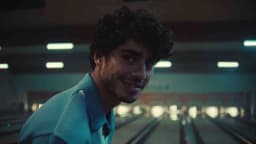
ARCHIVEThe #StopMontagnedOr film is directed by Thibaut Grevet and stars Ibrahim Cissé, a professional footballer, according to wearesocial.com. Production was handled by Frenzy, also per wearesocial.com. The choice of a footballer as protagonist was not incidental — it was the creative spine of the entire campaign, allowing the football-pitch scale comparison to become embodied and human rather than purely graphic or statistical.
Packshotmag described the film as "puissante et percutante" — powerful and striking — capturing the way the production combines the visual grammar of a sports narrative with the weight of an environmental stakes argument. The film places Ibrahim Cissé within the landscape under threat, using the physical presence of a recognisable athletic figure to bridge the gap between a remote Amazonian ecosystem and a French public with no direct experience of French Guiana's terrain. The cinematic approach, with professional-grade cinematography and a deliberate pacing closer to a short film than a public service announcement, was identified by business.ladn.eu as central to the campaign's effort to protect French Amazonia and mobilise public opinion against the proposed mine.
The creative strategy, as documented by wearesocial.com, involved converting the mine's 1,513-hectare footprint into approximately 2,161 football pitches as the campaign's anchor statistic. This single translational act — from hectares to football pitches — structured every subsequent creative decision, from casting to visual composition to the film's narrative arc. The campaign contained a single media asset, meaning the film had to carry the full weight of awareness, emotional resonance, and call-to-action simultaneously. That constraint produced a concentrated piece of craft in which every creative element serves the petition mechanic. Sandrine Plasseraud, Isabelle Constant, and Thomas Guilhot are credited in connection with the We Are Social team on the campaign, per wearesocial.com.
The #StopMontagnedOr campaign produced verified and significant civic outcomes. More than 100,000 people signed the petition addressed to the French president during WWF France's digital mobilisation campaign, according to wwf.fr. That volume of signatures represented a substantial public mandate within the French civic context, demonstrating that the campaign's call-to-action translated creative engagement into measurable political pressure.
An IFOP survey of 608 people representative of Guyana's population aged 18 and over found that 7 in 10 Guyanese opposed the mining project, according to wwf.fr, providing independent third-party evidence that public sentiment in the affected territory aligned with the campaign's objectives. WWF states the French government announced in May 2019 that the Montagne d'Or project would not proceed, according to WWF's 2018–2019 activity report published on wwf.fr — a policy outcome that, while not solely attributable to the campaign, occurred in the context of the sustained public and political pressure it helped generate.
On the industry recognition side, the campaign won a Grand Prix at the 2018 Stratégies du Brand Content Awards, according to wwf.fr, confirming its standing among French communications professionals as an exceptional piece of public-service work. No further verified performance data — including media reach figures, social impressions, or post-campaign brand-tracking results — is publicly available beyond the sources cited here. The combination of a Grand Prix, a six-figure petition response, and a subsequent government decision to halt the project gives #StopMontagnedOr a results profile that is rare in public-service advertising: it can point to a concrete political consequence as part of its legacy, however partially.
#StopMontagnedOr is a 2018 public service campaign by WWF France, created by We Are Social, opposing the Montagne d'Or industrial gold mine in French Guiana. It used a cinematic film starring footballer Ibrahim Cissé, a football-pitch scale comparison, and a public petition addressed to French president Emmanuel Macron to mobilise national opposition.
More than 100,000 people signed the petition, according to wwf.fr. The petition was addressed to French president Emmanuel Macron and formed the campaign's central civic mechanism, converting film viewership and social engagement into a direct and quantifiable act of political pressure on the Montagne d'Or mining decision.
The campaign won a Grand Prix at the 2018 Stratégies du Brand Content Awards, according to wwf.fr. This recognition positioned the work among France's most distinguished brand content productions of that year, reflecting both its creative ambition and its demonstrated capacity to produce measurable civic outcomes through public-service advertising.
The film was directed by Thibaut Grevet, according to wearesocial.com. It starred professional footballer Ibrahim Cissé and was produced by Frenzy. The We Are Social team included Sandrine Plasseraud, Isabelle Constant, and Thomas Guilhot. The film was the campaign's sole media asset, carrying awareness, emotion, and call-to-action within a single production.
WWF states the French government announced in May 2019 that the Montagne d'Or project would not proceed, according to WWF's 2018–2019 activity report on wwf.fr. While multiple factors influenced that decision, the campaign's 100,000-signature petition and the broader public mobilisation it generated contributed to the sustained political pressure on the French government.
We Are Social converted the mine's 1,513-hectare footprint into approximately 2,161 football pitches to make the ecological scale immediately legible to a French mass audience, according to wearesocial.com. Hectares are abstract to most people; football pitches are not. This translational strategy structured every creative decision, from casting Ibrahim Cissé to the film's visual composition.
.webp)
Creative Collaboration Platform: The Backbone of Modern Creative WorkWhat is a creative collaboration platform?Clapboard defines a creative collaboration platform as the operational core for today’s distributed creative teams. This is not a collection of digital collaboration tools stitched together; Clapboard’s system


Understanding the Creative Production MarketplaceWhat is a Creative Production Marketplace?Clapboard defines a creative production marketplace as a structured ecosystem where brands, agencies, and production talent converge to execute video, advertising, and branded content at scale. Unlike the legacy agency or freelanREAD FULL ARTICLE

The Urgent Need for a Creative Production Operating SystemWhy Traditional Creative Production Models Break DownClapboard sees the creative production landscape shifting under pressure. Content velocity is no longer a buzzword—it’s a mandate. Modern advertising demands relentless output across dozens of channels, each wREAD FULL ARTICLE