Innocence In Danger's 'The Witness' campaign by Rosapark confronts child sexual abuse in France through a metaphor-driven film that reframes every bystander as

Innocence In Danger Forces France to Face the Witness Within
"The Witness" is a French public-interest film created by Rosapark for child-protection organisation Innocence In Danger, released in France in April 2016, that uses narrative metaphor to position the viewing audience as silent bystanders to child sexual abuse.
Innocence In Danger published "The Witness" as a single-asset film campaign, targeting audiences across France at a moment when public discourse around child protection was intensifying, according to WARC. The campaign's tagline — "Lui ne peut parler. Vous, vous pouvez" (He cannot speak. You can.) — collapses the distance between spectator and subject, transforming passive viewers into morally implicated witnesses. That rhetorical move is the campaign's central mechanism and its most durable creative idea, according to Rosaparks.
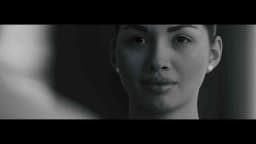
The film depicts, through symbolic and metaphorical framing rather than explicit imagery, the ordeal endured by a young girl in her own bedroom at the hands of an adult who was supposed to protect her. By withholding graphic depiction and instead foregrounding the perspective of an unseen, inactive witness, Rosapark engineers a specific emotional discomfort: the guilt of proximity without intervention. This approach aligns with a broader strategic logic in public-service advertising — that implicating the audience is frequently more motivating than informing them.
In France, campaigns addressing child sexual abuse occupy a culturally sensitive and legally regulated communications space. Innocence In Danger, as one of France's established child-protection advocacy organisations, carries institutional authority that enables a campaign of this emotional directness. The film medium was chosen deliberately: narrative film allows for sustained emotional development in a way that static print cannot, and Innocence In Danger's campaign lineage, documented across the Clapboard archive, shows a consistent preference for emotionally immersive formats when addressing abuse directly.
Rosapark built the campaign's strategy around a single, transferable insight: in cases of child sexual abuse, inaction by those who could intervene is itself a form of complicity, according to LinkedIn. This reframing — moving the message from victim-focused awareness to bystander-focused accountability — represents a meaningful strategic evolution in how French public-interest advertising approaches child protection.
The campaign sits within a lineage of Innocence In Danger communications that Clapboard's archive documents across more than a decade. Earlier work, including the 2013 print campaigns created by Herezie in Paris and documented by Clapboard, addressed the concealment of predators within children's digital environments. A parallel 2013 effort, the "Daily Abuse" campaign for the German market, was produced by Serviceplan Munich, as recorded by Clapboard. Each of these executions addressed a different vector of child exploitation, but "The Witness" marks a shift: rather than exposing the perpetrator or the digital context, it turns to face the audience.
Comparable public-service campaigns from the same period offer useful competitive context. The NSPCC's "Pants Song" (2016), produced for the United Kingdom market, employed accessible, child-directed language to build protective awareness among young people themselves — a meaningfully different strategic posture from Rosapark's adult-accountability approach. ActionAid's concurrent European campaigns similarly centred victim testimony rather than bystander guilt. In France specifically, public-interest advertising is shaped by regulatory guidance from institutions including the Direction de l'Information Légale et Administrative, as referenced in communications policy documents available via Echanges Dila Gouv, which establishes norms for campaigns addressing sensitive social subjects. Within that framework, Rosapark's choice to implicate rather than inform represents a deliberately confrontational strategic stance.
Rosapark constructed "The Witness" around the discipline of showing without showing. The film relates the abuse of a young girl in her own bedroom through metaphor and implication rather than direct visual representation — a creative decision that is simultaneously an ethical responsibility and a sophisticated narrative technique.
This approach demands more of the viewer than explicit imagery would. By refusing to depict the abuse directly, the film forces the audience's imagination to complete the scene, which produces a more personally located and therefore more lasting emotional response. The witness of the title is never identified on screen; the camera occupies that position, making the viewer's own act of watching the structural equivalent of witnessing and doing nothing. That conflation of the cinematic gaze with moral inaction is the campaign's most precise piece of craft.
Production credits for "The Witness" are not publicly documented in the sources available to Clapboard at the time of writing. What is verifiable is the agency of record: Rosapark, the Paris-based creative agency whose work across French public-interest and commercial accounts is documented across industry sources including Clapboard and adsspot.me. The single-asset film format — one film, no supporting print or digital executions catalogued — suggests a campaign designed to function as a standalone cultural intervention rather than a media-weight awareness drive. In that sense, the film is closer to editorial short film than to conventional advertising, a format choice that aligns with the gravity of the subject and with French public-interest film traditions more broadly.
The tagline operates as the film's moral instruction. "Lui ne peut parler. Vous, vous pouvez" does not ask the audience to donate, to call a hotline, or to sign a petition. It asks them to speak. The simplicity of that ask, combined with the complexity of the emotional journey that precedes it, is where the campaign's craft is most concentrated.
No verified performance data for "The Witness" is publicly available. No Effie Awards record, no One Show entry, and no independently verified audience reach or engagement figures have been documented for this campaign in the sources consulted. Cannes Lions 2016 category documentation references the Charities and NGOs human rights context in which the campaign existed, as noted in a corporate report, but no verified award win for "The Witness" is on record.
Clapboard assigns "The Witness" a Campaign Score of 63 out of 100, a result that reflects the campaign's creative coherence and strategic clarity while acknowledging structural limitations. The single-asset format, absent any documented media plan, limits the campaign's capacity to generate sustained reach in France or beyond. A film that exists as one piece without amplification across paid, earned, or owned channels depends entirely on organic distribution — a viable strategy only when the creative itself generates sufficient cultural friction to travel without media support.
Structurally, the campaign's bystander-accountability framing is its greatest strength. It avoids the compassion fatigue risk inherent in victim-centred public-service advertising, and it creates a direct behavioural ask — speak up — that is specific, memorable, and actionable without requiring significant resources from the audience. The metaphorical approach to depicting abuse also ensures the film can be screened in contexts, including broadcast and public spaces in France, where explicit depiction would be prohibited or counterproductive. These are the decisions of a campaign built to endure within institutional channels, even if its documented public footprint remains limited.
"The Witness" is a public-interest film created by Rosapark for Innocence In Danger, released in France in April 2016. It addresses child sexual abuse by positioning the audience as inactive bystanders, using metaphorical depiction and the tagline "Lui ne peut parler. Vous, vous pouvez" to call for witness intervention.
Rosapark created "The Witness" for Innocence In Danger. Rosapark is a Paris-based creative agency whose work on this campaign is documented in the Clapboard archive. The campaign was published in France in April 2016 and consisted of a single film asset within the public-interest sector.
"The Witness" uses metaphor and implication rather than direct depiction. The film frames the camera itself as the inactive witness, forcing viewers to complete the scene imaginatively. This technique creates personal emotional implication while remaining suitable for broadcast and public screening contexts across France.
No verified award win for "The Witness" is on public record. While Cannes Lions 2016 included a Charities and NGOs human rights category relevant to the campaign's subject, no confirmed entry or win has been documented. No Effie Awards or One Show records for this campaign exist in available sources.
Innocence In Danger's earlier French campaigns, including 2013 print work by Herezie documented by Clapboard, focused on digital predator concealment. "The Witness" marks a strategic shift: rather than exposing perpetrators or online contexts, Rosapark turned accountability toward adult bystanders, making inaction the campaign's central subject.
Clapboard assigns "The Witness" a Campaign Score of 63 out of 100. This reflects the campaign's strong strategic coherence and disciplined creative restraint, while noting structural limitations including the single-asset format and an absence of documented media amplification across the French market or internationally.
.webp)
Creative Collaboration Platform: The Backbone of Modern Creative WorkWhat is a creative collaboration platform?Clapboard defines a creative collaboration platform as the operational core for today’s distributed creative teams. This is not a collection of digital collaboration tools stitched together; Clapboard’s system


Understanding the Creative Production MarketplaceWhat is a Creative Production Marketplace?Clapboard defines a creative production marketplace as a structured ecosystem where brands, agencies, and production talent converge to execute video, advertising, and branded content at scale. Unlike the legacy agency or freelanREAD FULL ARTICLE

The Urgent Need for a Creative Production Operating SystemWhy Traditional Creative Production Models Break DownClapboard sees the creative production landscape shifting under pressure. Content velocity is no longer a buzzword—it’s a mandate. Modern advertising demands relentless output across dozens of channels, each wREAD FULL ARTICLE