Chambre des Notaires de la Gironde's 2018 film 'The Neighbors' by Le Vestiaire repositions French notaries as everyday mediators in neighbor disputes through

Chambre des Notaires de la Gironde Makes Notaries the Heroes of Neighborhood Conflict
"The Neighbors" is a 2018 French public interest film created by Le Vestiaire for the Chambre des Notaires de la Gironde, positioning the notary not as a distant legal formality but as an accessible mediator when relations between neighbours break down beyond ordinary repair.
Published in November 2018 and produced by SOP Audiovisuel under the direction of Antoine Lassort, the campaign centres on a single comic yet pointed narrative: a neighbourhood hedge, trimmed into an unmistakably offensive shape, becomes the visual symbol of a dispute that has escalated well past the point of polite resolution. The film's premise is precise — when communication between neighbours collapses entirely, a notary can intervene as a trusted third party and restore order without recourse to litigation. That positioning is both legally accurate and strategically deliberate, broadening the perceived remit of the notarial profession in France beyond property transactions and inheritance documentation.
The campaign operates within a broader communications platform maintained by the Chambre des Notaires de la Gironde, the departmental body representing notaries across the Gironde region. As documented on Ads of the World and in the Clapboard archive, the organisation has produced a series of thematically related films — among them "The Handyman" and "The Testament" — suggesting a sustained editorial strategy rather than a one-off awareness exercise. In France, where the notary holds a constitutionally embedded role in civil and commercial life, this kind of public-facing image work serves a dual purpose: it demystifies the profession for ordinary citizens and extends its perceived usefulness into the everyday social fabric, not only into moments of major legal transaction.
The Chambre des Notaires de la Gironde identified a genuine strategic gap. In France, the notary's public image has long been anchored to high-stakes, infrequent life events — buying a home, settling an estate, formalising a marriage contract. Le Vestiaire's insight was that this perceived narrowness left an entire category of legitimate notarial activity invisible to the public: mediation in civil and neighbourhood disputes, a function notaries are legally empowered to perform but rarely associated with in the popular imagination.
The strategic choice to dramatise a neighbour conflict rather than, for example, a property sale was therefore not merely creative. It was a repositioning argument. According to echos-judiciaires.com, neighbourhood disputes represent one of the most common categories of civil friction in France, frequently reaching formal legal channels when earlier intervention could have resolved them more efficiently and less expensively. By placing a notary at the resolution point of precisely this kind of dispute, the campaign implicitly invited French citizens to reconsider when, not only why, they might seek notarial counsel.
The competitive context matters here. Legal technology platforms and online mediation services have expanded steadily across the European market, offering consumers perceived convenience as an alternative to professional legal intermediaries. Firms such as Legalstart and Rocket Lawyer have built consumer-facing profiles in France by emphasising speed and accessibility. Against that backdrop, the Chambre des Notaires de la Gironde's campaign made a counter-argument grounded in human judgment and institutional trust rather than transactional efficiency. The notary is positioned not as a slower alternative to a digital tool, but as the party capable of restoring something a form-filling service cannot: a functional relationship between two people who must continue to live side by side.
Antoine Lassort directed the film with a tonal register that sits precisely between domestic comedy and quiet social observation. The central visual device — a hedge sculpted into an obscene gesture — is specific enough to be instantly legible and absurd enough to generate the kind of wry recognition that public interest advertising depends upon. The joke lands because it is grounded in real escalation logic: the hedge is not random mischief but the final act in a deteriorating relationship, the point at which ordinary social inhibitions have been entirely abandoned.
Creative direction was handled by Alexandre Lataste and Étienne Fabaron, with art direction by Damien Poeymiroo, all of Le Vestiaire's Bordeaux office. The visual grammar of the film is restrained and suburban — ordinary houses, ordinary people, ordinary daylight — which makes the transgressive centrepiece of the hedge all the more effective as a comedic and rhetorical device. Production was carried out by SOP Audiovisuel, with special effects handled by Black Pixel, whose contribution grounds the film's key image in something that reads as genuinely real rather than clearly constructed, reinforcing the campaign's documentary-adjacent tone.
The music selection — Miss Lindy and Larry and the Lamplighters, as documented on Ads of the World — adds a layer of knowing anachronism: the warm, mid-century tone sits in deliberate counterpoint to the pettiness of the dispute being depicted, reinforcing the film's gentle mockery of how seriously neighbours can take their grievances. Social media distribution was managed by Camille Bourguet. The campaign was submitted to and archived on Ads of the World, and subsequently documented across Clapboard, creapills.com, and echos-judiciaires.com, indicating a meaningful level of industry attention for a regional French public interest production.
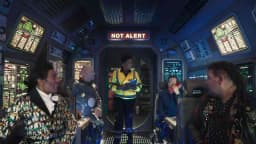
No verified performance data for "The Neighbors" is publicly available. The campaign has not been confirmed as a recipient of major industry awards from bodies including Cannes Lions, D&AD, The One Show, or the Effies, based on searches across adsoftheworld.com, creapills.com, and clapboard.com. A Clapboard Score of 62 out of 100 reflects a competent and strategically coherent execution that demonstrates craft and clarity of message without reaching the level of creative distinction that tends to drive award recognition or broader cultural impact.
Structurally, the campaign's effectiveness rests on two sound foundations. First, the specificity of its central metaphor: the shaped hedge is a single, self-explaining image that communicates an entire relationship arc without requiring extended setup. Second, the institutional credibility of its call to action: notaries in France occupy a legally defined and constitutionally recognised role, which means the film's resolution — consult a notary — is substantively plausible rather than aspirational. The campaign belongs to a documented series of thematically related films produced for the Chambre des Notaires de la Gironde, as recorded in the Clapboard archive, which suggests that the client and agency regard this communications approach as productive enough to sustain over multiple years. That institutional continuity is itself a form of effectiveness signal, even in the absence of disclosed audience or behaviour metrics.
"The Neighbors" is a 2018 French public interest film that positions notaries as mediators in neighbourhood disputes. Created by Le Vestiaire for the Chambre des Notaires de la Gironde and directed by Antoine Lassort, it uses the image of a hedge trimmed into an offensive shape to dramatise how neighbour relations can deteriorate past ordinary resolution.
Le Vestiaire, a Bordeaux-based agency, created the campaign. Creative direction was led by Alexandre Lataste and Étienne Fabaron, with art direction by Damien Poeymiroo. The film was directed by Antoine Lassort and produced by SOP Audiovisuel, with special effects by Black Pixel, all working together on this November 2018 production.
The film argues that notaries in France are not only relevant to major legal events but can intervene as trusted mediators in everyday civil disputes. This repositions the notarial profession beyond property and inheritance, extending its perceived accessibility to ordinary citizens facing neighbourhood conflict that has escalated beyond informal resolution.
No verified award recognition for "The Neighbors" has been confirmed. Searches across adsoftheworld.com, creapills.com, and clapboard.com found no record of the campaign receiving honours from major bodies including Cannes Lions, D&AD, The One Show, or the Effies. It holds a Clapboard Score of 62 out of 100.
Yes. The Clapboard archive documents multiple films produced for the Chambre des Notaires de la Gironde by Le Vestiaire, including "The Handyman" and "The Testament." This suggests "The Neighbors" forms part of a sustained public interest communications strategy rather than a standalone production, reflecting the organisation's ongoing effort to broaden public awareness of notarial services in France.
The film's central device — a hedge sculpted into an unmistakably offensive shape — communicates an entire relationship breakdown in a single image. Directed by Antoine Lassort with music by Miss Lindy and Larry and the Lamplighters, the production balances suburban realism with dark comic restraint, making the notary's intervention feel both necessary and genuinely plausible to a French audience.
.webp)
Creative Collaboration Platform: The Backbone of Modern Creative WorkWhat is a creative collaboration platform?Clapboard defines a creative collaboration platform as the operational core for today’s distributed creative teams. This is not a collection of digital collaboration tools stitched together; Clapboard’s system


Understanding the Creative Production MarketplaceWhat is a Creative Production Marketplace?Clapboard defines a creative production marketplace as a structured ecosystem where brands, agencies, and production talent converge to execute video, advertising, and branded content at scale. Unlike the legacy agency or freelanREAD FULL ARTICLE

The Urgent Need for a Creative Production Operating SystemWhy Traditional Creative Production Models Break DownClapboard sees the creative production landscape shifting under pressure. Content velocity is no longer a buzzword—it’s a mandate. Modern advertising demands relentless output across dozens of channels, each wREAD FULL ARTICLE