Greenpeace France's Survifood campaign used a fictional delivery platform and billboard advertising to confront food insecurity among young people ahead of the

Greenpeace France Uses a Fake Delivery App to Expose Youth Food Insecurity
Survifood is a fictional food delivery platform created by Greenpeace France and Jellyfish France to confront youth food insecurity in France, using fake branding, out-of-home advertising, and a social media campaign timed to the 2022 French presidential election.
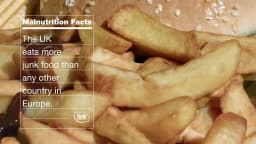
The campaign launched on 21 February 2022 and ran through 10 April 2022, according to Jellyfish France — a window that placed it squarely around the first round of the French presidential election in early April. Rather than deploy a conventional advocacy advertisement, Greenpeace France and Jellyfish France constructed an entire fictional brand identity around a delivery service with a deliberately provocative tagline: "hunger justifies the means." The conceit was precise. Survifood looked and communicated like a real commercial platform, down to its visual language and promotional tone, but its content exposed the exploitative logic behind cheap, nutritionally poor food options available to young people across France.
The campaign's objectives operated on three levels simultaneously. Greenpeace France used Survifood to appeal directly to presidential candidates, to provoke a reaction from the general public, and — most critically — to communicate to young people that food insecurity is not an inevitable condition. The campaign explicitly pointed toward structural solutions, including a social security system for food and the introduction of healthy, ethical meals at one euro in university dining halls. In France, where student food poverty became a visible social concern during and after the COVID-19 period, this framing connected an urgent lived reality to a concrete political ask at a moment when candidates were seeking voter attention. The Survifood campaign, as described by Jellyfish France, reflects the daily lives of a hungry, poorly-fed segment of the young population of France — holding a mirror to a society that had, to a large degree, normalised the conditions it depicted.
Greenpeace France anchored the Survifood campaign to the 2022 French presidential election as a deliberate strategic choice. Elections compress public and media attention onto a defined set of issues, and Greenpeace France used that compression to insert food insecurity — a structurally overlooked topic — into the national conversation at its most receptive moment.
The strategy recognised that food insecurity among young people in France is not a peripheral concern. Action Contre la Faim, the French anti-hunger organisation, has documented rising rates of food precarity among students and young working adults in France, a trend accelerated by economic pressure and housing costs. By building Survifood as a satirical commercial brand rather than a traditional public interest advertisement, Jellyfish France gave the campaign a cultural register that could travel across social platforms and attract influencer participation without requiring a paid media budget. The approach sidesteps the typical disadvantage facing non-profit campaigns — limited financial resources — by making the creative concept itself the distribution mechanism.
The competitive landscape in French public interest advertising is shaped by established organisations with significant reach and recurring campaigns. Les Restos du Cœur, one of France's most recognised food charity networks, runs annual campaigns with broad national exposure and deep public trust, representing a benchmark for audience engagement in this category. Action Contre la Faim similarly operates sustained awareness programmes rooted in long-term brand credibility. Survifood differentiated itself not through emotional appeal or institutional authority but through provocation and mimicry — adopting the aesthetic language of commercial start-ups to critique the system those start-ups represent. That inversion is the campaign's core strategic proposition, and it determined every subsequent creative and media decision made by Jellyfish France.
Survifood's creative execution rests on a single disciplined idea: build a fake commercial entity credible enough to be mistaken for real, then let the content destroy that credibility from within. Jellyfish France constructed the fictional delivery platform with the full visual and tonal apparatus of a venture-backed food-tech start-up — branding, promotional copy, and a platform identity — before using that scaffolding to articulate Greenpeace France's critique of cheap, exploitative food systems.
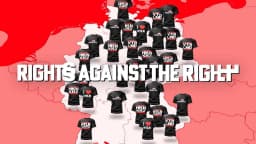
The campaign deployed three distinct media formats in sequence. Billboard advertising, donated by Le Figaro, placed Survifood imagery in physical public space across France, lending the fictional brand a material presence that reinforced its satirical believability. A social media and influence campaign followed in the week before the first round of the French presidential election, distributing content through nine influencers on Instagram and Twitter as well as Greenpeace's own social channels. This sequencing — physical credibility first, digital amplification second — gave the campaign structural coherence across platforms.
According to Jellyfish France, the creative team behind Survifood included Thomas Guilhot as Executive Creative Director, Alexandre Boutry as Creative Director, and Antoine Dezes Richard and Thibaut Samter as Art Directors. Sandrine Reinert served as Managing Director at Jellyfish France, with Carol-Ann Motard credited as Marketing Director on the submission. The campaign is classified as a Content, Digital, and Film production, comprising two media assets. Production credits beyond the core creative team are not fully publicly documented. The deliberate unpleasantness of the Survifood brand — its insistence on depicting cheap, nasty food without softening — was, per Jellyfish France's own case study framing, an intentional creative decision designed to make the audience uncomfortable rather than sympathetic, forcing an encounter with the reality it represents rather than a sanitised version of it.
Survifood generated 2 million total impressions from a reported media investment of zero euros, according to Jellyfish France. That figure encompasses three discrete channels: Le Figaro's donated poster inventory, which produced 300,000 impressions across France; nine influencers on Instagram and Twitter, who collectively generated 1 million impressions; and Greenpeace France's owned social media channels, which contributed a further 600,000 impressions, per Jellyfish France.
Beyond reach, the campaign produced 150,000 interactions and likes across its social content, according to Jellyfish France — a signal of active engagement rather than passive exposure. A related petition gathered 22,000 signatures, providing a direct measure of audience willingness to act beyond the scroll. These figures are notable precisely because they were achieved without conventional paid media placement, demonstrating that the creative concept itself functioned as a distribution strategy in the French social media environment.
Survifood was named a Finalist in the New York Festivals Health awards in the Health and Wellness category, specifically under Health Awareness and Advocacy, across both the Direct — Social Media and Social Media — Social Influencers subcategories, according to the New York Festivals Health official records. Jellyfish France's case study states the campaign has won seven awards in total, though the specific programmes, categories, and levels for all seven are not publicly identified on the accessible campaign page, per Jellyfish France's own documentation. No verified recognition from Cannes Lions, the Effie Awards, the One Show, D&AD, the Clio Awards, the Webby Awards, or WARC has been identified. Clapboard rates Survifood at 76 out of 100, reflecting strong strategic clarity and efficient media architecture against a background of limited independent verification of the full awards claim.
Survifood is a fictional food delivery platform created by Greenpeace France and Jellyfish France in 2022. The campaign used fake commercial branding to expose youth food insecurity in France, combining billboard advertising and a social media influence campaign timed to the 2022 French presidential election. Its tagline was "hunger justifies the means."
The Survifood campaign ran from 21 February to 10 April 2022 in France, according to Jellyfish France. The campaign's social media and influence phase launched in the week before the first round of the 2022 French presidential election, deliberately aligning its peak activity with maximum political attention.
Survifood generated 2 million total impressions from zero euros in paid media, according to Jellyfish France. This comprised 300,000 impressions from Le Figaro's donated billboard inventory, 1 million from nine Instagram and Twitter influencers, and 600,000 from Greenpeace France's own social media channels.
Jellyfish France created Survifood for Greenpeace France. The creative team included Thomas Guilhot as Executive Creative Director, Alexandre Boutry as Creative Director, and Antoine Dezes Richard and Thibaut Samter as Art Directors, with Sandrine Reinert serving as Managing Director, according to Jellyfish France.
Survifood was named a Finalist at the New York Festivals Health awards in the Health Awareness and Advocacy category, according to New York Festivals Health. Jellyfish France states the campaign won seven awards in total, though the specific programmes for all seven are not publicly identified on the accessible campaign page.
Survifood advocated for a social security system for food in France and the introduction of healthy, ethical meals priced at one euro in university dining halls. Greenpeace France used the campaign to pressure 2022 presidential candidates to address food insecurity as a structural policy issue rather than an individual circumstance.
.webp)
Creative Collaboration Platform: The Backbone of Modern Creative WorkWhat is a creative collaboration platform?Clapboard defines a creative collaboration platform as the operational core for today’s distributed creative teams. This is not a collection of digital collaboration tools stitched together; Clapboard’s system


Understanding the Creative Production MarketplaceWhat is a Creative Production Marketplace?Clapboard defines a creative production marketplace as a structured ecosystem where brands, agencies, and production talent converge to execute video, advertising, and branded content at scale. Unlike the legacy agency or freelanREAD FULL ARTICLE

The Urgent Need for a Creative Production Operating SystemWhy Traditional Creative Production Models Break DownClapboard sees the creative production landscape shifting under pressure. Content velocity is no longer a buzzword—it’s a mandate. Modern advertising demands relentless output across dozens of channels, each wREAD FULL ARTICLE