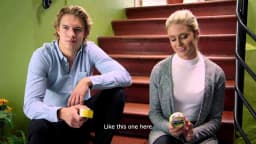
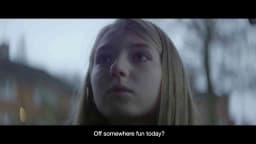
The World Vision campaign "What happens next?" employs a stark, documentary-style social experiment to confront viewers with the harsh reality faced by vulnerable children globally. By depicting an innocent girl at play under ambiguous circumstances, the campaign evokes a powerful emotional response, encouraging the audience to consider the darker possibilities lurking behind such everyday scenes. The brand proposition centers on the promise of awareness and urgency: it urges the public to recognize the urgency of child protection and implies that the future survival and welfare of millions of children—represented by the figure 17,000 daily cases—hinge on collective action. The campaign’s value lies in fostering a sense of individual and societal responsibility, making the abstract statistics relatable and immediate.
Strategically, the campaign leverages the insight that everyday innocence can mask pervasive danger, tapping into the audience’s protective instincts and moral concern. By framing the scenario as a moment open to interpretation—“An innocent girl playing or something darker?”—it prompts viewers to engage actively with the content, bridging the emotional gap between passive observation and proactive involvement. The choice of a documentary/social experiment genre enhances authenticity and credibility, targeting socially conscious viewers in the UK who are receptive to public interest messages. The minimalist presentation and call to action evoke personal accountability, positioning the audience as agents of change rather than distant observers. This creative angle effectively channels empathy into motivation, aligning with World Vision's broader mission of safeguarding children from harm through awareness and intervention.
FORMAT#2 SHOW THE PROBLEM — Highlights a relatable problem, then shows the product as the solution.
This campaign, titled 'What happens next?', presents a documentary/social experiment style scenario focusing on real-life stakes (an innocent girl and the implied risks she faces), directly inviting the viewer to consider the gravity and prevalence of the problem — 17,000 such incidents a day. The description suggests confrontation with a social issue and calls for action (“What happens next? This is up to you.”), making viewers witness the severity of the problem, prompting their direct involvement as the potential 'solution.' There’s no indication of storytelling with a plot resolution, product demonstration, symbolism, or celebrity presence. Instead, this is a vivid showcase of a critical issue—characteristic of the "Show the Problem" format, commonly used in public service and advocacy campaigns to catalyze action.
ADVERTISING FORMATS EXPLAINED: https://www.clapboard.com/blog/branding-and-advertising/brand-strategy/12-advertising-creative-formats
1. Oxfam – Positioned as a global movement fighting poverty through sustainable development, humanitarian aid, and advocacy, Oxfam emphasizes grassroots community empowerment and tackling inequality at systemic levels, blending relief efforts with campaigning for social justice.
2. Save the Children – Focused on improving children’s lives worldwide, Save the Children differentiates itself by prioritizing child rights and welfare, delivering emergency aid alongside long-term education and health programs, with strong storytelling to engage donors emotionally.
3. UNICEF UK – Leveraging its global UN affiliation, UNICEF UK positions itself as the authoritative protector of children’s rights and wellbeing, combining emergency response with development initiatives, and emphasizing evidence-based interventions and advocacy for policy change.
4. Amnesty International UK – Renowned for its human rights activism, Amnesty positions itself around courageous campaigning against abuses worldwide, using compelling storytelling and grassroots mobilization, focusing primarily on human rights violations rather than broader poverty or development issues.
5. CARE International UK – CARE stands out by linking humanitarian aid with long-term poverty reduction, particularly emphasizing women’s empowerment as a driver of change, integrating gender equality with disaster relief and development programs to break cycles of poverty.
Q: What is What happens next? about?
A: What happens next? is a professional film campaign launched in the United Kingdom in 2015 for World Vision by the agency Don't Panic. The campaign presents a stark, documentary-style scenario centered on an innocent girl at play, deliberately leaving the outcome ambiguous to highlight the real-world risks faced by vulnerable children. By referencing the staggering statistic of 17,000 such incidents occurring daily, the campaign confronts viewers with the urgency of child protection. Its creative approach is designed to provoke contemplation and motivate intervention, positioning the public as potential agents of change in the fight against child endangerment.
Q: What creative device does What happens next? use?
A: What happens next? employs the Show the Problem format, as classified by Clapboard's 12-format taxonomy. This creative approach highlights a relatable and urgent issue—in this case, the vulnerability of children—by presenting a scenario that leaves the resolution open-ended. Rather than offering a narrative closure or product demonstration, the campaign uses a documentary/social experiment style to immerse viewers in the gravity of the problem, prompting them to consider their own role in shaping the outcome. This technique is widely used in public service campaigns to catalyze awareness and action by making the stakes immediate and personal.
Q: What is the campaign proposition for What happens next??
A: The campaign proposition for What happens next? centers on raising public awareness and urgency around the protection of vulnerable children. World Vision positions the audience as key players in determining the fate of children at risk, using the ambiguous scenario of an innocent girl to evoke emotional engagement and moral responsibility. The campaign underscores that the future welfare of millions of children—represented by the figure of 17,000 daily cases—depends on collective action. By making the statistics tangible and immediate, the campaign aims to foster both individual and societal accountability, aligning with World Vision's broader mission to safeguard children through awareness and intervention.
Q: How does What happens next? rank in Clapboard's archive?
A: What happens next? holds a Clapboard Campaign Score of 69/100 in Clapboard's global ad archive. This score reflects the campaign's creative ambition, execution quality, and cultural relevance within the public service advertising sector.
Q: Who are the competitors in World Vision's category?
A: In the public service and humanitarian sector, World Vision competes with several prominent organizations. Oxfam is recognized for its global movement against poverty, focusing on sustainable development and systemic advocacy. Save the Children prioritizes child rights and welfare, engaging donors through emotionally driven storytelling and long-term support programs. UNICEF UK leverages its UN affiliation to position itself as the authoritative protector of children's rights, emphasizing evidence-based interventions and policy advocacy. Amnesty International UK is known for its bold human rights activism and grassroots mobilization, while CARE International UK integrates humanitarian aid with a focus on women's empowerment and poverty reduction.


 ARCHIVE
.webp)