 ARCHIVE
Fast Forward - giffgaff | Clapboard Ad Archive
Giffgaff’s Fast Forward campaign, created with Neverland and activated across digital, film, and...
Uber Eats Japan Bets on a Squirrel to Sell the Joy of Staying Home
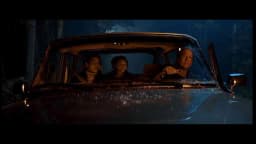
Uber Eats Japan's "Squirrel Edition" is a 2025 film campaign that uses the comic disruption of an outdoor meal by a squirrel to argue, with deadpan logic, that ordering food at home through Uber Eats is simply the better idea.
Published on Uber Eats Japan's official YouTube and Instagram accounts on March 11, 2025, at 2:00 p.m. JST, and broadcast on television across the Kanto, Chukyo, and Hokkaido regions from March 12, 2025, the spot positions itself as part of the brand's broader spring 2025 Japanese campaign built around the rhetorical question "Uber Eats で、いーんじゃない" — a colloquial Japanese construction that translates loosely as "Why not just go with Uber Eats?" The campaign exists in at least two broadcast formats: an official announcement describes a 30-second commercial, while a contemporaneous listing references a 15-second version, as reported by 4anet.com and News Nicovideo Jp, suggesting that both cut-downs were prepared for different placement contexts.
In the United States, Uber Eats has historically leaned on celebrity-driven absurdism to cut through a crowded delivery market. In Japan, the brand applies a similar tonal register — humour, mild surrealism, a self-aware punchline — but grounds it in a distinctly local scenario: a couple's attempt at a peaceful outdoor meal undone by wildlife. The campaign stars Japanese actors Akira Nakao and Riisa Naka, according to reporting by 4anet.com, and the contrast between the chaos of eating outside and the implied calm of ordering delivery at home forms the campaign's central argument. The Clapboard Score for this campaign is 65 out of 100.
Uber Eats Japan competes in a food delivery services market that has grown sharply since the early 2020s.
In Japan, Uber Eats operates alongside domestic rival Demae-can — backed by Line and SoftBank — as well as the international competitor foodpanda, which has operated across Asian markets with varying degrees of penetration. The competitive pressure in the Japanese delivery services sector has pushed platforms toward sharper brand differentiation, and Uber Eats Japan's 2025 stated priorities reflect that pressure directly. According to reporting by visie.io and uber.com, the brand identified expansion of grocery and daily necessities delivery alongside geographic expansion into suburban areas as key growth levers for 2025, signalling a strategic shift from purely urban restaurant delivery toward a broader household utility proposition.
Globally, the online food delivery market is a category of considerable scale. Business Research Insights projects a market value of USD 540.6 billion by 2035, at a compound annual growth rate of 9.3% for the period 2025 to 2035, according to Business Research Insights. Mordor Intelligence separately estimates the market at USD 257.74 billion growing at 10.47% compound annually between 2026 and 2031, with restaurant-to-consumer delivery representing approximately 68.75% of total volume in 2025, according to Mordor Intelligence. Ken Research reports 32.1 billion completed orders globally in 2025, according to Ken Research. The "Squirrel Edition" campaign does not address grocery or suburban expansion directly, but it reflects a related strategic insight: that the primary obstacle to deeper delivery adoption in Japan is not awareness but occasion — specifically, the cultural and seasonal pull of eating outdoors during spring, a moment when the proposition of home delivery requires active reframing rather than passive reminder.
The "Squirrel Edition" film deploys a single, contained comic scenario to carry its entire argument.
A couple — played by veteran Japanese actor Akira Nakao and actor Riisa Naka, as confirmed by 4anet.com — attempts to enjoy an outdoor meal. A squirrel intervenes. The disruption is the joke, and the joke is the brief. Rather than presenting delivery as an exciting or aspirational product, the campaign presents it as the obvious alternative to a situation that has already gone wrong. The logic is deliberately anti-climactic: the squirrel does not need to be elaborate, because the point is that nature itself is sufficient evidence for staying indoors and ordering in.
A notable production detail elevates the campaign's credibility within its own comic register. According to reporting by 4anet.com, actor Akira Nakao confirmed in public comments that an actual squirrel was used on set, rather than a digital or animatronic substitute. That choice — live animal, real set, practical disruption — reinforces the campaign's tonal commitment to unadorned, observational humour. The production does not oversell its own cleverness. Production credits beyond cast have not been publicly documented for the "Squirrel Edition" campaign.
The film's creative lineage connects it to a broader Uber Eats global tendency toward absurdist comedy with a structural punchline. The 2022 US campaign "Uber Don't Eats," developed by Special Group Los Angeles, exploited the literal ambiguity of the brand name through a cast that included Jennifer Coolidge, Nicholas Braun, Trevor Noah, and Gwyneth Paltrow, according to The Drum and The One Club, which described it as an "announcement campaign" built around a "logic bomb" created by the brand name itself. The "Squirrel Edition" operates at a smaller register but shares the same structural instinct: identify an unlikely premise, commit to it with a straight face, and let the brand's role emerge as the rational resolution to an irrational situation.
No verified performance data for the "Why not try Uber Eats | Squirrel Edition!" campaign is publicly available.
No view counts, engagement rates, sales lift figures, or brand recall metrics have been disclosed by Uber Eats Japan or attributed to a named third-party measurement source as of the time of this analysis. What can be assessed is the campaign's structural effectiveness relative to the objectives it appears designed to serve.
The spot launches during spring 2025, a season in Japan when outdoor dining — picnics, hanami gatherings beneath cherry blossoms — represents a culturally specific reason for consumers to deprioritise delivery. The campaign's creative strategy directly addresses that seasonal friction by dramatising the failure mode of the outdoor alternative. In that sense, the timing is precise rather than coincidental. Broadcast across the Kanto, Chukyo, and Hokkaido regions from March 12, 2025, as reported by 4anet.com and news.nicovideo.jp, the campaign reaches three geographically and climatically distinct markets simultaneously, suggesting a media plan calibrated to reach urban and semi-urban audiences during the early spring consideration window. The use of two established Japanese actors — one of significant generational recognition in Akira Nakao, one with strong contemporary visibility in Riisa Naka — broadens the spot's demographic reach without requiring a celebrity endorsement framework in the conventional sense. The Clapboard Score of 65 out of 100 reflects a campaign that executes its comic premise with discipline and contextual intelligence, while leaving limited room to assess the originality of the underlying idea against the brand's own established global playbook.
The Squirrel Edition is a 2025 film campaign for Uber Eats Japan. Published on March 11, 2025, it depicts a couple's outdoor meal disrupted by a squirrel, using that comic scenario to present home delivery as the rational and more comfortable alternative, according to 4anet.com and news.nicovideo.jp.
Japanese actors Akira Nakao and Riisa Naka star in the Squirrel Edition campaign. Nakao is a veteran actor with broad generational recognition in Japan, while Naka brings strong contemporary visibility. Both were confirmed as cast members by 4anet.com in coverage of the campaign's March 2025 launch.
A real squirrel was used on set during production. Actor Akira Nakao confirmed this detail in public comments following the campaign's release, as reported by 4anet.com. The decision to use a live animal reinforces the film's tonal commitment to observational, unadorned humour rather than digital artifice.
Television broadcasting of the Squirrel Edition began March 12, 2025, across the Kanto, Chukyo, and Hokkaido regions, according to 4anet.com and news.nicovideo.jp. The film was simultaneously published on Uber Eats Japan's official YouTube and Instagram accounts on March 11, 2025, at 2:00 p.m. JST.
The Uber Eats Squirrel Edition receives a Clapboard Score of 65 out of 100. This reflects a campaign that executes its comic outdoor-meal premise with contextual discipline and well-chosen casting, while offering limited evidence of creative distance from Uber Eats' established global approach to absurdist delivery advertising.
The Squirrel Edition aligns with Uber Eats Japan's 2025 focus on deepening domestic delivery adoption. According to visie.io and uber.com, the brand's 2025 priorities include expanding grocery delivery and geographic reach into suburban areas, with the spring campaign addressing seasonal friction by reframing outdoor eating as an avoidable inconvenience.
.webp)
Creative Collaboration Platform: The Backbone of Modern Creative WorkWhat is a creative collaboration platform?Clapboard defines a creative collaboration platform as the operational core for today’s distributed creative teams. This is not a collection of digital collaboration tools stitched together; Clapboard’s system


Understanding the Creative Production MarketplaceWhat is a Creative Production Marketplace?Clapboard defines a creative production marketplace as a structured ecosystem where brands, agencies, and production talent converge to execute video, advertising, and branded content at scale. Unlike the legacy agency or freelanREAD FULL ARTICLE

The Urgent Need for a Creative Production Operating SystemWhy Traditional Creative Production Models Break DownClapboard sees the creative production landscape shifting under pressure. Content velocity is no longer a buzzword—it’s a mandate. Modern advertising demands relentless output across dozens of channels, each wREAD FULL ARTICLE