🎬 What we talk about when we talk about Clapboard

Learn More

Period Romance - Uber Eats | Clapboard Ad Archive

Period Romance - Uber Eats | Clapboard Ad Archive
0:00 / 0:00

1

#FormulaTweet

142
142 Likes
393
393 Total Views
Share
Share Post
2

The super strong meter maid

148
148 Likes
388
388 Total Views
Share
Share Post
3

Eco-friendly rides

64
64 Likes
944
944 Total Views
Share
Share Post
4

Black Ink

130
130 Likes
500
500 Total Views
Share
Share Post
5

The new Tiguan Allspace with optional third row

60
60 Likes
420
420 Total Views
Share
Share Post
DISCLAIMER:
71

Period Romance - Uber Eats | Clapboard Ad Archive

Description

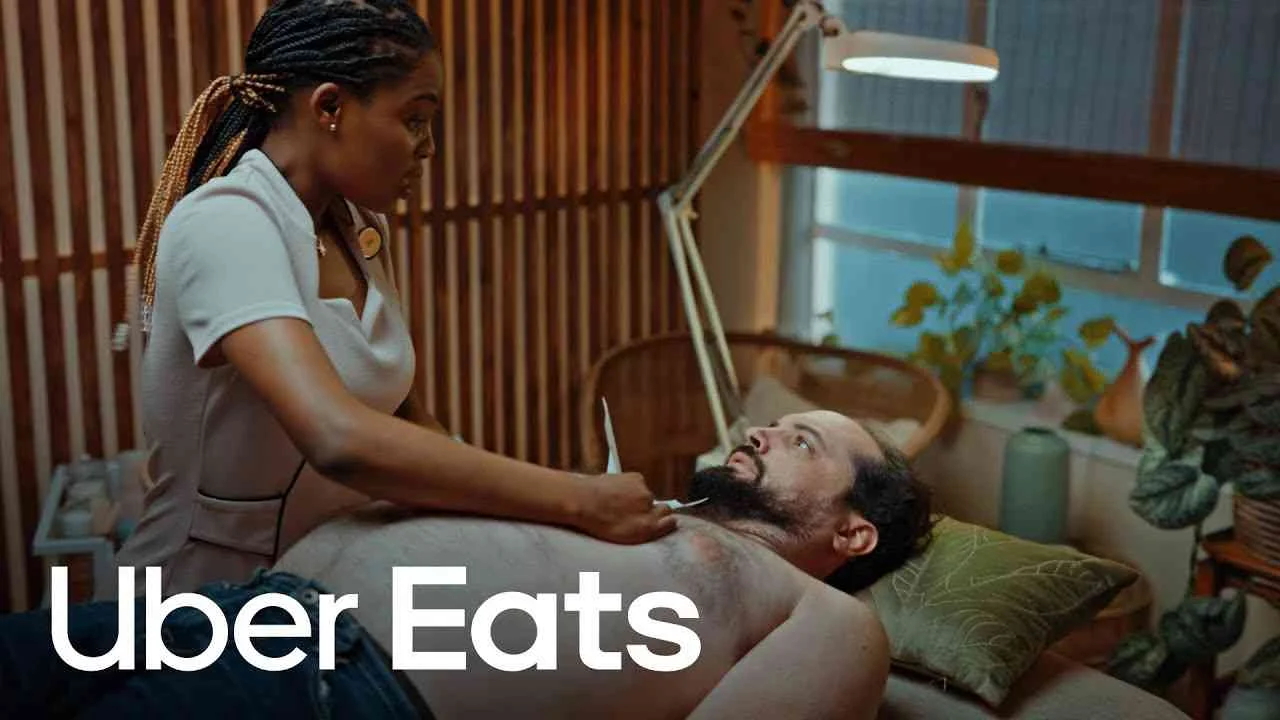
Uber Eats’ Period Romance campaign, released in the United States in 2023, redraws the conventions of food and convenience delivery advertising by uniting the core proposition of real-time access with the irresistible stylings of a heritage film genre. Retooling the visual and narrative codes of the classic period romance, the film medium spotlights the celebrated tropes—costume drama, yearning glances, and the tempest of everyday longing—yet subverts them with a modern twist: swift, app-based fulfillment of everyday needs, whether restaurant favorites or essential items from local stores. The creative engine behind this work, identified by Clapboard’s taxonomy as FORMAT#12—Parody or Borrowed Format, does not simply employ period décor as a surface gag; it leverages the full emotional range and formal stylings of the genre to land Uber Eats’ core message: the platform brings almost almost anything, at the speed of now, to the moments when comfort is craved most. Strategic positioning here carries significant weight, foregrounding not just the breadth of Uber Eats’ offering in the Food & Drink and Delivery Services space, but also the way technology, local partnerships, and on-demand logistics are deeply woven into daily habits for a digitally native audience. Distance from explicit problem–solution narratives or social proof in favor of purposeful genre parody distinguishes this execution from industry peers like DoorDash and Grubhub, who traditionally cast reliability and restaurant networks as center stage but seldom attempt such overt cultural play. The film’s market approach—distributed across prominent owned and paid digital platforms—targets a consumer cohort that expects immediacy, seamless integration, and emotional relevance, while the narrative itself plays to the insight that delivery is no longer merely transactional but intertwined with care, companionship, and the rhythms of real life. Uber Eats’ campaign nimbly reinforces brand warmth and relevance, contextualizing the app as enabler of comfort in not-so-grand everyday dramas, and operates at the intersection of utility and empathy to drive repeated brand engagement. Clapboard rates this 71/100. For an evolving delivery category where functional parity is the baseline, Period Romance signals that emotional intelligence and creative risk in format selection are fast becoming the new competitive advantage.

Credits
Client
Uber Eats
Campaign Proposition

Uber Eats’ “Period Romance” campaign leverages a narrative approach to reinforce its core brand proposition: the platform offers unparalleled convenience and immediacy in delivery, enabling customers to “get almost anything” quickly and reliably. The campaign emphasizes the seamless integration of technology, local restaurant partnerships, and expansive delivery networks, highlighting Uber Eats’ ability to fulfill varied and sometimes spontaneous consumer needs in real time. By focusing on a relatable, everyday scenario, the brand underscores its role as a facilitator of comfort and care through timely food and essentials delivery. Strategically, the campaign taps into the insight that consumers increasingly seek immediate solutions that accommodate their lifestyle demands, particularly during moments of discomfort or urgency. The “Period Romance” concept humanizes the delivery service by connecting it to intimate, personal experiences, thereby fostering emotional resonance with the audience. This creative angle positions Uber Eats not merely as a transactional platform but as an empathetic companion catering to real-life moments. Additionally, the campaign’s distribution through digital channels like YouTube and social media supports targeting a tech-savvy, convenience-oriented demographic that values speed and variety in food delivery. Collectively, the campaign’s narrative and market approach aim to distinguish Uber Eats as an essential, versatile service adept at responding to everyday needs with immediacy and care.

Creative Device

FORMAT#12 PARODY OR BORROWED FORMAT — Uses or parodies pop culture formats like films, shows, or genres. This campaign, titled "Period Romance," signals through both its title and the mention of "Film medium" and "Narrative" genre that it adopts the style of a classic "period romance"—a well-known film and TV genre. The creative device borrows the full aesthetic and storytelling conventions of historical romantic dramas, but it’s re-contextualized to promote Uber Eats’ core benefit: delivering “almost almost anything.” Rather than focusing on literal demonstrations, explicit problem–solution setups, or testimonial devices, the ad playfully uses genre parody to contrast modern convenience with old-fashioned scenarios. This use of a borrowed format to create humor, memorability, and direct product linkage makes FORMAT#12 the clear fit. ADVERTISING FORMATS EXPLAINED: https://www.clapboard.com/blog/branding-and-advertising/brand-strategy/12-advertising-creative-formats

Competitive Planks
DoorDash – Market Positioning DoorDash positions itself as the most reliable and convenient food delivery platform with a vast restaurant network, emphasizing fast delivery times and ease of use. Their subscription service, DashPass, offers value through reduced fees, targeting frequent users. They also invest heavily in logistics and partnerships, including grocery and convenience store deliveries, to become the all-in-one local delivery solution.
Grubhub – Market Positioning Grubhub focuses on connecting customers with a wide array of local restaurants, emphasizing user experience with personalized recommendations and an easy ordering process. It promotes strong relationships with independent eateries and integrates loyalty programs. Grubhub differentiates by its extensive market presence in urban areas and its strategic focus on enhancing restaurant partnerships for exclusive offerings.
Postmates – Market Positioning Postmates, now a part of Uber, differentiates itself through rapid and flexible delivery beyond just food, including groceries and alcohol. It positions as a hyper-local, on-demand delivery pioneer catering to consumers who want immediate access to a broad range of everyday essentials, highlighting convenience at any hour and diverse product availability.
Instacart – Market Positioning Instacart is primarily positioned as a leading grocery delivery service, partnering with major supermarket chains to provide same-day delivery and pickup. Their focus lies on catering to household needs with a seamless app experience, personalized shopping, and a strong emphasis on fresh and quality products, targeting customers who prefer comprehensive grocery shopping over restaurant delivery.
Amazon Delivery (Amazon Fresh & Prime Now) – Market Positioning Amazon leverages its massive logistics network to offer fast, reliable delivery of groceries, meals, and convenience items through Amazon Fresh and Prime Now. It focuses on integrating deliveries with the broader Amazon ecosystem, promising convenience, competitive pricing, and exclusive benefits for Prime members, emphasizing speed, selection, and trustworthiness in urban markets.

Period Romance - Uber Eats | Clapboard Ad Archive FAQs

What is Period Romance - Get Almost Almost Anything | Uber Eats about?
Period Romance - Get Almost Almost Anything | Uber Eats is a 2023 campaign created for Uber Eats in the United States, positioned within the food and drink delivery services market. The campaign centers on a narrative film that reimagines the classic period romance genre to highlight Uber Eats’ promise of delivering almost anything, anytime. Through a playful and relatable storyline, the campaign demonstrates how Uber Eats seamlessly integrates into everyday life, making it possible for customers to order from their favorite restaurants and convenience stores with speed and reliability. The work was distributed digitally, engaging audiences across YouTube and social platforms.
What creative device does Period Romance - Get Almost Almost Anything | Uber Eats use?
Period Romance - Get Almost Almost Anything | Uber Eats employs FORMAT#12 PARODY OR BORROWED FORMAT, as classified by Clapboard’s 12-format taxonomy. This creative device borrows the visual and narrative conventions of the period romance film genre, re-contextualizing them to promote Uber Eats’ core benefit of delivering almost anything with modern convenience. By playfully contrasting historical scenarios with present-day delivery solutions, the campaign uses genre parody to create humor, memorability, and a direct link to the product’s value proposition, distinguishing itself from more literal or testimonial-driven advertising approaches.
What is the campaign proposition for Period Romance - Get Almost Almost Anything | Uber Eats?
The campaign proposition for Period Romance - Get Almost Almost Anything | Uber Eats is rooted in Uber Eats’ strategic positioning as a platform that offers unmatched convenience and immediacy in delivery. Targeting a tech-savvy, convenience-oriented audience, the campaign emphasizes the brand’s ability to fulfill a wide range of consumer needs in real time, especially during moments of urgency or discomfort. By humanizing the service through a relatable narrative, Uber Eats positions itself as more than a transactional platform, instead presenting itself as an empathetic companion that brings comfort, care, and essential items directly to customers’ doors.
How does Period Romance - Get Almost Almost Anything | Uber Eats rank in Clapboard's archive?
In Clapboard’s global ad archive, Period Romance - Get Almost Almost Anything | Uber Eats holds a Clapboard Campaign Score of 71/100. This score reflects the campaign’s creative ambition, the quality of its execution, and its cultural relevance within the delivery services sector.
Who are the competitors in Uber Eats's category?
In the food and drink delivery services category, Uber Eats faces competition from several major players. DoorDash is positioned as a highly reliable and convenient platform with a vast restaurant network and a focus on fast delivery and value-driven subscriptions. Grubhub emphasizes user experience and strong partnerships with local restaurants, particularly in urban markets. Postmates, now part of Uber, differentiates itself with rapid, flexible delivery of a broad range of essentials beyond food. Instacart leads in grocery delivery, prioritizing fresh products and seamless app experiences, while Amazon Delivery leverages its logistics network to offer fast, integrated delivery of groceries and convenience items through Amazon Fresh and Prime Now.