truTV and Mullen launched 'Meter Maid, Auditor, Masseuse' in October 2014, a three-asset film campaign repositioning the US cable network as a comedy

truTV Reframes Everyday Jobs as Comedy Gold in 2014 Film Campaign
truTV's 'Meter Maid, Auditor, Masseuse' is a three-asset film campaign created by Mullen and published in the United States in October 2014, designed to reinforce the network's strategic shift away from crime and courtroom programming toward comedy-led entertainment by using the comic potential of universally familiar, often-dreaded professions, according to Thecomicscomic.
The campaign arrives at a defining moment in truTV's brand history, according to Ama. As reported by The Comics Comic, truTV announced a significant brand repositioning in April 2014, explicitly targeting what the network called 'funseekers' and committing its 2014–15 season to comedy docusoaps, semi-scripted series, sketch comedy, and reality competitions. That repositioning had roots going back further still: Court TV rebranded as truTV in January 2008, per Wikipedia, beginning a years-long effort to broaden its identity beyond legal and crime-centred programming, according to Deadline. 'Meter Maid, Auditor, Masseuse' is, in that context, not merely a promotional campaign but a creative argument for the network's evolved character, according to En Wikipedia.
In the United States, the campaign deployed three distinct film assets, each anchored to a recognisable figure — the meter maid, the auditor, the masseuse — whose professional roles carry built-in comic tension. Each is associated with interactions people endure rather than enjoy, making them natural vessels for the irreverent, human-centred comedy tone truTV was actively cultivating. The campaign's objective was clear: to give American audiences a felt sense of what the repositioned truTV looked and sounded like, using short-form film as the primary medium. Produced with original music by Beacon Street Studios and editorial by PS260, the campaign was overseen by Executive Director of Integrated Production Liza Near. The Clapboard Score for this campaign is 57 out of 100, reflecting solid creative intent and production coherence against limited measurable impact data.
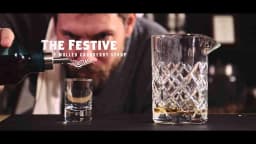
truTV entered 2014 with a formally declared strategic identity. The network's April 2014 repositioning, as reported by The Comics Comic, was a deliberate pivot to comedy-first programming aimed at a younger, entertainment-hungry American audience segment. The 'Meter Maid, Auditor, Masseuse' campaign by Mullen serves this strategy directly, using film to dramatise the network's new personality rather than simply announce it.
The United States cable television market in 2014 was intensely competitive for comedy-oriented positioning. Comedy Central, owned by Viacom, held a firmly established identity as the destination for comedy programming among American cable viewers, while FX was simultaneously investing in prestige comedy formats. For truTV to carve meaningful space in that environment, differentiation had to be felt rather than stated. Mullen's creative approach — grounding comedy in the friction of everyday American life rather than in celebrity or spectacle — reflects an understanding of that competitive pressure.
The broader television advertising market provided a favourable context. Global television advertising was estimated at approximately 195 billion dollars in 2014, representing year-over-year growth, according to McKinsey. In the United States specifically, television remained the dominant medium for brand-building at scale, making a film-led campaign a strategically sound choice for a cable network seeking to reshape audience perception. Per the American Marketing Association, repositioning an established brand requires sustained creative investment that connects the new brand promise to tangible, emotionally resonant experiences — precisely the brief that 'Meter Maid, Auditor, Masseuse' appears designed to answer.
Production company Traktor directed the three film assets at the centre of this campaign. Traktor is a collective known for a heightened, character-driven visual style that suits comedy requiring precise timing and credible human detail — qualities essential when the comic premise rests entirely on the specific social discomfort each profession generates.
The creative leadership at Mullen brought significant structural seniority to the project. Mark Wenneker served as Chief Creative Officer, with Tim Vaccarino and Dave Weist as Executive Creative Directors and Dylan Bernd as Group Creative Director. That layered creative oversight suggests a campaign treated as strategically important rather than a routine promotional execution. Liza Near, as Executive Director of Integrated Production, oversaw the integration of the production pipeline across all three assets.
Original music was composed by Beacon Street Studios, a detail that matters in comedy film work where rhythm and tone are as consequential as the visual gag. Editorial was handled by PS260, with sound design and mixing by Mike Secher — a production roster that reflects professional craft investment across every post-production discipline. The decision to build bespoke music rather than license existing tracks signals an intent to give each of the three films a consistent, ownable audio identity that reinforces the truTV brand tone rather than borrowing emotional shorthand from pre-existing songs. In the United States entertainment marketing landscape of 2014, that level of sonic intentionality was more common among major broadcast networks than cable brands still consolidating a new identity, making it a meaningful creative choice for truTV at this stage of its repositioning.
No verified performance data for 'Meter Maid, Auditor, Masseuse' is publicly available. No published sales lift, viewership growth, or audience data has been attributed to this campaign, and no production or media budget figures have been disclosed. No verified award wins are recorded at Cannes Lions, the Effies, The One Show, D&AD, the Clios, the Webby Awards, or WARC Awards.
Structural analysis, however, offers meaningful inference. The campaign's three-asset architecture is a deliberate choice: rather than consolidating a single execution, Mullen built a suite of films that could be deployed across different placements and audience touchpoints within the United States cable and digital media environment. Each asset — the meter maid, the auditor, the masseuse — functions as an independent comedy premise while contributing to a cumulative brand argument. That redundancy is a structural strength, reducing dependence on any single execution landing perfectly with any single viewer segment.
The campaign also arrives with precise strategic timing. Launching in October 2014, it aligns with the front end of the US television season, a period when networks actively compete for viewer attention and habit formation. Placing a character-driven, comedy-coded film campaign at that moment reflects sound media logic. As reported by Next TV, truTV's repositioning was an ongoing commitment across the 2014–15 season, suggesting 'Meter Maid, Auditor, Masseuse' was one element in a broader creative programme rather than a standalone effort — a context that makes isolated measurement less relevant than its role in sustaining the network's new brand narrative across the American entertainment market.
truTV's 'Meter Maid, Auditor, Masseuse' is a three-asset film campaign created by Mullen and published in the United States in October 2014. It uses three socially uncomfortable professions as comic premises to reinforce truTV's repositioning as a comedy-first cable entertainment network aimed at American 'funseeker' audiences.
Mullen created the campaign. Mark Wenneker served as Chief Creative Officer, Tim Vaccarino and Dave Weist as Executive Creative Directors, and Dylan Bernd as Group Creative Director. Production was directed by Traktor, with editorial by PS260 and original music by Beacon Street Studios, all coordinated under Executive Director of Integrated Production Liza Near.
truTV began repositioning away from crime and courtroom content after rebranding from Court TV in January 2008, per Wikipedia. By April 2014, as reported by The Comics Comic, the network formally committed its programming to comedy formats targeting 'funseekers,' making the Mullen campaign a creative expression of that declared strategic identity in the United States entertainment market.
Production company Traktor directed the three film assets in the campaign. Traktor is known for character-driven, comedically precise visual work. Sound design and mixing were handled by Mike Secher, and Beacon Street Studios composed original music, giving each film a consistent audio identity suited to truTV's repositioned comedy brand.
No verified award wins for the campaign are recorded at Cannes Lions, the Effies, The One Show, D&AD, the Clios, the Webby Awards, or WARC Awards. The campaign received a Clapboard Score of 57 out of 100, reflecting solid creative structure and production quality relative to available documentation of measurable impact.
The campaign is one part of truTV's sustained 2014–15 repositioning effort. Mullen also created truTV's 'Now More Refined' campaign in July 2014, per available records. Together, these efforts established a consistent comedy-coded brand voice for truTV across the United States market during a critical season of network identity transition.
.webp)
Creative Collaboration Platform: The Backbone of Modern Creative WorkWhat is a creative collaboration platform?Clapboard defines a creative collaboration platform as the operational core for today’s distributed creative teams. This is not a collection of digital collaboration tools stitched together; Clapboard’s system


Understanding the Creative Production MarketplaceWhat is a Creative Production Marketplace?Clapboard defines a creative production marketplace as a structured ecosystem where brands, agencies, and production talent converge to execute video, advertising, and branded content at scale. Unlike the legacy agency or freelanREAD FULL ARTICLE

The Urgent Need for a Creative Production Operating SystemWhy Traditional Creative Production Models Break DownClapboard sees the creative production landscape shifting under pressure. Content velocity is no longer a buzzword—it’s a mandate. Modern advertising demands relentless output across dozens of channels, each wREAD FULL ARTICLE