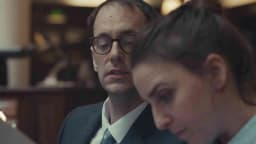
Scottish Government's The Poo Song, created by Leith in April 2013, drove 50,000 additional screening kit returns in the United Kingdom through humorous

Scottish Government and Leith Turn Bowel Cancer Screening Into a Sing-Along
The Poo Song is a government public health campaign created by The Leith Agency for the Scottish Government, published in the United Kingdom in April 2013, using a humorous musical film to encourage adults aged 50 to 74 to complete and return their bowel cancer screening kits.
Bowel cancer screening occupies a uniquely difficult communications space. The act it requires — collecting a stool sample and returning it by post — is private, mildly unpleasant, and culturally taboo in ways that cause eligible adults to quietly shelve their kits rather than use them. The Scottish Government and Leith identified this avoidance behaviour as the central barrier to participation, and designed The Poo Song to dismantle it not through clinical instruction but through shared laughter. The campaign launched in April 2013 across the United Kingdom, targeting the precise demographic — adults in the 50 to 74 age bracket — who receive screening invitations through the NHS bowel screening programme.
The campaign's mechanics were deliberately simple. A single film asset carried the entire creative weight, presenting the subject of faecal testing as something a family could laugh about together rather than avoid. By naming the thing directly — in song — the campaign neutralised the embarrassment that public health messaging on this topic typically amplifies rather than reduces. As reported by psa.marketingsociety.com, the campaign produced measurable behavioural outcomes at scale, with approximately 50,000 additional people returning a screening test in 2014. The Poo Song earned a Clapboard Score of 79 out of 100, reflecting its strong creative rationale, verified impact, and its value as a case study in government-funded public interest filmmaking.
 ARCHIVE
The Leith Agency identified cultural embarrassment as the primary barrier preventing eligible adults in the United Kingdom from completing their bowel cancer screening kits. Standard health communication on this topic relied on clinical language and consequence-framing, approaches that tended to reinforce the very discomfort that caused kit abandonment in the first place. Leith's strategic proposition inverted that logic entirely.
Phil Evans, creative group head at The Leith Agency, articulated the underlying philosophy in a January 2024 article published by PMcLive: "People are bombarded with thousands of messages every day. So the first requirement of any campaign is to get noticed." While Evans' quote appeared in the context of a broader discussion about humour in healthcare marketing and does not explicitly reference The Poo Song by name, it reflects a creative doctrine consistent with the campaign's approach. Lisa, a contributor quoted in the same PMcLive article whose surname was not provided, stated that humour in the Scottish Government's breast and bowel cancer campaigns "has played an important role in helping to dispel the taboo status of cancer," per PMcLive.
The competitive landscape for public health attention in the United Kingdom is crowded. Campaigns from charities such as Cancer Research UK and Bowel Cancer UK compete directly for the same adult demographic's attention, typically using emotionally weighty, consequence-led creative work. The Leith Agency's decision to use comedy positioned the Scottish Government's bowel cancer screening message as distinct — more shareable, more repeatable, and more likely to generate conversation within the family units that could reinforce an individual's decision to act. According to Gov Uk, UK government publicity and marketing expenditure rose from £12.3 million in 2011 to 2012 to £13.6 million in 2012 to 2013, an increase of approximately 10.6 percent, indicating a broader environment in which government communicators were expected to demonstrate efficiency and impact per pound spent.
The Poo Song takes the form of a composed musical number, performed and filmed as a short-form piece that functions equally as advertising and as shareable entertainment. The creative approach is rooted in a single structural insight: that an original song about a taboo subject is inherently more memorable than a message about that subject delivered in conventional terms.
The film uses domestic familiarity — recognisable family dynamics, everyday settings, and the universal awkwardness of bodily function — to create a tone that is warm rather than crude. This tonal precision is what separates the campaign from shock-value public health advertising. The humour is inclusive, aimed at making the viewer feel understood rather than challenged, which is a markedly harder register to sustain in a single short film. As noted in coverage by itsnicethat.com, the campaign demonstrated that bold creative choices in a government public interest context can produce work that audiences engage with voluntarily rather than simply endure.
Production credits for The Poo Song as published on clapboard.com identify Leith — operating under its full name The Leith Agency — as the creating agency. Phil Evans held the role of creative group head at The Leith Agency, per PMcLive. Full directorial and production house credits for the 2013 film are not publicly documented in consolidated form across available sources. The campaign comprised a single film media asset, a constraint that concentrated all creative and production resource into one piece of work and made the film's standalone quality essential to the campaign's viability. The musical form also made the campaign resistant to skipping behaviour in a way that conventional public health films rarely achieve, lending the work structural advantages that extended its reach beyond paid placement.
The Poo Song generated verified, large-scale behavioural change in the United Kingdom's bowel cancer screening programme. According to psa.marketingsociety.com, bowel screening kit returns increased by approximately 4,300 per month in 2014, representing a 10 percent increase compared to the pre-campaign baseline. Across 2014, approximately 50,000 additional people returned a screening test, according to the same source. Requests for replacement screening kits increased by 80.6 percent, per Psa Marketingsociety, indicating that a significant portion of the population actively re-engaged with the programme rather than simply completing kits they already held.
The campaign's YouTube reach, as reported across the clapboard.com archive, ranged between 96,000 views cited in the original case study and 137,000 views recorded in the archive listing, figures that are notable for a government public interest film with no celebrity involvement and a single media asset. The Poo Song received an IPA Best of Health Award, as documented by available awards records, though the specific category, level, and year of that award are not specified in publicly available sources.
No further independently audited performance data beyond the above is publicly available for this campaign. The structural case for its effectiveness, however, is clear: a single film, targeting a defined age group across the United Kingdom, produced a measurable and sustained uplift in a health behaviour that had previously proven resistant to conventional public health communication. For government campaigns operating under expenditure scrutiny, that outcome — behaviour change at scale from a single creative asset — represents a strong efficiency argument as well as a creative one.
The Poo Song is a public health film created by The Leith Agency for the Scottish Government, published in the United Kingdom in April 2013. It used a humorous original song to encourage adults aged 50 to 74 to complete and return their NHS bowel cancer screening kits, producing approximately 50,000 additional returns in 2014, according to psa.marketingsociety.com.
The Leith Agency created The Poo Song for the Scottish Government. The agency, based in Scotland, served as the Scottish Government's creative partner on public health campaigns. Phil Evans held the role of creative group head at The Leith Agency, per PMcLive, and the agency is documented as a Scottish Government creative partner from at least October 2011, according to clapboard.com.
The Poo Song drove a 10 percent monthly increase in bowel screening kit returns in the United Kingdom in 2014, according to psa.marketingsociety.com. Approximately 50,000 additional people returned a screening test that year. Replacement kit requests rose by 80.6 percent, per the same source, indicating sustained re-engagement with the NHS bowel screening programme beyond initial campaign exposure.
The Poo Song won an IPA Best of Health Award, as documented in available awards records. The specific category, level, and year of the award are not confirmed in publicly available sources. The campaign also earned a Clapboard Score of 79 out of 100, reflecting its verified creative impact and measurable public health outcomes across the United Kingdom.
Leith identified cultural embarrassment as the primary barrier preventing eligible adults in the United Kingdom from completing their bowel cancer screening kits. As reported by PMcLive, Lisa, a contributor on Scottish Government health campaigns, stated that humour has played an important role in dispelling the taboo status of cancer, a strategic rationale that underpinned the musical film format chosen for The Poo Song.
The Poo Song targeted adults aged 50 to 74 in the United Kingdom, the demographic group eligible to receive NHS bowel cancer screening kits by post. This age group represented the population most at risk and most likely to have received a screening invitation, making behavioural follow-through — rather than awareness — the campaign's primary communications objective, as documented by psa.marketingsociety.com.
.webp)
Creative Collaboration Platform: The Backbone of Modern Creative WorkWhat is a creative collaboration platform?Clapboard defines a creative collaboration platform as the operational core for today’s distributed creative teams. This is not a collection of digital collaboration tools stitched together; Clapboard’s system


Understanding the Creative Production MarketplaceWhat is a Creative Production Marketplace?Clapboard defines a creative production marketplace as a structured ecosystem where brands, agencies, and production talent converge to execute video, advertising, and branded content at scale. Unlike the legacy agency or freelanREAD FULL ARTICLE

The Urgent Need for a Creative Production Operating SystemWhy Traditional Creative Production Models Break DownClapboard sees the creative production landscape shifting under pressure. Content velocity is no longer a buzzword—it’s a mandate. Modern advertising demands relentless output across dozens of channels, each wREAD FULL ARTICLE