 ARCHIVE
How SAAQ and Lg2 Made Bus Shelters Confront Pedestrian Risk
Bone VS Steel is a 2018 outdoor public interest campaign created for SAAQ — the Société de l'assurance automobile du Québec — by Québec-based agency Lg2, using a live-animation bus-shelter installation to confront pedestrians directly with the physical disparity between the human body and a moving vehicle.
SAAQ launched the campaign on October 1, 2018, running it through October 28 to coincide with Québec's annual Mois du piéton — Pedestrian Month — as documented by Saaq Gouv Qc Ca. The timing was deliberate. Pedestrian Month exists to concentrate public attention on road-safety behaviour at a moment when shorter daylight hours and changing weather conditions elevate risk for people travelling on foot across Canada. Rather than deploying conventional crash imagery or statistics, Bone VS Steel delivered its message at the precise location where pedestrian vulnerability is lived daily: the bus shelter.
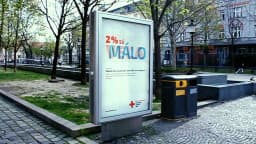
The campaign's central mechanic was a digitally animated installation placed inside a bus shelter, presenting the campaign's unambiguous proposition — "Bone VS Steel. You don't stand a chance" — to commuters waiting alongside the road. The format collapsed the distance between the safety message and the moment of risk, addressing pedestrians not as an audience watching a broadcast but as individuals physically occupying the environment the campaign describes. Per campaignsoftheworld.com, the installation was produced by BLVD, Montréal, and directed by Olivier Labonté Lemoyne. Creative direction and art direction were led by Luc Du Sault at Lg2, with creatives Nicolas Boisvert and Camille Gagnon, and account directors Alexandra Laverdière and Camille Savard overseeing delivery.
In Canada, where pedestrian safety campaigns compete for attention alongside a saturated public communications landscape, Bone VS Steel represents a considered escalation in Lg2's approach for SAAQ — one that prizes environmental specificity over media reach and visceral clarity over informational volume. The campaign contains a single media asset, concentrating its entire strategic weight into one precisely engineered encounter.
SAAQ's road-safety communications have operated within a longer strategic framework built on behaviour-specific, experiential interventions rather than generalised danger messaging. Bone VS Steel did not emerge in isolation. As documented by Strategyonline Ca, Lg2's 2014 campaign for SAAQ, known as Wake-Up Call, placed bathroom-mirror ghost projections in 39 colleges across Québec, reaching nearly ten thousand young people and generating approximately 220,000 YouTube views alongside 125 press mentions representing substantial earned media value. That campaign established a creative lineage in which the installation environment — not the broadcast medium — carries the persuasive load.
The strategic rationale for Bone VS Steel rests on the same insight extended to a new context. Pedestrians at bus shelters are stationary, attentive, and already physically proximate to the risk being communicated. The shelter itself becomes the argument. Where competitors in the Canadian public service advertising space — including Transport Canada's national road-safety communications and the Canada Safety Council's broader injury-prevention campaigns — have historically relied on television spots and digital media to reach mass audiences, SAAQ and Lg2 elected to narrow the channel and deepen the impact, concentrating message delivery on the people most immediately exposed to pedestrian collision risk.
The Government of Canada reported spending C$39.17 million on advertising in fiscal 2017–18, including production and media costs, according to Publications Gc Ca. Against that backdrop, SAAQ's reported annual advertising budget of approximately C$5 million, as documented by saaq.gouv.qc.ca, positions the organisation as a precision spender rather than a volume buyer — a constraint that reinforces the strategic logic of a single, high-impact installation over a broad-reach media plan. In Canada, where public sector advertising budgets face ongoing scrutiny, the outdoor experiential format allows SAAQ to generate press coverage and word-of-mouth that extends the effective reach of a modest production well beyond its physical footprint.
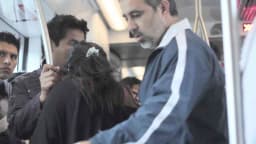
Bone VS Steel operates through a single, unflinching visual premise. The installation animates the contrast between organic bone and manufactured steel within the physical frame of a bus shelter, using the commuter's own presence at roadside to make the comparison immediate rather than abstract. Per adsoftheworld.com, the campaign format is described as a bus-shelter installation using live animation — a production approach that requires the digital content to respond to or coexist with the real environment rather than merely occupy a screen surface.
Director Olivier Labonté Lemoyne led the production for BLVD, Montréal, bringing a documentary sensibility to material that might otherwise resolve into graphic shock. The decision to animate rather than photograph or film crash scenarios reflects a deliberate creative choice: animation allows the structural facts — the density, hardness, and mass differential between bone and steel — to be rendered with clinical precision, stripped of the narrative distancing that documentary crash footage can produce. Creative director and art director Luc Du Sault, working with creatives Nicolas Boisvert and Camille Gagnon at Lg2, shaped a visual language that is blunt without being gratuitous, as documented by campaignsoftheworld.com and bestadsontv.com.
The outdoor medium disciplines the creative in ways broadcast does not. A bus-shelter installation must communicate in seconds, without audio dependency, in variable weather and light conditions, to an audience that has not chosen to receive it. Bone VS Steel meets those constraints by reducing its message to three words and a subordinate clause — a ratio of language to image that places the visual argument at the centre and uses copy only to confirm what the eye has already registered. In the context of Canadian outdoor advertising, where transit shelter formats are typically used for product promotion, the campaign's subject matter and execution carry an inherent disruption premium that no media buy could replicate.
ARCHIVEBone VS Steel earned a Gold at the Advertising and Design Club of Canada in the Advertising Transit, Single category, as documented by adsoftheworld.com. The award year is not confirmed in available sources, though the ADCC article is dated February 19, 2026. No verified wins for Bone VS Steel at Cannes Lions, the Effies, the One Show, D&AD, the Clios, the Webby Awards, or WARC Awards are publicly available.
No verified performance data measuring pedestrian behaviour change, campaign recall, or earned media reach for Bone VS Steel is publicly available. Analysed on structural grounds, the campaign's effectiveness argument is strongest at the level of attention economics. A single installation operating at the site of risk, framed by an unambiguous message, directed at an audience with zero capacity for avoidance — the person waiting for the bus cannot change the channel — creates conditions for genuine message absorption that broadcast placements rarely achieve. The precedent set by Lg2's earlier SAAQ work is instructive: Wake-Up Call, with a similarly constrained physical footprint, generated approximately 220,000 YouTube views and 125 press mentions according to strategyonline.ca, suggesting that SAAQ's experiential outdoor executions consistently outperform their media spend in earned reach.
Bone VS Steel holds a Clapboard Score of 67 out of 100, reflecting strong creative clarity and strategic specificity offset by the limited documented evidence of measurable outcome. The campaign's value to the broader SAAQ road-safety platform lies in its contribution to a cumulative body of work that, over multiple years, has established Lg2 and SAAQ as the most consistently inventive pairing in Canadian public service advertising.
Bone VS Steel is a 2018 outdoor public interest campaign for SAAQ by Lg2. It used a live-animation bus-shelter installation in Québec during October's Pedestrian Month to communicate the physical disparity between the human body and a vehicle. The campaign's tagline was "Bone VS Steel. You don't stand a chance."
Lg2, based in Québec, created Bone VS Steel for SAAQ. Creative direction and art direction were led by Luc Du Sault, with creatives Nicolas Boisvert and Camille Gagnon. Production was handled by BLVD, Montréal, with Olivier Labonté Lemoyne directing, as documented by campaignsoftheworld.com and bestadsontv.com.
Bone VS Steel ran from October 1 to October 28, 2018, in Canada. It was timed to align with Québec's Mois du piéton — Pedestrian Month — a period designated to focus public attention on pedestrian road safety, as documented by saaq.gouv.qc.ca.
Bone VS Steel won a Gold at the Advertising and Design Club of Canada in the Advertising Transit, Single category, as documented by adsoftheworld.com. No verified wins at Cannes Lions, the Effies, the One Show, D&AD, the Clios, or WARC Awards are publicly available for this campaign.
Bone VS Steel continues a strategy Lg2 established with SAAQ through campaigns like Wake-Up Call in 2014, which used environment-specific installations rather than broadcast media. According to strategyonline.ca, that earlier campaign reached nearly ten thousand young people and generated approximately 220,000 YouTube views, setting a precedent for experiential public service work in Canada.
Bone VS Steel holds a Clapboard Score of 67 out of 100. The score reflects strong creative clarity and strategic precision in its use of the outdoor format, offset by the absence of publicly verified performance data measuring pedestrian behaviour change or documented campaign reach following the October 2018 activation in Canada.
.webp)
Creative Collaboration Platform: The Backbone of Modern Creative WorkWhat is a creative collaboration platform?Clapboard defines a creative collaboration platform as the operational core for today’s distributed creative teams. This is not a collection of digital collaboration tools stitched together; Clapboard’s system


Understanding the Creative Production MarketplaceWhat is a Creative Production Marketplace?Clapboard defines a creative production marketplace as a structured ecosystem where brands, agencies, and production talent converge to execute video, advertising, and branded content at scale. Unlike the legacy agency or freelanREAD FULL ARTICLE

The Urgent Need for a Creative Production Operating SystemWhy Traditional Creative Production Models Break DownClapboard sees the creative production landscape shifting under pressure. Content velocity is no longer a buzzword—it’s a mandate. Modern advertising demands relentless output across dozens of channels, each wREAD FULL ARTICLE