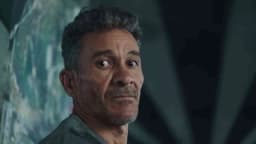
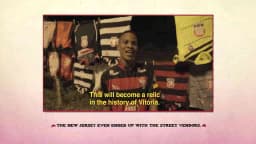
League Against Cancer and Y&R Lima launched 'The Real Life case video' in Peru in December 2013, using OOH outdoor media to confront audiences with unscripted

League Against Cancer Turns a Hidden Camera Into a Public Health Lesson
"The Real Life case video" is a December 2013 outdoor public-interest campaign created by Y&R Lima for the League Against Cancer in Peru, using a single media asset to confront everyday audiences with unscripted human reality as a vehicle for cancer awareness.
Liga Contra el Cáncer, the Peru-based nonprofit known in English as the League Against Cancer, has sustained one of the most consistent public-interest advertising programmes in Latin America, according to adruby.com. The organisation worked with Y&R across multiple years and formats, building a body of work that combines emotional directness with creative experimentation. "The Real Life case video" represents the documentary strand of that collaboration — a departure from print metaphor or scripted film into the register of observed, lived experience.
The campaign belongs to the OOH outdoor medium, a channel that places messaging inside the physical environment of its audience rather than interrupting a media stream. In Peru, where urban public space carries enormous social and communicative weight, this choice carries strategic logic: the campaign does not ask an audience to seek out a message but instead engineers an encounter with it. That encounter, per the Clapboard Ad Archive, was distilled into a single documented asset, making the work a concentrated rather than distributed intervention.
Y&R Lima assembled a substantial creative team for the production, with Flavio Pantigoso and Tin Sánchez among the credited personnel, alongside Jorge Soto, Charlie Valderrama, André Toledo, Jorge Rocca, Manuel Ahumada, Gabriela Misari, and Elena Monteverde. Production was handled by Patria, with Tito Köster directing. The campaign sits within a broader 2013 output for the same client that included "Sports Fields, Streets, Parks," "Jaws," "Can," and "A Doctor's Visit to Remember," per adruby.com, establishing it as one instalment in a year of sustained creative activity around cancer awareness in the Peruvian market.
Liga Contra el Cáncer has operated as Peru's primary nonprofit vehicle for cancer prevention communication across more than a decade of documented advertising output. The organisation's strategic relationship with Y&R Lima spans at least 2010 through 2013, according to records indexed at Alicia Concytec Gob Pe, encompassing print, film, and outdoor formats across multiple executions each year. This continuity signals an institutional understanding that cancer awareness is not a single-message problem but a sustained cultural project requiring varied creative registers.
By December 2013, Y&R Lima had already produced several distinct League Against Cancer campaigns within that calendar year alone. Adruby.com documents "Sports Fields, Streets, Parks" in January, "Jaws" in March, "Can" in September, and "A Doctor's Visit to Remember" in October as preceding work for the same client. Each approached prevention communication from a different creative angle. "The Real Life case video" enters this sequence as a social experiment — a format that derives its persuasive power not from art direction or copywriting but from the unmediated reaction of real people placed in designed circumstances.
This approach reflects a broader shift visible in public-interest advertising during the early 2010s, when the documentary and hidden-camera format gained traction as a response to audience scepticism toward produced emotion. Where competitors in the regional public-health communication space relied on graphic consequence imagery or celebrity endorsement, the social experiment format locates authority in the authenticity of the observed subject. For a cause as personally resonant as cancer, the unscripted human moment carries an evidentiary weight that no scripted narrative can replicate. Y&R Lima's decision to work within this format for the League Against Cancer in Peru reflects a precise reading of what the Peruvian public-interest landscape required at that moment.
Tito Köster directed "The Real Life case video" for production company Patria, working from a creative brief that demanded the visible absence of conventional advertising craft. The social experiment and documentary format imposes a specific discipline on a director: the visible apparatus of production must recede entirely so that the human subject at the centre of the frame reads as genuinely unaware rather than performed. Köster's task was to engineer conditions in which authentic response could occur and then capture that response with sufficient technical control to make it communicable as a public-interest message.
The creative team at Y&R Lima, led by Flavio Pantigoso and Tin Sánchez among others, structured the concept around the gap between how people behave when observed and how they behave when they believe themselves to be unobserved. Cancer prevention communication typically struggles with a fundamental psychological barrier: the condition being addressed feels distant, statistical, and impersonal to a healthy audience. The social experiment format closes that distance by making the audience witnesses to someone else's unguarded confrontation with reality, collapsing the abstraction of disease risk into a specific, named, visible human moment.
The decision to execute this as an outdoor campaign rather than a digital or broadcast film is a meaningful craft choice. OOH placement anchors the message in the physical geography of Peru's urban environment, creating an encounter that cannot be skipped, muted, or scrolled past. The single documented media asset, per the Clapboard Ad Archive, suggests a confidence in concentration — the campaign does not distribute its argument across multiple executions but stakes everything on the singular impact of one precisely constructed experience. Production credits are documented by Clapboard and include the full Y&R Lima creative roster alongside Patria as the production partner.
No verified performance data for "The Real Life case video" is publicly available. No figures for reach, recall, audience response, or behavioural change have been documented in trade press sources including Campaign, Ad Age, or Adlatina. The Clapboard Ad Archive assigns the campaign a score of 60 out of 100, a rating that reflects competent execution within an established format rather than exceptional creative breakthrough.
The One Show archive at The One Club does not list "The Real Life case video" as an award recipient. The One Show did verify a 2013 Advertising Merit Award for Y&R Lima and the Peruvian League Against Cancer in that period, according to oneclub.org, but the awarded work was titled "Day and Night" rather than "The Real Life case video." No evidence of festival recognition specific to this campaign has been located in publicly available sources.
Structurally, the campaign carries several qualities that support effectiveness in the absence of measurable data. The social experiment format generates internal credibility by definition — its persuasive logic depends on the audience trusting that what they are witnessing is real, which places a high premium on production discipline and casting authenticity. The OOH placement in Peru removes the opt-out behaviour that limits digital and broadcast recall. The single-asset concentration focuses rather than diffuses impact. Against the backdrop of Y&R Lima's broader 2013 output for League Against Cancer, as catalogued by adruby.com and selfstorming.com, "The Real Life case video" reads as a deliberate tonal variation — a moment of observed human truth within a year of formally diverse cancer awareness communication.
"The Real Life case video" is a December 2013 outdoor public-interest campaign created by Y&R Lima for Peru's League Against Cancer. It uses a social experiment and documentary format, captured as a single OOH media asset, to confront audiences with unscripted human reality as a vehicle for cancer awareness communication in Peru.
Y&R Lima created the campaign, with Flavio Pantigoso and Tin Sánchez among the credited creatives alongside Jorge Soto, Charlie Valderrama, André Toledo, and others. Production company Patria handled production, with Tito Köster directing. The full creative and production roster is documented in the Clapboard Ad Archive.
"The Real Life case video" is not listed as an award recipient in The One Show archive at oneclub.org. Y&R Lima and the Peruvian League Against Cancer did receive a 2013 One Show Merit Award that year, according to oneclub.org, but that recognition was for a separate campaign titled "Day and Night."
Y&R Lima produced multiple League Against Cancer campaigns in 2013, according to adruby.com. These included "Sports Fields, Streets, Parks" in January, "Jaws" in March, "Can" in September, and "A Doctor's Visit to Remember" in October. "The Real Life case video" was published in December as the final documented campaign of that year.
The Clapboard Ad Archive assigns "The Real Life case video" a score of 60 out of 100. This rating reflects competent execution within the social experiment and documentary format rather than exceptional creative distinction, placing it as a solid contribution to Y&R Lima's sustained public-interest output for the League Against Cancer in Peru.
.webp)
Creative Collaboration Platform: The Backbone of Modern Creative WorkWhat is a creative collaboration platform?Clapboard defines a creative collaboration platform as the operational core for today’s distributed creative teams. This is not a collection of digital collaboration tools stitched together; Clapboard’s system


Understanding the Creative Production MarketplaceWhat is a Creative Production Marketplace?Clapboard defines a creative production marketplace as a structured ecosystem where brands, agencies, and production talent converge to execute video, advertising, and branded content at scale. Unlike the legacy agency or freelanREAD FULL ARTICLE

The Urgent Need for a Creative Production Operating SystemWhy Traditional Creative Production Models Break DownClapboard sees the creative production landscape shifting under pressure. Content velocity is no longer a buzzword—it’s a mandate. Modern advertising demands relentless output across dozens of channels, each wREAD FULL ARTICLE