Road Safety Commission's 'Airbag, Carbon Fibre Exo Suit, Training Wheels' uses symbolic overprotection to expose motorcyclist vulnerability in Australia,

Road Safety Commission Puts Motorcyclist Vulnerability on Screen
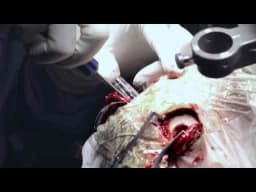
Road Safety Commission's 'Airbag, Carbon Fibre Exo Suit, Training Wheels' is a 2019 Australian public interest film campaign created by The Brand Agency that uses exaggerated protective devices to expose the inherent vulnerability of motorcyclists on public roads, delivering its message across four distinct media assets.
Published in March 2019, the campaign arrives from the Road Safety Commission of Western Australia and positions itself squarely within the public service tradition of confronting audiences with an uncomfortable truth rather than a comfortable instruction. The creative premise is deliberately absurd: motorcyclists are shown equipped with an airbag, a carbon fibre exo suit, and training wheels — gear so elaborate and so impractical that its very existence underscores how little protection riders actually carry. The exaggeration is the argument. By imagining what full safety would require, the campaign communicates what ordinary riding lacks.
In Australia, motorcycle safety remains a persistent road safety priority. The campaign's three principal executions — each named after one of the symbolic devices — are accompanied by a behind-the-scenes asset, collectively forming a suite of film content developed by The Brand Agency in Perth. The work was produced by King Street and directed by Paul Komadina, bringing a considered visual approach to what is, at its core, a public interest challenge: persuading riders to internalise risk rather than dismiss it. Clapboard Score for this campaign sits at 63 out of 100, reflecting competent craft and a clear strategic premise that stops short of the kind of sustained creative ambition that earns industry recognition.
The Road Safety Commission targets an audience that is statistically and psychologically resistant to conventional safety messaging. Motorcyclists in Australia represent a disproportionate share of serious road trauma relative to their numbers on the road, a pattern well established in the research literature of state road authorities. The Transport Accident Commission in Victoria has documented this disparity extensively across its own campaigns and published safety data, making the challenge familiar across Australian jurisdictions even if the Western Australian market has its own specific conditions.
Strategy Director Hannah Muirhead and the team at The Brand Agency chose a reframing device rather than a shock tactic. Where campaigns from the Transport Accident Commission — one of the most prominent road safety advertisers in Australia and a direct creative benchmark in this category — have historically leaned on graphic consequence, the 'Airbag, Carbon Fibre Exo Suit, Training Wheels' campaign reaches for irony and invention. The symbolic safety equipment does not show what goes wrong; it shows what would be required for nothing to go wrong. That is a meaningfully different rhetorical position, one that invites the viewer to complete the logic rather than flinching from imagery.
In the broader competitive landscape of public service road safety advertising, international programmes such as the United Kingdom's THINK! campaign series — which according to Assets Publishing Service Gov Uk has operated across multiple years and audience segments targeting driver behaviour — demonstrate that film remains the dominant medium for shifting attitudes. The Brand Agency's decision to commit the Road Safety Commission's message to film in 2019 aligns with that global consensus, while the specifically Australian context of the campaign grounds it in a market where state-level road safety bodies carry both legislative authority and creative responsibility.
Director Paul Komadina brings a precise visual logic to each of the three principal executions. The carbon fibre exo suit, the airbag, and the training wheels are not treated as jokes; they are rendered with a straight-faced production quality that makes the absurdity land as insight. King Street, the production company, supports that tone with craft choices that keep the films grounded rather than comic — the goal being that viewers register the gap between the imagined equipment and real-world riding conditions as sobering rather than amusing.
Executive Creative Director Marcus Tesoriero oversaw the creative direction of the campaign, with Copywriter Lachlan Banton and Art Director Niall Stephen responsible for the executional specifics of each film. The three-way division of the campaign into separate named devices — airbag, carbon fibre exo suit, training wheels — gives each execution a discrete identity while reinforcing the cumulative argument that no single piece of equipment closes the vulnerability gap for riders. Together they function as a structured series rather than interchangeable variants, which is a deliberate creative architecture that rewards sequential viewing.
The behind-the-scenes asset included among the campaign's four media assets extends the campaign's reach into a secondary audience of industry observers and creative community members who engage with production process content. In the public interest category in Australia, where budgets are constrained relative to commercial advertising and every asset must work efficiently, the inclusion of a making-of component reflects practical resource thinking as much as creative ambition. The overall production aesthetic — clean, controlled, and purposefully clinical — reinforces the campaign's central proposition that motorcycle safety is a serious engineering problem, not merely a matter of rider attitude.
 ARCHIVE
No verified performance data for the 'Airbag, Carbon Fibre Exo Suit, Training Wheels' campaign is publicly available. No confirmed entries or awards for this campaign appear in the records of Cannes Lions, the Effies, or The One Show, as noted across adsoftheworld.com and clapboard.com. The absence of award recognition does not negate the campaign's functional purpose, but it does limit independent verification of its creative standing within the industry.
Structurally, the campaign demonstrates genuine strategic coherence. The symbolic device — absurdly elaborate safety equipment standing in for the protection riders do not have — is a single-minded idea that translates cleanly to film. The three-execution format gives the Road Safety Commission sustained presence rather than a single moment of visibility, and the production quality from King Street and director Paul Komadina ensures the films carry authority appropriate to a government safety body.
Where the campaign falls short of the highest creative benchmark is in the degree of cultural penetration its premise achieves. The idea is clear and the craft is competent, but the exaggeration stops at illustration rather than pushing into the kind of visceral or unexpected territory that earns lasting recall. In Australia's road safety advertising landscape, where the Transport Accident Commission has historically set a high creative bar, campaigns need more than conceptual clarity to break through sustained audience fatigue. The Clapboard Score of 63 out of 100 reflects exactly this position: a campaign that executes its brief with professionalism and genuine strategic thought, without quite reaching the creative intensity that drives measurable behaviour change or industry recognition.
'Airbag, Carbon Fibre Exo Suit, Training Wheels' is a 2019 Australian public interest film campaign created by The Brand Agency for the Road Safety Commission of Western Australia. It uses exaggerated protective devices — an airbag, a carbon fibre exo suit, and training wheels — to highlight how vulnerable motorcyclists are on public roads. The campaign comprises four media assets.
Paul Komadina directed the campaign for Road Safety Commission. He worked with production company King Street to deliver three principal film executions plus a behind-the-scenes asset. Executive Creative Director Marcus Tesoriero led the creative team at The Brand Agency, supported by Copywriter Lachlan Banton and Art Director Niall Stephen.
The Brand Agency, based in Perth, Australia, created the campaign. The agency's Strategy Director Hannah Muirhead contributed to the strategic foundation, and the team chose symbolic overprotection as its central device rather than graphic depictions of road trauma, distinguishing the work from more confrontational approaches in Australian road safety advertising.
No verified awards for this campaign appear in the records of Cannes Lions, the Effies, or The One Show, according to adsoftheworld.com and clapboard.com. The campaign received a Clapboard Score of 63 out of 100, reflecting competent craft and a clear strategic premise without reaching the creative intensity associated with top industry recognition.
The campaign takes a notably different tone from the Transport Accident Commission's longstanding Australian road safety work, which has historically used graphic consequence to drive impact. The Brand Agency's 2019 approach for Road Safety Commission relies instead on irony and symbolic invention, asking viewers to complete the logical argument about motorcyclist vulnerability rather than confronting them with its outcome.
.webp)
Creative Collaboration Platform: The Backbone of Modern Creative WorkWhat is a creative collaboration platform?Clapboard defines a creative collaboration platform as the operational core for today’s distributed creative teams. This is not a collection of digital collaboration tools stitched together; Clapboard’s system


Understanding the Creative Production MarketplaceWhat is a Creative Production Marketplace?Clapboard defines a creative production marketplace as a structured ecosystem where brands, agencies, and production talent converge to execute video, advertising, and branded content at scale. Unlike the legacy agency or freelanREAD FULL ARTICLE

The Urgent Need for a Creative Production Operating SystemWhy Traditional Creative Production Models Break DownClapboard sees the creative production landscape shifting under pressure. Content velocity is no longer a buzzword—it’s a mandate. Modern advertising demands relentless output across dozens of channels, each wREAD FULL ARTICLE