Parkinson's NSW and JWT Sydney launched 'The Lucky Ones' in April 2016, a documentary-style film using real awake brain surgery footage to reframe Parkinson's

How Parkinson's NSW and JWT Made Surgery the Heart of Awareness
'The Lucky Ones' is a 2016 public service film created by J. Walter Thompson Sydney for Parkinson's NSW, documenting a real patient undergoing awake deep-brain-stimulation surgery to reframe Parkinson's disease as a condition that modern medicine can meaningfully treat, thereby shifting public perception and driving charitable support across Australia.
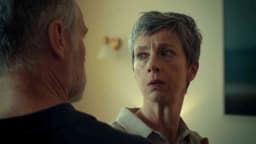
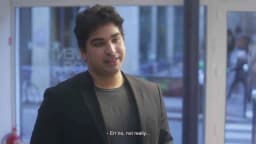
Parkinson's NSW launched the campaign on 11 April 2016, timed to coincide with World Parkinson's Day. The film follows Andy O'Shea, an actual Parkinson's patient, through the full arc of his awake deep-brain-stimulation procedure, including the drilling of his skull, conducted in December 2015. Rather than depicting Parkinson's disease solely through the lens of loss and limitation, the campaign positioned access to advanced surgical treatment as something worth celebrating — and worth funding. The strategic reframe gave the brand a rare emotional and rational foothold simultaneously, turning a harrowing medical procedure into an argument for hope.
In Australia, where Parkinson's disease affects a substantial and growing number of people, the campaign arrived as a direct-response film designed to generate awareness, online engagement, and financial support for Parkinson's NSW. The creative work sits within the public interest category and was produced as a single film asset, submitted to the global advertising archive by JWT Sydney approximately nine years ago, according to Clapboard. The Clapboard Score for 'The Lucky Ones' is 58 out of 100.
 ARCHIVE
JWT Sydney built 'The Lucky Ones' on a counterintuitive strategic premise. Rather than emphasising the progressive and degenerative nature of Parkinson's disease — the approach most health campaigns default to — the agency identified an underused truth: that some patients are, in a meaningful sense, fortunate to live in an era of effective surgical intervention. That reframe became the entire architecture of the campaign.
Executive Creative Director Simon Langley stated, as reported by AdNews, that three Australians under 40 are diagnosed with Parkinson's disease every week. That figure grounds the campaign's urgency in domestic reality and distinguishes Parkinson's NSW from broader international Parkinson's advocacy bodies, making the Australian context central rather than incidental. In a public interest landscape where organisations including Dementia Australia and the Heart Foundation compete for charitable attention and media coverage, Parkinson's NSW needed a device that was both viscerally arresting and strategically differentiated. Real surgical footage, cleared with patient consent and institutional approval, provided exactly that.
The social experiment dimension of the campaign — presenting audiences with footage they would not ordinarily encounter in a charitable appeal — reflects a broader shift in Australian public interest advertising toward documentary realism. Producing the film with We Are Content and directing it through David Jagoda gave the work an authenticity that scripted or reconstructed health campaigns cannot replicate. According to bestadsontv.com, the campaign generated significant industry recognition, confirming that the strategic logic resonated beyond the Australian market and into the global creative community.
David Jagoda directed 'The Lucky Ones' for Parkinson's NSW. Jagoda is himself a person living with Parkinson's disease who underwent the same deep-brain-stimulation procedure approximately six years before taking on the project, as documented by Smith and Western and confirmed in production records cited by bestadsontv.com. That biographical detail is not incidental to the film's creative power — it is structurally inseparable from it. A director who has lived the procedure being filmed brings a quality of observational intimacy that cannot be manufactured.
Production company We Are Content executed the shoot in a live surgical environment in December 2015, capturing Andy O'Shea's awake deep-brain-stimulation surgery with the precision and restraint that the subject demanded. The film avoids sensationalism; the surgery is presented with clinical honesty rather than horror-film staging. Editor Kel Gronow shaped the footage into a narrative that moves between the operating theatre and O'Shea's broader life, reinforcing the campaign's central argument that this procedure is a passage toward capability rather than a confrontation with fragility.
Post-production and grade were handled by Method Studios, with sound and music delivered by Smith and Western, whose work on the audio landscape gives the film a measured, human quality consistent with the documentary register. Senior agency producer Paul Friedmann oversaw production logistics, with Rob Schrieber as producer. The creative team at JWT Sydney — including creatives Laurie Geddes, John Lam, and Matt Thorne, working under Executive Creative Director Simon Langley — developed the script that earned a Cannes Lions 2016 shortlist in Film Craft for Script in the Health and Wellness category, as reported by Clapboard.
'The Lucky Ones' achieved more than 7 million Facebook views and 66,900 clicks on the Facebook post, according to Clapboard. Those figures, generated by a single film asset for a state-based Australian health charity with no paid media budget beyond organic and pro-bono distribution, represent an exceptional organic reach outcome for the public interest category.
The campaign received a Cannes Lions 2016 Bronze Lion in Film Craft for Direction in the Health and Wellness category, as reported by Clapboard. It also received two Cannes Lions 2016 shortlist recognitions — one in Film Craft for Achievement in Production and one in Film Craft for Script in the Health and Wellness category — confirming that the jury assessed the work as exceptional across multiple craft disciplines. Additionally, the campaign received a Clio Awards 2016 Silver in Clio Health for Film Technique and Direction, as reported by Clapboard. These awards place 'The Lucky Ones' among the most decorated Australian public interest films of 2016.
Parkinson's NSW secured the creative services of J. Walter Thompson Sydney on a pro-bono basis, according to Parkinsonsnsw Org Au, which amplifies the significance of the production values achieved. AdNews described JWT's Parkinson's work as both powerful and successful. Structurally, the campaign succeeded because it resolved a longstanding tension in health advertising between emotional resonance and credible specificity — the surgery footage provided both simultaneously, anchoring an abstract charitable ask in a concrete, verifiable human outcome.
'The Lucky Ones' is a 2016 public service film created by J. Walter Thompson Sydney for Parkinson's NSW. It documents real patient Andy O'Shea undergoing awake deep-brain-stimulation surgery to reframe Parkinson's disease as a condition that modern medicine can treat, launching on World Parkinson's Day, 11 April 2016, in Australia.
David Jagoda directed 'The Lucky Ones' for Parkinson's NSW in 2016. Jagoda lives with Parkinson's disease and had undergone the same deep-brain-stimulation procedure approximately six years before directing the film, lending the documentary-style work a biographical authenticity that defined its creative authority, as documented by Smith and Western.
'The Lucky Ones' won a Cannes Lions 2016 Bronze Lion in Film Craft for Direction in the Health and Wellness category and a Clio Awards 2016 Silver in Clio Health for Film Technique and Direction, according to Clapboard. It also received two additional Cannes Lions 2016 shortlist recognitions for Production and Script.
'The Lucky Ones' achieved more than 7 million Facebook views and 66,900 clicks on the Facebook post, according to Clapboard. Those results were generated by a single film asset for an Australian state-based health charity, making the organic reach outcome particularly significant within the public interest advertising category.
JWT Sydney used real surgical footage to reframe Parkinson's disease as a condition that modern medicine can treat. As stated by Executive Creative Director Simon Langley and reported by AdNews, the strategy countered public perception of Parkinson's as solely progressive and degenerative, positioning access to deep-brain-stimulation surgery as a reason for hope and charitable support.
We Are Content produced 'The Lucky Ones' for Parkinson's NSW in 2016, with post-production and grade handled by Method Studios and sound by Smith and Western, according to Clapboard. J. Walter Thompson Sydney provided creative services on a pro-bono basis, as confirmed by parkinsonsnsw.org.au, with Rob Schrieber serving as producer.
.webp)
Creative Collaboration Platform: The Backbone of Modern Creative WorkWhat is a creative collaboration platform?Clapboard defines a creative collaboration platform as the operational core for today’s distributed creative teams. This is not a collection of digital collaboration tools stitched together; Clapboard’s system


Understanding the Creative Production MarketplaceWhat is a Creative Production Marketplace?Clapboard defines a creative production marketplace as a structured ecosystem where brands, agencies, and production talent converge to execute video, advertising, and branded content at scale. Unlike the legacy agency or freelanREAD FULL ARTICLE

The Urgent Need for a Creative Production Operating SystemWhy Traditional Creative Production Models Break DownClapboard sees the creative production landscape shifting under pressure. Content velocity is no longer a buzzword—it’s a mandate. Modern advertising demands relentless output across dozens of channels, each wREAD FULL ARTICLE