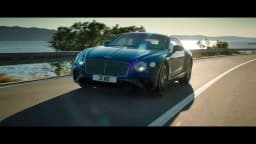
Renault's Fast Drive Slow Emotions, created by Publicis Lisboa in April 2016, uses racetrack sensory drama to position the Mégane as a car that amplifies human

Renault Fast Drive Slow Emotions Captures Speed and Feeling in Portugal
Renault's "Fast Drive Slow Emotions" is a 2016 Portuguese automotive film campaign, created by Publicis Lisboa, that positions the Renault Mégane through the sensory contrast between the physical intensity of a racetrack and the slow, intimate register of human feeling.
The campaign launched in Portugal in April 2016 and centres on a single film asset, using the racetrack environment not as a showcase for mechanical performance alone but as a stage for emotional revelation. Where most automotive advertising in the performance segment leads with engineering specifications or competitive lap times, this execution treats speed as a condition that strips away distraction and forces the driver into a state of heightened awareness. The Renault Mégane becomes the instrument through which that emotional clarity is reached. The campaign title itself encodes the creative tension: velocity and feeling are placed in deliberate opposition, inviting the audience to hold both at once.
The objective is clearly one of brand differentiation within the Portuguese automotive market, where Renault competes as one of the most established European volume brands. In Portugal, Renault has historically maintained a strong presence across both passenger car and light commercial vehicle segments, making a campaign that elevates the Mégane's emotional credentials a strategically coherent move in a market where brand affinity shapes purchase consideration alongside price and practicality. The film operates in the tradition of Publicis Lisboa's broader work for Renault Portugal, which has consistently sought to find human or dramatic angles within automotive contexts rather than defaulting to product-feature cataloguing. "Fast Drive Slow Emotions" received a Clapboard Score of 63 out of 100, reflecting a campaign that demonstrates creative intent and formal discipline while operating without the wide international distribution or verified performance data that would push the score higher.
Renault entered 2016 from a position of genuine commercial momentum. Groupe Renault sold 3.18 million vehicles globally in 2016, a rise of 13.3 percent from 2015, compared with growth of approximately 4.6 percent for the broader market, according to focus2move.com. Groupe Renault's global market share reached approximately 3.5 percent in that year, up 0.3 percentage points from 2015, also per focus2move.com. That performance gave the brand confidence to invest in campaigns that deepened emotional resonance rather than simply reinforcing volume messaging.
The strategic insight underpinning "Fast Drive Slow Emotions" addresses a tension familiar to automotive marketers working in the performance and near-performance hatchback segment. Competitors such as Volkswagen, with the Golf GTI, and Ford, with the Focus ST, had long contested the emotionally engaged driver in Portugal and across European markets with a combination of heritage storytelling and track-day credibility. Renault's answer with the Mégane is to reframe the very definition of what a performance drive delivers: not adrenaline or aggression as ends in themselves, but a clarified emotional state that the car uniquely enables.
In Portugal, where automotive culture balances a strong appreciation for practicality with genuine enthusiasm for European performance models, this positioning finds a receptive audience. The campaign's choice of a film medium is itself strategic. According to digitalagencynetwork.com, digital video had become the dominant format for automotive brand storytelling in Southern European markets by the mid-2010s, as audiences increasingly consumed long-form brand content through online channels rather than broadcast alone. Publicis Lisboa's decision to submit the film under both digital and traditional film categories at the 2016 CCP awards reflects an awareness that the work was designed to travel across both contexts simultaneously.
The creative execution of "Fast Drive Slow Emotions" rests on a single disciplined formal idea: the racetrack as an environment that slows internal experience even as external velocity increases. The film uses the sensory drama of speed and emotion on a racetrack as its central creative subject, and the production approach commits fully to that premise rather than hedging toward conventional automotive imagery.
Cinematography plays a structurally important role. Racetrack automotive films occupy a crowded visual territory, and the challenge for any creative team is to find a register that feels distinct from the slow-motion tyre-smoke aesthetic that has become generic across the category. The available evidence suggests this film pursues something more interior and observational, prioritising the driver's experience of time and sensation over the car's exterior spectacle. That is a considered craft decision that places it closer to documentary-inflected brand filmmaking than to traditional automotive advertising production.
Production credits for "Fast Drive Slow Emotions" are not publicly documented in available trade sources. The campaign was created by Publicis Lisboa for Renault Portugal, and the work sits within a lineage of Publicis Lisboa campaigns for Renault that includes the 2013 "Don't Dream and Drive" execution promoting Renault's Visio System safety technology, and the earlier "Don't Make Up and Drive" and "Red Is Dead" campaigns from 2012 and 2013, per adruby.com. That body of work demonstrates a consistent creative philosophy at Publicis Lisboa: finding a human behavioural truth and using it to recontextualise a Renault vehicle's function. "Fast Drive Slow Emotions" extends that philosophy into performance territory, applying the same behavioural-insight framework to the experience of driving the Renault Mégane at speed. Among the individuals associated with Renault and Publicis work in the Portuguese market, João Pedro Moreira and Pedro Ribeiro have been cited in connection with the agency's creative output during this period, though specific directorial or creative director attribution for this film is not confirmed in publicly available documentation.
No verified performance data for "Fast Drive Slow Emotions" is publicly available. No published sales lift figures, view counts, engagement metrics, or brand tracking results have been identified in trade press sources including Campaign, Ad Age, Adweek, The Drum, or Contagious, nor in social media archives across Twitter/X, Reddit, LinkedIn, or YouTube.
The campaign's measurable public recognition rests on its award submissions. The work received three shortlist nominations at the 2016 CCP — Portugal's principal creative industry awards — across the categories of Digital and Interactive Web Films, Relationship Marketing Digital Direct Marketing in film and audiovisual formats, and Advertising Film for Best Film. No wins or finalist placements have been verified at Cannes Lions, the Effie Awards, The One Show, D&AD, the Clio Awards, the Webby Awards, or WARC. The three CCP shortlist appearances indicate that the Portuguese creative community recognised the campaign as work of above-average craft, even without a win confirming it as the strongest in its class.
Structurally, the campaign's effectiveness rests on clarity of concept and the efficiency of a single-asset execution. A film that carries one well-resolved idea is better positioned for recall than a multi-asset campaign where creative energy is dispersed. The emotional contrast encoded in the title is immediately communicable, which aids both earned media potential and audience retention. The absence of verified quantitative outcomes limits how far any assessment of real-world commercial impact can reach, but the creative architecture of "Fast Drive Slow Emotions" is coherent and the strategic alignment with Renault Mégane's positioning in the Portuguese automotive market is sound.
"Fast Drive Slow Emotions" is a 2016 Renault film campaign made by Publicis Lisboa for the Portuguese market. It positions the Renault Mégane through the contrast between the physical intensity of racetrack speed and the intimate, clarified emotional state that driving at that speed produces in the driver.
Publicis Lisboa created "Fast Drive Slow Emotions" for Renault Portugal. The agency had a sustained creative relationship with Renault in the Portuguese market, having also produced the 2013 "Don't Dream and Drive" safety campaign and earlier performance-positioning work including "Red Is Dead" and "Don't Make Up and Drive," per adruby.com.
"Fast Drive Slow Emotions" received three shortlist nominations at the 2016 CCP awards in Portugal, across digital web film, digital direct marketing, and best film categories. No wins or finalist placements have been verified at Cannes Lions, D&AD, The One Show, the Effie Awards, the Clio Awards, or the Webby Awards.
The campaign advertises the Renault Mégane in the Portuguese market. The Mégane is positioned not through mechanical specifications but through the emotional experience of driving at speed, framing the car as an instrument that produces heightened sensory and emotional clarity rather than simply delivering performance.
The campaign extends a consistent Publicis Lisboa approach for Renault Portugal: identifying a human behavioural truth and using it to reframe a vehicle's function. Earlier Renault Portugal campaigns from 2012 and 2013, documented by adruby.com, applied the same framework to safety and Formula 1 performance, demonstrating a deliberate creative lineage.
.webp)
Creative Collaboration Platform: The Backbone of Modern Creative WorkWhat is a creative collaboration platform?Clapboard defines a creative collaboration platform as the operational core for today’s distributed creative teams. This is not a collection of digital collaboration tools stitched together; Clapboard’s system


Understanding the Creative Production MarketplaceWhat is a Creative Production Marketplace?Clapboard defines a creative production marketplace as a structured ecosystem where brands, agencies, and production talent converge to execute video, advertising, and branded content at scale. Unlike the legacy agency or freelanREAD FULL ARTICLE

The Urgent Need for a Creative Production Operating SystemWhy Traditional Creative Production Models Break DownClapboard sees the creative production landscape shifting under pressure. Content velocity is no longer a buzzword—it’s a mandate. Modern advertising demands relentless output across dozens of channels, each wREAD FULL ARTICLE