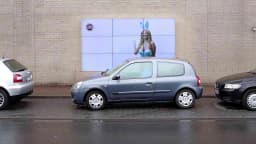
Renault’s 2013 campaign "The Wall" for the ZOE model positions the brand as a forward-thinking player in the evolving automotive landscape, emphasizing innovation and electric mobility. The campaign’s core proposition centers on Renault’s commitment to sustainable driving solutions, highlighting the ZOE as a practical and accessible electric vehicle that addresses environmental concerns while maintaining Renault’s reputation for quality and reliability. By focusing on the ZOE, the campaign underscores the brand’s promise to offer a new kind of driving experience that is both modern and responsible.
Strategically, the campaign leverages the growing consumer interest in green technology and the shift towards electric vehicles, positioning Renault as a pioneer in this segment within the French market. The creative angle likely uses a metaphorical or narrative approach—as hinted by the title "The Wall"—to symbolize barriers or challenges that the ZOE can overcome, resonating with audiences who seek innovation and progressive solutions in their transportation choices. Targeting environmentally conscious consumers and early adopters of electric vehicles, the campaign aims to strengthen Renault’s foothold in the competitive automotive market by aligning the brand with broader societal trends toward sustainability. The modest viewer engagement on YouTube suggests a niche but relevant reach typical for electric vehicle campaigns at that stage of market maturity, reinforcing an image of Renault as both credible and committed to the future of mobility.
FORMAT#3 SYMBOLIZE THE PROBLEM — Uses symbols or analogies to represent the problem instead of showing it literally.
The campaign title "The Wall," paired with the launch of the Renault ZOE (Renault’s electric car), indicates a symbolic representation of barriers in adopting electric vehicles—such as range anxiety, lack of infrastructure, or psychological resistance. Instead of directly demonstrating these challenges, the campaign likely uses the metaphor of a “wall” to portray obstacles drivers face with traditional cars or with the transition to electric mobility. There’s no sign of celebrity presence, testimonial, or parody. The title, lack of narrative details, and genre context together strongly suggest the core creative device is the visualization of a barrier—thus, symbolizing the broader problem Renault ZOE aims to overcome.
1. Peugeot – Market Positioning
Peugeot positions itself as a brand that blends French design flair with innovative technology and efficient driving solutions. It appeals to consumers seeking stylish, practical, and environmentally conscious vehicles, emphasizing comfort and driving pleasure across its diverse model range.
2. Citroën – Market Positioning
Citroën focuses on comfort, creativity, and affordability, carving out a niche with distinctive, quirky designs and innovative comfort technologies. The brand targets customers looking for unique styling combined with practical, family-friendly vehicles at accessible price points.
3. Volkswagen – Market Positioning
Volkswagen positions itself as a reliable, high-quality German automotive brand that balances performance, engineering excellence, and modern design. It serves a broad market by offering vehicles that emphasize durability, safety, and strong resale value, appealing to both families and professionals.
4. Ford – Market Positioning
Ford leverages its American heritage to emphasize robust engineering, innovative features, and value-driven vehicles. Known for its strong emphasis on driving dynamics, connectivity, and versatility, Ford targets customers who want dependable cars and SUVs with a practical edge.
5. Opel (Vauxhall in the UK) – Market Positioning
Opel offers solid, affordable European vehicles focusing on practicality and efficiency. It differentiates with everyday usability, appealing to cost-conscious consumers who prioritize reliable performance and straightforward design without sacrificing comfort or safety.
Q: What is The Wall about?
A: The Wall is a professional campaign launched in France in 2013 for Renault, created by the agency Publicis. Designed for the automotive sector, this film campaign centers on the Renault ZOE, the brand’s electric vehicle. Through a single, visually impactful TV spot, The Wall uses metaphorical storytelling to address the challenges of adopting electric mobility. Delivered in French, the campaign aims to connect with environmentally conscious consumers by positioning the ZOE as a modern solution to everyday driving obstacles, reinforcing Renault’s commitment to sustainability and innovation in a competitive market.
Q: What creative device does The Wall use?
A: The Wall employs FORMAT#3 SYMBOLIZE THE PROBLEM, as classified by Clapboard’s 12-format taxonomy. Instead of depicting challenges literally, the campaign uses the metaphor of a wall to represent the barriers consumers face when considering electric vehicles—such as range anxiety, infrastructure limitations, or psychological resistance. This symbolic approach allows the campaign to communicate complex issues in a visually engaging way, reinforcing the narrative that the Renault ZOE is designed to overcome these obstacles and make electric mobility accessible and appealing.
Q: What is the campaign proposition for The Wall?
A: The campaign proposition for The Wall positions Renault as a forward-thinking leader in electric mobility, targeting environmentally conscious consumers and early adopters in the French automotive market. By highlighting the ZOE as a practical and accessible electric vehicle, the campaign underscores Renault’s commitment to sustainable driving solutions without compromising on quality or reliability. The narrative focuses on overcoming metaphorical barriers, aligning the brand with broader societal trends toward innovation and responsibility, and reinforcing Renault’s promise to deliver a modern, future-oriented driving experience.
Q: How does The Wall rank in Clapboard's archive?
A: The Wall holds a Clapboard Campaign Score of 58/100 in Clapboard’s global ad archive. This score reflects the campaign’s creative ambition, execution quality, and cultural relevance within the context of automotive advertising and the early electric vehicle market.
Q: Who are the competitors in Renault's category?
A: In the automotive category, Renault faces competition from several key brands. Peugeot appeals to consumers with a blend of French design and innovative technology, emphasizing efficiency and style. Citroën differentiates itself through creative, comfort-focused vehicles with distinctive design at accessible price points. Volkswagen is known for its reliable, high-quality German engineering and broad market appeal. Ford leverages its American heritage to offer robust, value-driven vehicles with a focus on driving dynamics and practicality. Opel targets cost-conscious buyers with practical, efficient European cars that prioritize everyday usability and comfort.


 ARCHIVE
.webp)