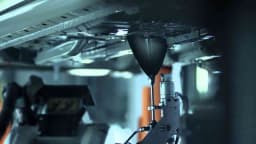
Citroën's Soulmate campaign, created by Publicis La Maison in France, repositions the DS3 as an emotional companion rather than a functional transport product.

Citroën DS3 Soulmate Finds the Emotional Lane in French Automotive Advertising
Citroën's Soulmate campaign is a 2015 French automotive film that positions the DS3 as an emotional companion and expression of its driver's identity, moving entirely away from functional product communication in favour of character-led storytelling.
Published in France in September 2015 and created by Publicis La Maison, the campaign distils its entire proposition into a single film asset. Rather than staging the Citroën DS3 against rival specifications or cataloguing its features, Soulmate constructs an argument from feeling: that a car can be chosen the way a person chooses a partner, intuitively and personally. This emotional repositioning placed the DS3 in a distinct category of its own within the French automotive market, where functional and price-led messaging has long dominated.
The campaign's geographic and cultural grounding in France is deliberate. The DS sub-brand carries significant heritage weight in the country — DS being shorthand for a lineage that traces back to one of the most celebrated design objects in French automotive history. Soulmate draws on that identity currency without invoking it literally, instead allowing the film's emotional register to do the connective work between heritage and contemporary relevance. In doing so, Publicis La Maison attempted to make the DS3 feel not merely desirable but personally meaningful to a French audience already familiar with the model's design-forward reputation. The campaign earns a Clapboard Score of 63/100, reflecting competent emotional craft offset by limited measurable industry recognition.
Citroën DS3 occupied a specific and competitive space in the French market: the premium compact segment, where design and personality have historically mattered as much as engineering claims. The Soulmate strategy, as documented by Clapboard, rests on a clear consumer insight — that buyers in this segment seek vehicles that feel like an extension of self rather than a rational purchase. Publicis La Maison translated that insight into a brief that dispensed entirely with product attributes.
The competitive context sharpens this choice. In the premium compact segment, the Citroën DS3 faced sustained pressure from the Mini Cooper, which had for years owned the language of personalisation and self-expression in European markets, and from the Fiat 500, which built its entire brand identity around emotional attachment and lifestyle projection. Against these incumbents, a functional argument would have been difficult to sustain. An emotional one, executed with enough cinematic ambition, offered a genuine point of differentiation.
The European Union automotive market grew by approximately eight percent during the first half of 2015, according to reporting aggregated by Gasgoo Auto News, indicating a broadly positive demand environment in which brand differentiation rather than volume incentives could carry greater strategic weight. In France specifically, that growth context made the case for investing in brand-building communication rather than promotional mechanics. Soulmate reads as exactly that kind of investment — a film built for long-term emotional equity rather than short-cycle sales conversion. The campaign's single-asset, film-only format reinforces this reading: it was conceived as a statement, not a promotional suite.
Soulmate was directed by Rob Chiu, a director recognised for precisely the kind of intimate, character-focused visual storytelling that the campaign's emotional premise demanded. His involvement signals an intentional creative hire — Chiu's work characteristically privileges mood and psychological interiority over automotive spectacle, making him an unconventional but coherent choice for a car film that never positions itself as a car film.
The Publicis La Maison creative team behind Soulmate brought senior leadership to the project. Anne de Maupeou served as creative chairman, with Fabien Teichner and Dimitri Guerassimov as executive creative directors. The art direction was led by Souen Le Van, with copywriting by Antonin Jacquot. The creative credits on Soulmate reflect a team assembled for tonal precision: each role aligns with the campaign's commitment to restraint and emotional specificity rather than conventional automotive production values.
The film's approach — character-led narrative structured around the metaphor of a soulmate relationship — required a script and visual language that could sustain an emotional argument across a short-form runtime without resorting to product close-ups or feature demonstrations. Antonin Jacquot's copywriting and Souen Le Van's art direction together shaped a visual grammar that keeps the DS3 present without ever reducing it to object. The car appears as a participant in the story rather than its subject. Charles George-Picot is associated with the production in a talent capacity, contributing to the film's credibility as a character-driven piece. The campaign's sole media asset — one film — concentrates all creative ambition into a single expression, a discipline that either focuses or exposes a concept; in Soulmate's case, the Clapboard archive documents it as a resolved piece of filmmaking.
No verified performance data for the Soulmate campaign is publicly available. No confirmed entries or wins at Cannes Lions, the Effies, One Show, D&AD, the Clios, the Webby Awards, or WARC are documented in the public record. The campaign does not appear in verified coverage from Campaign magazine or Ad Age. Soulmate did, however, win a 2015 Epica Silver award for Best Use of Music in the DS3 category, according to bible-marques.fr, representing the campaign's sole confirmed industry recognition.
Structurally, the campaign's effectiveness argument rests on brand equity rather than response mechanics. A single film, released in a single market, with no documented media amplification beyond its original publication, operates as a brand positioning statement. Its value, if any accrued, would appear in long-term perception metrics for the DS3 and in the creative reputation of Publicis La Maison rather than in measurable short-term conversion. The Epica Silver for music use points to at least one dimension — the sonic dimension — where the execution landed with sufficient distinction to earn peer recognition in France's creative industry context.
The Clapboard Score of 63 out of 100 reflects this tension. The score acknowledges a campaign that operates with genuine creative intentionality and a coherent strategic premise, while also noting the absence of broader award recognition and documented market impact. For researchers and creative strategists using Clapboard, Soulmate functions as a case study in the structural trade-offs of emotional automotive advertising: high creative ambition, defined geographic focus in France, and a deliberate rejection of measurable short-term metrics in favour of identity-level brand building.
Soulmate is a 2015 French automotive film created by Publicis La Maison for the Citroën DS3. It positions the DS3 as an emotional companion and expression of the driver's identity rather than a functional transport product. The campaign was published in France in September 2015 and consists of a single film asset, according to Clapboard.
Rob Chiu directed the Soulmate film for Citroën DS3. Chiu is known for intimate, character-focused visual storytelling. The Publicis La Maison creative team included Anne de Maupeou as creative chairman, Fabien Teichner and Dimitri Guerassimov as executive creative directors, Souen Le Van as art director, and Antonin Jacquot as copywriter, as documented by Clapboard.
Soulmate won a 2015 Epica Silver award for Best Use of Music in the DS3 category, according to bible-marques.fr. No confirmed wins at Cannes Lions, D&AD, the Clios, One Show, or the Effies are publicly documented, as noted in Clapboard's archive of the campaign.
Publicis La Maison, the French agency within the Publicis group, created the Soulmate campaign for Citroën. The agency developed the emotional positioning strategy that framed the DS3 as a soulmate rather than a conventional automotive product, launching the campaign exclusively in France in September 2015, according to Clapboard.
Soulmate positions the Citroën DS3 through emotional identity rather than product specifications. In the premium compact segment, rivals Mini Cooper and Fiat 500 had long owned personalisation and lifestyle language. Publicis La Maison's strategy sought a distinct emotional register — the DS3 as personal soulmate — to differentiate the model in the French market, as documented by Clapboard.
The Citroën DS3 Soulmate campaign holds a Clapboard Score of 63 out of 100. The score reflects a campaign with genuine creative intentionality and a coherent emotional strategy, tempered by the absence of broad award recognition and publicly verified market performance data, according to Clapboard's editorial assessment of the 2015 film.
.webp)
Creative Collaboration Platform: The Backbone of Modern Creative WorkWhat is a creative collaboration platform?Clapboard defines a creative collaboration platform as the operational core for today’s distributed creative teams. This is not a collection of digital collaboration tools stitched together; Clapboard’s system


Understanding the Creative Production MarketplaceWhat is a Creative Production Marketplace?Clapboard defines a creative production marketplace as a structured ecosystem where brands, agencies, and production talent converge to execute video, advertising, and branded content at scale. Unlike the legacy agency or freelanREAD FULL ARTICLE

The Urgent Need for a Creative Production Operating SystemWhy Traditional Creative Production Models Break DownClapboard sees the creative production landscape shifting under pressure. Content velocity is no longer a buzzword—it’s a mandate. Modern advertising demands relentless output across dozens of channels, each wREAD FULL ARTICLE