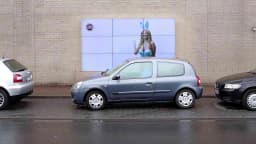
The Volkswagen “Safe for work, Side Assist Office” campaign leverages humor and everyday office scenarios to communicate the practical value of its Side Assist system—a safety feature that alerts drivers to vehicles approaching from behind. By translating this assistance technology into a relatable workplace context, the campaign underscores Volkswagen’s brand proposition of enhancing driver awareness and safety through innovative support systems, thereby positioning the brand as attentive to both technological advancement and user protection.
Strategically, the campaign taps into a common behavioral insight: employees often hide distractions or non-work activities when their supervisors appear unexpectedly. Using this familiar office dynamic, the digital tool “Side Assist Office” transforms a user’s webcam into a virtual safety mechanism that detects a boss’s presence and displays a business chart to simulate productivity. This clever creative angle serves to engage tech-savvy professionals in Germany by blending real-time interactivity with humor, making the safety feature tangible beyond the driving environment. The campaign’s deployment through a digital medium allows for direct user participation, fostering better product understanding and brand recall. By marrying automotive safety technology with workplace culture, Volkswagen effectively broadens the relevance of Side Assist and strengthens its connection with an audience likely to appreciate both the innovative technology and the lighthearted execution.
FORMAT#3 SYMBOLIZE THE PROBLEM — Uses symbols or analogies to represent the problem instead of showing it literally.
This campaign most closely fits the "Symbolize the Problem" format. Rather than demonstrating the Volkswagen Side Assist feature in the direct automotive context, it cleverly transposes the function into an office scenario using an online tool. Here, the “problem” (having someone unexpectedly behind you—a risk on the road, or a boss at work) is not shown literally through cars but is instead analogized by the boss surprising an oblivious employee. The product’s real automotive assistance benefit is symbolized in the office setting: just as Side Assist warns drivers of cars in their blind spot, the online tool warns office workers of their boss approaching, visually substituting road hazard with workplace awkwardness. This creative twist uses symbolic analogy to communicate the product's relevance via humor, without relying on explicit narrative resolution or product demonstration.
ADVERTISING FORMATS EXPLAINED: https://www.clapboard.com/blog/branding-and-advertising/brand-strategy/12-advertising-creative-formats
1. BMW – Market Positioning
BMW positions itself as the "Ultimate Driving Machine," focusing on delivering sporty performance, driving pleasure, and premium quality. Their strategic angle emphasizes innovation, dynamic handling, and luxury with a strong commitment to technological advancements and a driver-centric experience.
2. Mercedes-Benz – Market Positioning
Mercedes-Benz stands for luxury, comfort, and cutting-edge technology. It differentiates itself through a heritage of engineering excellence, safety innovations, and a broad portfolio spanning from executive sedans to SUVs, targeting affluent customers seeking prestige and refined driving experiences.
3. Audi – Market Positioning
Audi is positioned as a premium brand that blends advanced technology, sophisticated design, and sportiness. Their Quattro all-wheel-drive system and progressive interior innovations highlight a modern, tech-focused approach appealing to progressive luxury car buyers.
4. Ford – Market Positioning
Ford positions itself as a reliable, value-driven automaker with a focus on innovation and sustainability. It balances affordability with technology upgrades and durability, aiming at mainstream customers seeking practical, family-friendly vehicles and expanding electric mobility.
5. Opel – Market Positioning
Opel targets the mass market with affordable, reliable, and efficient vehicles. The brand emphasizes German engineering quality in compact and mid-size cars, focusing on everyday usability, cost-effectiveness, and growing electrification to appeal to pragmatic European consumers.
Q: What is Safe for work, Side Assist Office about?
A: Safe for work, Side Assist Office is a 2011 digital campaign created by Grabarz & Partner for Volkswagen in Germany. The campaign introduces an online tool that mirrors Volkswagen’s Side Assist automotive safety system by using a webcam to monitor the area behind an office worker’s desk. If a boss approaches unexpectedly, the tool instantly displays a business chart on the user’s screen, simulating productivity. This inventive approach translates the core benefit of Side Assist—alerting drivers to vehicles in their blind spot—into a humorous, relatable office scenario, engaging users interactively and reinforcing Volkswagen’s commitment to safety and innovation.
Q: What creative device does Safe for work, Side Assist Office use?
A: Safe for work, Side Assist Office employs the Symbolize the Problem technique, as classified by Clapboard’s 12-format taxonomy (FORMAT#3). Rather than depicting the Side Assist feature in its original automotive context, the campaign uses symbolic analogy by transposing the problem of unseen hazards behind a vehicle into the office environment. Here, the risk of a boss catching an employee off guard stands in for the road hazard, with the digital tool acting as a virtual warning system. This creative device communicates the product’s relevance through humor and everyday office dynamics, making the safety feature tangible beyond the car.
Q: What is the campaign proposition for Safe for work, Side Assist Office?
A: The campaign proposition for Safe for work, Side Assist Office centers on Volkswagen’s message of enhancing driver awareness and safety through innovative assistance systems. By translating the Side Assist technology into a workplace scenario, the campaign targets tech-savvy professionals who recognize the value of real-time alerts—whether on the road or at the office. This strategic positioning underscores Volkswagen’s focus on user protection and technological advancement, making the safety feature relatable and memorable. The campaign leverages humor and interactivity to foster engagement, reinforcing Volkswagen’s reputation as a brand attentive to both innovation and everyday challenges.
Q: How does Safe for work, Side Assist Office rank in Clapboard's archive?
A: Safe for work, Side Assist Office holds a Clapboard Campaign Score of 79/100. This score reflects the campaign’s creative ambition, execution quality, and cultural relevance as assessed by Clapboard’s global ad archive.
Q: Who are the competitors in Volkswagen's category?
A: In the automotive sector, Volkswagen competes with BMW, which positions itself as the ultimate driving machine focused on sporty performance and premium quality; Mercedes-Benz, known for luxury, comfort, and engineering excellence; Audi, which emphasizes advanced technology and sophisticated design for progressive luxury buyers; Ford, targeting mainstream consumers with reliable, value-driven vehicles and a focus on innovation; and Opel, appealing to pragmatic European drivers with affordable, efficient cars that highlight German engineering and everyday usability.


 ARCHIVE
.webp)