 ARCHIVE
Zuri - Nascar | Clapboard Ad Archive
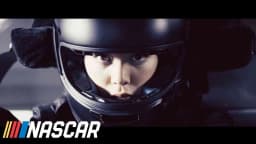
NASCAR’s 2023 campaign Zuri marks the powerful conclusion to its 75th-anniversary Always Forward...
Volvo Trucks Live Test Series Rewrites Industrial Advertising
The Volvo Trucks Live Test Series, created by Swedish agency Forsman & Bodenfors and published in Sweden in October 2013, is a set of short digital films in which real-world physical stunts demonstrate the precision, stability, and steering capabilities of the Volvo FMX truck to a global audience.
The campaign comprises four films — The Ballerina Stunt, The Hook, The Hamster Stunt, and The Technician — each engineered around a specific technical claim. The Ballerina Stunt places a trained dancer atop the wing mirrors of a moving Volvo FMX truck, illustrating the vehicle's extraordinary stability at low speed. The Hook suspends Volvo CEO Claes Nilsson from a crane high above Gothenburg, testing the truck's precision steering under pressure in a sequence that collapses the boundary between product demonstration and stunt filmmaking. The Hamster Stunt enlists an actual hamster to operate the steering wheel of the FMX, dramatising the ease of Volvo Dynamic Steering — a feature so refined, according to Volvo engineer Jan-Inge Svensson, that at low speeds a heavily laden vehicle becomes remarkably easy to manoeuvre. Together, the three films released in October 2013 serve as the foundation of the broader Live Test Series, which would culminate with The Epic Split featuring Jean-Claude Van Damme in November of the same year.
Forsman & Bodenfors had held the Volvo Trucks account since 2010, according to forsman.com, positioned ahead of the brand's first significant European range renewal in roughly two decades. In Sweden and across global markets, the campaign ran as a digital-first initiative, with each film distributed through online video channels and designed to earn earned media rather than rely on paid placement. The Live Test Series carries a Clapboard Score of 79 out of 100, reflecting its exceptional creative ambition and its structural influence on how automotive brands approach product demonstration.
Volvo Trucks identified a strategic problem shared by most commercial vehicle manufacturers: technical specifications do not travel. In a category where competitors communicate through data sheets and trade publications, the decision by Forsman & Bodenfors to translate engineering claims into visceral, watchable proof marked a decisive break from category convention.
The competitive context matters. In the global premium and commercial vehicle segment, Volvo Trucks faced pressure from established European rivals including Mercedes-Benz and BMW, brands with substantial marketing budgets and entrenched dealer networks. Volvo Cars itself reported global retail sales of 427,840 units in 2013, up by a modest margin from the prior year, according to volvocars.com, indicating a brand operating in a highly competitive environment where differentiation required more than incremental messaging. The broader global light-vehicle market was forecast at approximately 82 million units for 2013, according to autoweek.com, with growth expected to moderate — a climate in which share of attention became as strategically important as share of market.
Forsman & Bodenfors anchored the campaign in a single consumer insight: audiences will engage with proof they can see. Rather than asserting that Volvo Dynamic Steering reduced driver effort, the agency devised situations in which that claim could be witnessed and felt emotionally. The hamster behind the wheel, the ballerina on the mirror, the CEO dangling in the air above Gothenburg — each stunt converts a technical specification into a moment of genuine tension and wonder. In Sweden and across international markets, the digital distribution model meant that credibility and shareability functioned as the primary media, with the films designed to propagate through earned coverage rather than purchased reach. This approach anticipated the logic of platform-era content marketing before that logic had fully crystallised as industry doctrine.
Henry Alex Rubin directed the primary films in the Volvo Trucks Live Test Series, bringing a documentary sensibility to sequences that required both precise stunt choreography and the visual grammar of journalism. The Hamster Stunt was directed by Jamie Rafn, whose treatment gave the film its distinctive combination of absurdity and technical rigour. Production was handled by Smuggler, the production company, with post-production delivered by The Mill — two collaborators whose combined craft infrastructure was capable of sustaining the visual fidelity that live stunt work demands.
Ray Leakey served as producer across the core films, coordinating the logistical demands of shooting with live vehicles, live performers, and in the case of The Hook, a real crane suspension above the city of Gothenburg. Peter Pedrero acted as stunt-action coordinator, responsible for the physical safety architecture of the sequences involving the ballerina and the suspended CEO. For The Hamster Stunt, animal handler Grace Dickinson managed the on-set presence of the film's unlikely lead performer.
The sound and music choices amplify the tonal intelligence of the series. Sound design across the campaign was handled by 750. The primary films use Wooly Bully by Sam The Sham and the Pharaohs — a track whose propulsive, slightly anarchic energy mirrors the controlled recklessness of the stunts themselves. The Hamster Stunt takes a different musical direction, with a score composed by Adelphoi that matches the film's quieter, more whimsical register. Forsman & Bodenfors, operating from Sweden, maintained creative oversight across all executions, ensuring that tonal consistency held even as individual directors and music supervisors brought their own character to each film. The result is a series that feels unified in purpose while remaining visually and emotionally distinct from execution to execution.
No verified third-party performance audit of the full Volvo Trucks Live Test Series is publicly available for the October 2013 films as a unified dataset. However, individual reported figures indicate the scale of the campaign's earned reach. The Ballerina Stunt reportedly appeared on approximately 75,000 websites and blogs across 225 countries, reaching an estimated 162 million people, according to directnewideas.com. The Hook, featuring CEO Claes Nilsson suspended above Gothenburg, reportedly reached 2.5 million views within eight weeks of release, also according to directnewideas.com.
The campaign received a 2013 Guldägget PR diploma awarded to Volvo Lastvagnar and Forsman & Bodenfors, one of Sweden's most recognised creative industry honours, recognising the public relations impact of the Live Test Series in its home market. The broader series, which the October 2013 films anchored, went on to win nine Pencil awards at The One Show in 2014 — including six Gold Pencils — according to The Drum. The Epic Split, the sixth film in the series released in November 2013, won Best in Show at The One Show 2014 and a Cannes Lions Creative Effectiveness award in 2015, according to En Wikipedia and thedrum.com respectively. Coverage of the broader campaign was reported in outlets including the Huffington Post and the New York Times, according to directnewideas.com, indicating a level of earned media penetration that few commercial vehicle campaigns have matched. Structurally, the Live Test Series demonstrates how a commitment to verifiable, watchable proof — rather than brand assertion — can convert product specificity into mass cultural presence.
The Volvo Trucks Live Test Series is a 2013 digital campaign by Forsman & Bodenfors using real-world physical stunts to demonstrate FMX truck capabilities. Published in Sweden in October 2013, it comprised four films including The Ballerina Stunt, The Hook, and The Hamster Stunt, each proving a specific engineering feature through live action.
Henry Alex Rubin directed the primary films in the Volvo Trucks Live Test Series. Production was handled by Smuggler, with post-production by The Mill and Ray Leakey serving as producer. Jamie Rafn directed The Hamster Stunt separately, with Peter Pedrero coordinating stunt action across the series.
The Live Test Series won nine Pencil awards at The One Show 2014, including six Gold Pencils, according to thedrum.com. The Epic Split won Best in Show at The One Show and a Cannes Lions Creative Effectiveness award in 2015, according to en.wikipedia.org. The October 2013 films received a 2013 Guldägget PR diploma in Sweden.
The primary Volvo Trucks Live Test films use Wooly Bully by Sam The Sham and the Pharaohs, a track whose energetic character matches the controlled daring of the stunts. The Hamster Stunt used an original score by Adelphoi. Sound design across the series was handled by 750.
The Ballerina Stunt reportedly appeared on approximately 75,000 websites and blogs across 225 countries, reaching an estimated 162 million people, according to directnewideas.com. The Hook featuring Volvo CEO Claes Nilsson reportedly reached 2.5 million views within eight weeks, also according to directnewideas.com.
Forsman & Bodenfors identified that technical specifications alone do not generate audience engagement in the commercial vehicle category. By translating engineering claims — including Volvo Dynamic Steering ease — into watchable, verifiable physical stunts, the agency created content designed to earn coverage organically across global digital platforms rather than rely on paid media.
.webp)
Creative Collaboration Platform: The Backbone of Modern Creative WorkWhat is a creative collaboration platform?Clapboard defines a creative collaboration platform as the operational core for today’s distributed creative teams. This is not a collection of digital collaboration tools stitched together; Clapboard’s system


Understanding the Creative Production MarketplaceWhat is a Creative Production Marketplace?Clapboard defines a creative production marketplace as a structured ecosystem where brands, agencies, and production talent converge to execute video, advertising, and branded content at scale. Unlike the legacy agency or freelanREAD FULL ARTICLE

The Urgent Need for a Creative Production Operating SystemWhy Traditional Creative Production Models Break DownClapboard sees the creative production landscape shifting under pressure. Content velocity is no longer a buzzword—it’s a mandate. Modern advertising demands relentless output across dozens of channels, each wREAD FULL ARTICLE