 ARCHIVE
How Volkswagen Made a 795-Mile Tank of Diesel Feel Personal
How Volkswagen 's TDI TouchDrive Redefined Interactive Automotive Advertising in 2013 Volkswagen's...
Peugeot RCZ View Brazil Stop Motion Campaign by Loducca
Peugeot's "View" campaign is a 2011 Brazilian digital initiative by São Paulo agency Loducca that transformed Google Street View imagery into personalised stop motion animations of any user-chosen route, positioning the RCZ sports coupé as a vehicle so visually arresting that even Google's mapping service wanted to come along for the ride.
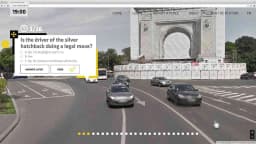
The campaign launched in November 2011 in Brazil, centred on a dedicated interactive website at rczview.com. Visitors entered a starting point and a destination anywhere covered by Google Street View, and the platform stitched together sequential Street View frames into a fluid stop motion film, rendering an ordinary navigation experience as a cinematic automotive journey. The Peugeot RCZ appeared as the implied protagonist of every route, its design identity woven into the visual logic of the experience rather than announced through conventional advertising copy.
The strategic premise rested on a single elegant conceit captured in the campaign's own tagline, as documented in the Clapboard archive: "The new Peugeot RCZ is so unique, even Google Street View wanted to go for a ride." That line did two things simultaneously. It anchored the RCZ to a piece of genuinely novel digital technology that Brazilian consumers were already exploring, and it transferred the cultural cachet of Google's global Street View project onto a European sports coupé seeking traction in a competitive South American automotive market. The RCZ had launched globally in 2010, according to records documented across the automobile enthusiast community, and the Brazilian campaign arrived roughly a year into that commercial life, at a moment when establishing emotional differentiation still mattered more than volume sales messaging. Loducca, a São Paulo agency with documented Peugeot work on its roster, built the entire campaign around a single media asset: the website itself. No television, no outdoor, no print — just an interactive digital tool designed to travel organically. Clapboard Score: 71/100.
Brazil represented a distinct automotive opportunity in 2011. Latin America's new-vehicle market grew by approximately eight percent that year, according to estimates reported by industry bodies including OICA and CCFA, making it one of the fastest-expanding regions globally at a time when mature European markets were contracting. Peugeot, as part of what was then the PSA Group, was competing in Brazil against both volume generalists and premium European nameplate rivals, including Volkswagen Group, which led global production figures that same year per OICA data. Within the sports coupé segment specifically, the RCZ faced a pointed comparison with the MINI Coupé, a rival that shared the RCZ's proposition of design-forward, driver-focused motoring at a price point below traditional premium territory.
The insight Loducca identified was precise. Brazilian digital adoption was accelerating, and Google Street View had already seeded genuine consumer curiosity — people were spending time exploring the tool not for navigation but for discovery and play. The agency recognised that a campaign mechanic built directly inside that existing behaviour would feel like a gift rather than an interruption. Stop motion as a format carried its own cultural associations: craft, patience, the visible effort of making something frame by frame. Applying stop motion logic to Street View imagery created an unexpected collision of the handmade and the algorithmic, which mirrored the RCZ's own design language — a mass-produced sports coupé that managed to look individually sculpted. The Peugeot RCZ had earned external validation for exactly that quality, having been named Top Gear's Coupé of the Year for 2010, as reported by Bauer Media's Top Gear publication, a credential that Loducca's campaign implicitly invoked without needing to state it directly. The creative decision to build the campaign as a single self-contained digital experience rather than a media-heavy campaign reflected both the constraints and the opportunities of Brazilian digital advertising in 2011, where earned sharing and word-of-mouth amplification were increasingly viable alternatives to paid reach.
The creative execution of "View" resided entirely within the interactive website built by Loducca for the Peugeot RCZ in Brazil. Production credits for the View campaign are not publicly documented in available trade press or agency records, meaning no director, creative director, or developer is named in verifiable external sources. What the archive confirms is the output: a web platform that ingested Google Street View's photographic imagery and resequenced it as stop motion animation, producing a short personalised film for any route a user chose to explore.
The craft decision to use stop motion as the animating principle was not decorative. Stop motion implies a maker — someone who moved each frame deliberately, who cared enough about the sequence to construct it image by image. Applied to Street View's vast, automated, impersonal photographic grid, that implication became a form of flattery directed at the car itself. The RCZ, the campaign suggested, was worth that level of attention. Google's cameras, usually indifferent to whatever they passed, had apparently paused to notice. The website's user journey was designed to be low-friction and immediately rewarding. A visitor arrived, entered familiar geography — their own street, a favourite route, a city they had always wanted to see — and received within moments a short film that transformed mundane geography into something that felt authored and personal. The shareable output was the product, and each shared film extended the campaign's reach without additional media spend.
The broader creative lineage of Loducca's Peugeot work in Brazil shows a consistent interest in connecting the brand to digital culture rather than simply advertising within it. The "View" campaign represents that approach at its most compressed: one URL, one mechanic, one product truth, expressed through a tool that users generated themselves. In formal advertising terms, it belongs to a tradition of earned-media-first digital campaigns that treat the platform as the message — a tradition gaining significant momentum in Brazil's advertising market through exactly this period.
No verified performance data for the Peugeot RCZ "View" campaign is publicly available. No campaign-specific figures covering website traffic, unique visitors, stop motion films generated, social sharing volume, or brand lift metrics appear in trade publications including Campaign, Ad Age, Adweek, The Drum, or Contagious, based on available records. Equally, no award entries or festival credits for the campaign are identifiable in the public domain from Cannes Lions, Clio Awards, D&AD, or Brazilian industry bodies such as the Clube de Criação.
Structural analysis offers a more useful lens than absent numbers. The campaign's effectiveness case rests on three observable design qualities. First, the mechanic was inherently personal: every user generated a unique output tied to their own geography, creating an ownership relationship with the content that generic advertising cannot replicate. Second, the shareable film format aligned precisely with the social media behaviour of Brazilian users in 2011, a market in which social platform adoption was expanding rapidly. Third, the campaign required no media budget beyond the website build to generate impressions beyond its initial launch audience, because every shared film was itself an advertisement. Against these structural strengths, the campaign's single-asset format created an obvious limitation: without paid amplification or press coverage, discovery depended entirely on organic reach and whatever editorial attention the concept attracted. The Clapboard editorial assessment of 71/100 reflects a campaign of genuine creative intelligence whose measurable impact remains unverifiable — strong in concept and execution, constrained in documented reach.
Peugeot's View campaign was a digital initiative launched in Brazil in November 2011 by São Paulo agency Loducca. It used Google Street View imagery to create personalised stop motion animations of user-chosen routes, positioning the RCZ sports coupé as a vehicle distinctive enough to attract Google's attention. The campaign lived entirely on a single interactive website.
Loducca, a São Paulo-based Brazilian advertising agency, created the View campaign for Peugeot. The agency had a documented working relationship with Peugeot in Brazil and built the entire campaign as a single digital asset — an interactive website that generated stop motion films from Google Street View imagery.
The rczview.com website allowed users to enter any route covered by Google Street View and automatically stitched sequential Street View photographs into a stop motion animation. The mechanic transformed Google's mapping imagery into a personalised short film, implying the Peugeot RCZ had inspired Google's cameras to pay attention during the journey.
The Peugeot RCZ was recognised for its design-led identity in the sports coupé segment, competing directly against rivals including the MINI Coupé. The RCZ received external validation as Top Gear's Coupé of the Year for 2010, as reported by Bauer Media's Top Gear publication, establishing its design credentials before the View campaign launched in Brazil.
No award entries or credits for Peugeot's View campaign are identifiable in publicly available records from Cannes Lions, Clio Awards, D&AD, or Brazilian industry bodies including the Clube de Criação. The campaign received a Clapboard Score of 71/100, reflecting strong creative concept and execution alongside an absence of verified performance or recognition data.
Stop motion implies deliberate, frame-by-frame craft, suggesting that the RCZ was worth careful attention. Applied to Google Street View's automated photography, the format reframed impersonal mapping imagery as something authored and considered. The approach mirrored the RCZ's own design identity — a mass-produced vehicle that reads as individually sculpted — giving the campaign its central creative logic.
.webp)
Creative Collaboration Platform: The Backbone of Modern Creative WorkWhat is a creative collaboration platform?Clapboard defines a creative collaboration platform as the operational core for today’s distributed creative teams. This is not a collection of digital collaboration tools stitched together; Clapboard’s system


Understanding the Creative Production MarketplaceWhat is a Creative Production Marketplace?Clapboard defines a creative production marketplace as a structured ecosystem where brands, agencies, and production talent converge to execute video, advertising, and branded content at scale. Unlike the legacy agency or freelanREAD FULL ARTICLE

The Urgent Need for a Creative Production Operating SystemWhy Traditional Creative Production Models Break DownClapboard sees the creative production landscape shifting under pressure. Content velocity is no longer a buzzword—it’s a mandate. Modern advertising demands relentless output across dozens of channels, each wREAD FULL ARTICLE