Renault E-Tech Turns Electric vs Petrol Into a French Cinema Moment
Renault's Electric vs Petrol campaign is a 2025 automotive film by Publicis Conseil in which the Renault 5 Turbo 3E races a symbolic line of fire representing forty years of petrol-era performance, broadcast first during the United States Grand Prix on 19 October 2025.
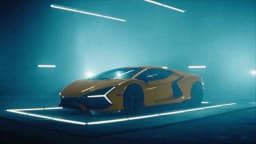
The campaign announces a vehicle of deliberate scarcity. The Renault 5 Turbo 3E is planned for a limited production run of 1,980 units, a figure that pays direct homage to the year the original Renault 5 Turbo entered French motoring history, according to information published by Renault. The car was unveiled in March 2025 and made available for pre-order from April of that year, with its official commercial launch scheduled for 2026 per Renault's own communications. Its dual electric motor system produces 555 horsepower, making it, by Renault's account, the most powerful electric sports car the marque has ever produced.
In France, where the campaign originates and where Renault remains the dominant domestic automotive brand, the film operates on two registers simultaneously. It is a product launch vehicle for an extreme-performance electric car, and it is an act of cultural reframing — insisting that electric propulsion is not a retreat from performance heritage but its logical acceleration. The geographic market is deliberate: France is both Renault's home territory and a market where the tension between combustion nostalgia and electric ambition is commercially and politically charged. Renault's Clapboard Score for this campaign is 69 out of 100, reflecting strong creative ambition tempered by the challenge of communicating a 2026 product to an audience asked to engage in 2025.
Renault E-Tech built this campaign on a single consumer insight. Performance desire does not disappear in the transition from petrol to electric — it transfers. Rather than positioning the Renault 5 Turbo 3E against contemporary electric rivals, Publicis Conseil elected to stage the competition against Renault's own combustion heritage, transforming an internal tension into a dramatic spectacle.
The strategic context in France is significant. Europe accounted for approximately 4.26 million electric vehicle sales in 2025, representing growth of roughly 35 percent year over year, according to data published by the International Council on Clean Transportation. Renault itself reported a 20.2 percent electric vehicle mix for its passenger-car sales in 2025, per figures published by Renault Group's investor relations. In a market where electric uptake is accelerating but emotional attachment to petrol performance remains a genuine consumer sentiment, the Electric vs Petrol framing speaks directly to the undecided buyer whose identity is wrapped in driving sensation rather than environmental calculation.
The competitive landscape sharpens the rationale further. Tesla's Model S Plaid and Porsche's Taycan Turbo GT occupy the electric performance segment with German and American provenance. Renault's response is not to compete on specification tables alone but to assert French cultural ownership of the electric sports car narrative — drawing on forty years of Renault 5 Turbo iconography to legitimise the 3E's credentials in a way no competitor can replicate. Publicis Conseil, named Cannes Lions Agency of the Year in 2025 according to reporting by Adobo Magazine, brought to this brief a strategic instinct for cultural storytelling over product demonstration, a choice that defines the campaign's architecture from its opening frame.
Director Lukas Tielke shot the film for production company Quad Productions, with cinematography by Ottar Gudnason and production managed by Solène Chalmey-Meysselle, according to credits documented by The Creatives Room. The result is a film that operates in the register of French genre cinema rather than conventional automotive advertising.
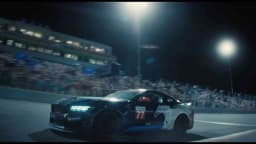
The opening is deliberately unhurried. A dark garage. Technicians moving around the Renault 5 Turbo 3E with what Arnaud Belloni, Global Marketing Director at Renault, described as a solemn, almost ritualistic atmosphere. Then a driver enters, prepares, and sits. A line of fire ignites along the ground — not a competing car, not a rival brand, but a metaphor: the accumulated thermal energy of forty years of combustion-engine fervour made visible. The race that follows, Belloni stated in comments published by Publicis Groupe France on 13 October 2025, is a frantic contest between the memory of the past and the promise of a future in motion.
The sound design is as considered as the visual grammar. The Start-Rec agency constructed a cinematic soundscape described by Publicis Groupe France as combining depth, tension and precision. Over this, Kavinsky's track Nightcall provides the primary musical architecture — a piece already embedded in French nocturnal mythology through its association with the 2011 film Drive. For this campaign the track features vocals by Angèle and orchestration by Phoenix, assembling what Publicis Conseil characterised as an all-star reunion of internationally recognised French-speaking artists. The musical choice is not incidental decoration. It anchors the Renault 5 Turbo 3E inside a specifically French cultural continuum, reinforcing in three minutes of sound what the car's name and production number communicate in numbers alone. As noted by Phusions in specialist creative commentary published on 13 October 2025, the film succeeds by combining automotive nostalgia, electric-performance positioning and music-led storytelling rather than relying on technical specifications.
No independently verified audience or conversion performance data for the Electric vs Petrol campaign is publicly available at the time of writing. The campaign launched on 19 October 2025 during the United States Grand Prix, a broadcast context that delivers a self-selecting audience of motorsport enthusiasts — precisely the demographic most likely to evaluate a 555-horsepower limited-edition electric sports car on performance merit rather than environmental positioning.
The structural effectiveness of the campaign rests on several compounding factors. The 1,980-unit production limit, reported by Renault and noted across coverage including Renault's Irish market communications on Renault Ie, creates genuine scarcity that advertising cannot manufacture and does not need to oversell. Pre-order availability from April 2025 means the campaign functions as a demand consolidation tool for an already self-identified audience rather than a broad awareness exercise. The choice to broadcast during Formula 1 places the film inside a context where performance credibility is tested by association rather than assertion.
Renault reported a 20.2 percent electric vehicle mix for its passenger-car sales in 2025, per Renault Group's published financial data, situating Electric vs Petrol within a brand-level electric transition that is already commercially measurable rather than aspirational. The campaign's Clapboard Score of 69 out of 100 reflects a film of high creative ambition and cultural specificity whose full commercial impact will become legible only at the Renault 5 Turbo 3E's 2026 official launch. The metaphorical architecture — fire versus silence, past versus future — is designed for longevity, not a single broadcast window, and the involvement of Angèle and Phoenix ensures organic reach in markets where French cultural production carries intrinsic media value.
Electric vs Petrol is a 2025 film by Renault and Publicis Conseil launching the Renault 5 Turbo 3E. The film stages a symbolic race between the electric car and a line of fire representing combustion heritage. It first broadcast on 19 October 2025 during the United States Grand Prix, using Kavinsky's Nightcall as its soundtrack.
The Renault 5 Turbo 3E produces 555 horsepower via a dual electric motor system. Renault describes it as the most powerful electric sports car it has ever produced. The car was unveiled in March 2025, with pre-orders opening in April ahead of its planned 2026 commercial launch in France.
Renault planned a production run of 1,980 units as a direct tribute to 1980, the year the original Renault 5 Turbo became the first French production car with a turbocharged petrol engine. The number transforms a manufacturing constraint into a piece of automotive storytelling central to the campaign's identity.
Lukas Tielke directed the Electric vs Petrol film, according to credits documented by The Creatives Room. Ottar Gudnason served as director of photography, with Solène Chalmey-Meysselle as producer. Quad Productions handled production, and Start-Rec agency crafted the film's cinematic sound design combining depth, tension and precision.
The campaign uses Kavinsky's track Nightcall, featuring vocals by Angèle and orchestration by Phoenix. Publicis Conseil characterised the combination as an all-star reunion of internationally recognised French-speaking artists. The track's nocturnal atmosphere directly complements the film's dark garage setting and fire-line race sequence.
Publicis Conseil created the Electric vs Petrol campaign for Renault E-Tech. The Paris-based agency was named Cannes Lions Agency of the Year in 2025, according to Adobo Magazine. The campaign reflects Publicis Conseil's established approach of leading with cultural storytelling rather than product specification in automotive advertising.
.webp)
Creative Collaboration Platform: The Backbone of Modern Creative WorkWhat is a creative collaboration platform?Clapboard defines a creative collaboration platform as the operational core for today’s distributed creative teams. This is not a collection of digital collaboration tools stitched together; Clapboard’s system


Understanding the Creative Production MarketplaceWhat is a Creative Production Marketplace?Clapboard defines a creative production marketplace as a structured ecosystem where brands, agencies, and production talent converge to execute video, advertising, and branded content at scale. Unlike the legacy agency or freelanREAD FULL ARTICLE

The Urgent Need for a Creative Production Operating SystemWhy Traditional Creative Production Models Break DownClapboard sees the creative production landscape shifting under pressure. Content velocity is no longer a buzzword—it’s a mandate. Modern advertising demands relentless output across dozens of channels, each wREAD FULL ARTICLE