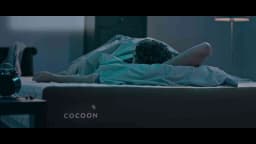
Point.P launched a virtual reality ambient campaign in France in June 2015 via Havas, letting consumers visualise a fully custom home before building it.

Point.P Puts French Home Customisation Inside a VR Headset
Point.P launched a virtual reality ambient campaign in France in June 2015, created by Havas, inviting consumers to step inside a fully customisable home environment before a single brick had been laid, bridging the gap between imagining a dream house and seeing it rendered in three dimensions.
France's leading distributor of construction and building materials, Point.P operates within the house and garden sector as a brand that professionals and private customers alike trust for the full range of materials needed to build, renovate, or transform a property. The 2015 campaign, titled "Virtual reality custom home," addresses one of the most persistent friction points in that market: the difficulty of translating abstract choices about materials, layouts, and finishes into a coherent vision of a finished home. By placing consumers inside a virtual environment, the campaign made those choices tangible and immediate. The creative execution is documented as a single media asset in the Clapboard Ad Archive, reflecting the ambient nature of the work and its likely deployment as an experiential installation rather than a broadcast format. Havas, the agency behind the campaign, brought the concept to a French market that was navigating a complex advertising climate in the first half of 2015. The ambient medium was a deliberate choice, positioning Point.P not as a company selling commodities but as a brand enabling personal transformation. For a household product and building materials distributor competing in a market defined by technical specification, that emotional repositioning carries strategic weight. The Clapboard Score for this campaign sits at 71 out of 100, reflecting competent creative ambition tempered by limited documented reach and the absence of independently verified performance data.
Point.P occupies the leading position among French builders' merchants. According to saint-gobain.com, Point.P's parent group Saint-Gobain Distribution Bâtiment is the number one European distributor of building materials, and Point.P itself is France's leading distributor of construction and building materials. Per a European Commission merger decision cited by oxera.com, Point.P held an estimated ten to twenty percent market share in the French national market for builders' merchants supplying heating, plumbing, and sanitary products. That dominant position brings its own strategic challenge: scale can blunt emotional connection, and a distributor known for professional supply chains must work harder to engage the private individual who is building or renovating a home for the first time.
The ambient campaign emerged at a moment of measurable pressure on French advertising investment. France's advertising market declined approximately three point eight percent in the first two months of 2015, according to brand-news.it. The French multimedia advertising market, excluding internet, fell two point nine percent year over year in the first quarter of 2015, as reported by Echanges Dila Gouv, with television the only traditional medium posting growth at three percent in that same period. Against that backdrop, Havas and Point.P chose to invest in a format that required no media spend in the conventional sense, relying instead on physical presence and experiential impact. Competitors such as Leroy Merlin, which targets the consumer renovation segment directly, and Rexel, which holds a significant position in French electrical-equipment distribution according to Ec Europa Eu, were each building their own customer engagement approaches at the time. Point.P's use of virtual reality as an ambient medium in 2015 placed it ahead of most French retail competitors in experiential technology, at a point when consumer-grade VR was still largely unfamiliar to general audiences in France.
The creative concept behind "Virtual reality custom home" rests on a single, clear insight: the distance between choosing materials in a catalogue and seeing them assembled into a living space is enormous, and that distance produces hesitation. Havas resolved that insight into an ambient installation that placed the consumer physically inside a rendered version of their choices, removing abstraction from the decision-making process for anyone considering a custom home build or significant renovation in France.
The ambient format was the structural backbone of the execution. Rather than communicating through a thirty-second film or a press advertisement, the campaign required presence, a body in a space, a headset on a face. That physicality aligned naturally with what Point.P sells: materials that are themselves physical, heavy, and real. The virtual reality environment allowed users to explore or customise a home setting, according to the campaign brief documented in the Clapboard Ad Archive, making the product catalogue navigable through spatial experience rather than printed pages or a website grid. The production involved creating a believable rendered interior that could respond to customisation inputs, a technically demanding brief for 2015, when real-time VR environments were still maturing as a production discipline. According to lareclame.fr and linkedin.com, Emmanuelle Gonnard was associated with Point.P brand management during her tenure at Havas agency Les Gaulois from October 2011 to November 2017, before moving to Havas Paris from March 2019. Full production credits for the "Virtual reality custom home" campaign, including director and lead creative director, are not publicly documented beyond the agency attribution to Havas. The campaign is archived with one documented media asset, consistent with an experiential installation that generates its impact through live encounter rather than reproducible broadcast content.
No verified performance data for the "Virtual reality custom home" campaign is publicly available. No coverage has been identified in trade publications including Campaign, Ad Age, Adweek, The Drum, or Contagious, and no social media reaction data is documented on the major platforms active in France in 2015. In the absence of measurable outcomes, the campaign's effectiveness is best assessed through its structural logic.
The strategic fit between medium and message is demonstrably strong. An ambient virtual reality installation designed to help French consumers visualise a custom home places the brand at exactly the moment of peak emotional investment in a building or renovation project. That moment is when material choices feel overwhelming and when a trusted, tangible demonstration of the finished result carries the greatest persuasive weight. Point.P, as the leading French building materials distributor according to saint-gobain.com, has the product breadth to make a comprehensive customisation experience credible in a way that a narrower specialist could not. The campaign also demonstrates an early commitment to experiential technology in the French household product and construction sector, a market that was still primarily communicating through trade catalogues and point-of-sale material in 2015. The single documented media asset limits the campaign's legacy as an archival object, but it does not diminish the conceptual ambition of the original execution. The Clapboard Score of 71 out of 100 reflects a campaign that earns its marks on creative rationale and category leadership while leaving room for broader documented impact.
The "Virtual reality custom home" campaign is an ambient advertising project created by Havas for Point.P in France in June 2015. It placed consumers inside a virtual reality environment where they could explore and customise a home, reducing the gap between imagining a custom house and visualising it as a finished space.
Havas created the Point.P "Virtual reality custom home" campaign in France in June 2015. Havas developed the ambient concept, and Emmanuelle Gonnard was associated with Point.P brand management during her tenure at Havas agency Les Gaulois from October 2011 to November 2017, according to lareclame.fr and linkedin.com.
Point.P chose an ambient virtual reality format to create direct physical engagement with its building materials. Television advertising in France grew three percent in the first quarter of 2015, per echanges.dila.gouv.fr, but the ambient medium allowed Point.P to place consumers experientially inside a custom home, aligning the medium with the brand's core proposition.
Point.P is France's leading distributor of construction and building materials, according to saint-gobain.com. Its parent group, Saint-Gobain Distribution Bâtiment, is described by saint-gobain.com as the number one European distributor of building materials, and Point.P held an estimated ten to twenty percent share in relevant French market segments, per oxera.com.
The Point.P "Virtual reality custom home" campaign received a Clapboard Score of 71 out of 100. The score reflects strong creative rationale and early adoption of virtual reality technology in the French household product and house and garden sector, alongside limited publicly documented performance data and a single archived media asset.
No verified performance data for the Point.P "Virtual reality custom home" campaign is publicly available. No coverage has been identified in major trade publications or social media platforms active in France in 2015. Its effectiveness is assessed through structural and strategic analysis rather than reported metrics, as documented in the Clapboard Ad Archive.
.webp)
Creative Collaboration Platform: The Backbone of Modern Creative WorkWhat is a creative collaboration platform?Clapboard defines a creative collaboration platform as the operational core for today’s distributed creative teams. This is not a collection of digital collaboration tools stitched together; Clapboard’s system


Understanding the Creative Production MarketplaceWhat is a Creative Production Marketplace?Clapboard defines a creative production marketplace as a structured ecosystem where brands, agencies, and production talent converge to execute video, advertising, and branded content at scale. Unlike the legacy agency or freelanREAD FULL ARTICLE

The Urgent Need for a Creative Production Operating SystemWhy Traditional Creative Production Models Break DownClapboard sees the creative production landscape shifting under pressure. Content velocity is no longer a buzzword—it’s a mandate. Modern advertising demands relentless output across dozens of channels, each wREAD FULL ARTICLE