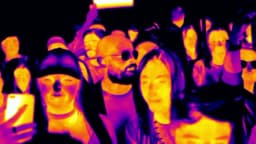
Philips Carousel, created by Tribal DDB Amsterdam in April 2009, won the Cannes Lions Film Grand Prix with a 139-second single-shot heist film for the Cinema

Philips Carousel Turned a Television Ad Into a Cannes Grand Prix Moment
Philips Carousel is a 139-second continuous-shot online film created by Tribal DDB Amsterdam to launch the Philips Cinema 21:9 LCD television in The Netherlands in April 2009, directed by Adam Berg and produced by Stinkdigital, and awarded the Cannes Lions Film Grand Prix the same year.
The campaign emerged from a deceptively simple brief. As reported by shots.net and campaignlive.co.uk, Neil Dawson, Chief Creative Officer at DDB worldwide for Philips, recalled the client instruction in three words: "Challenge us. We want change." The creative team's answer was a film that abandons the conventional grammar of the television commercial entirely. Rather than showcase the Cinema 21:9 screen through product shots or spec recitation, the spot places the viewer inside a frozen moment — the chaotic aftermath of an armoured-car heist — and moves through it in a single, unbroken tracking shot that loops on itself, functioning as an experience rather than an advertisement.
The film was published in The Netherlands and targeted the premium end of the flat-panel television market, a segment in fierce transition during 2009. The Cinema 21:9 proposition — a widescreen ratio matching the cinematic aspect ratio audiences encounter in a theatre — gave the creative team a genuine product truth to dramatise. The entire visual construction of Carousel, its frozen tableau, its sweeping lateral movement, its orchestrated depth of field, exists to put the viewer's eye in the position of someone watching the most immersive screen in the room. The campaign was distributed primarily online, channelling audiences to Philips' dedicated microsite at cinema.philips.com, where the film's looping structure and interactive framing extended the experience beyond a single passive viewing. Clapboard Score: 90/100.
Philips entered the Cinema 21:9 launch against a television market undergoing fundamental structural change. The shift from conventional cathode-ray sets to flat-panel LCD and plasma screens was accelerating across Europe, with manufacturers competing intensely on screen size, picture quality, and brand positioning rather than price alone, according to research documented on scribd.com and slideshare.net. In The Netherlands and across broader European markets, brands including Sony and Samsung were investing heavily in aspirational positioning to claim the premium tier of that transition.
The 2008–09 financial crisis complicated the landscape further. As noted by campaignlive.co.uk, weakened discretionary consumer spending affected the planned rollout of the broader campaign ecosystem surrounding Carousel, making the creative efficiency of the film itself — its capacity to travel organically online — commercially significant rather than merely aesthetically ambitious. A single piece of exceptional film work needed to carry weight that a larger, more expensive media schedule might otherwise have distributed across multiple touchpoints.
Philips' strategic foundation at the time was the "Sense and Simplicity" positioning, introduced in 2004 as a successor to the long-running "Let's make things better" platform first launched in 1995, according to En Wikipedia and adsoftheworld.com. That repositioning had moved Philips toward technology designed around people rather than technology for its own sake — a brand idea that gave the Cinema 21:9 campaign permission to lead with human experience rather than engineering specification. Neil Dawson, as cited by campaignlive.co.uk, framed the creative challenge as the need "to demonstrate an oft-claimed position of the best cinematic experience in a new and different way," acknowledging that the category claim itself was not unique and that only the execution could make it credible.
Adam Berg directed Carousel for Philips. The film's central structural device is a time-slice technique — a frozen moment in which the camera moves freely through a scene in which every human figure, every object, and every particle of debris hangs suspended in mid-action. The armoured-car heist scenario provides the creative rationale: maximum visual complexity, maximum kinetic energy, and zero motion. Everything the eye wants to follow is held perfectly still while the camera — and by implication, the viewer — travels through it unimpeded.
As characterised by promonews.tv at the time of release, the film's "impossible one-shot structure" was a defining feature of its critical reception, with Promonews noting it was likely to become "one of the most talked-about ads of the year." The production, executed by Stinkdigital, involved a combination of in-camera techniques and post-production compositing that preserved the visual coherence of a single continuous movement across a scene of considerable scale and complexity. The result reads as physically impossible — which is precisely the point. The Cinema 21:9 screen ratio, matching the 2.39:1 widescreen format of theatrical film releases, gave Berg's compositions horizontal space that a standard 16:9 frame could not accommodate, and the film was constructed to make that ratio feel inevitable rather than incidental.
Neil Dawson, speaking to campaignlive.co.uk and shots.net, cited Robert Altman as a directorial influence on the long tracking shot concept, stating: "I instantly liked the long tracking shot concept." That lineage — from Altman's fluid, multi-character ensemble sequences to a premium television advertisement — signals the cultural register Carousel was deliberately occupying. The campaign's interactive layer, delivered through the cinema.philips.com microsite developed as part of the Tribal DDB Amsterdam platform, extended the film's immersive logic into a digital environment, earning a Cannes Lions Silver in the Cyber Lions Websites and Microsites category alongside the Film Grand Prix, as documented by en.wikipedia.org and adsoftheworld.com.
Carousel won the Cannes Lions Film Grand Prix in 2009. That result, documented by en.wikipedia.org, adsoftheworld.com, and chrisbayliscreative.com, places the campaign at the top of the most scrutinised competitive advertising review in the world for that year. The film also received a Cannes Lions Silver in the Cyber Lions Websites and Microsites category for consumer products, according to the same sources. At Eurobest 2009, Carousel took the Grand Prix for Best Interactive and a Gold in Consumer Products, as recorded by chrisbayliscreative.com and Thisisnotadvertising Wordpress.
No verified sales performance data or media reach figures for the Carousel campaign have been made publicly available by Philips or Tribal DDB Amsterdam. What the award record does confirm, structurally, is that the campaign was judged to have achieved something category-defining across two distinct juries — one evaluating film craft and one evaluating digital execution — in the same competitive cycle. That dual recognition is rare and reflects the campaign's deliberate construction as a piece of work that functions simultaneously as cinema and as an interactive online experience.
The longer-term commercial context adds weight to that structural reading. Philips held the DDB relationship from the "Sense and Simplicity" era through to the end of 2011, when the global creative account moved to Ogilvy effective January 1, 2012, as reported by campaignlive.co.uk. Carousel stands as the acknowledged creative high point of that agency era, according to adsoftheworld.com and opened-source.com. Promonews characterised it at launch as a landmark production, and that assessment has been sustained by the advertising industry's collective record-keeping in the years since.
Philips Carousel is a 139-second continuous-shot film created by Tribal DDB Amsterdam to promote the Philips Cinema 21:9 LCD television. Published in The Netherlands in April 2009 and directed by Adam Berg, the film depicts a frozen heist scene and uses the 21:9 widescreen ratio as its central visual argument.
Adam Berg directed Philips Carousel. Berg worked with production company Stinkdigital to construct the film's time-slice single-shot technique, creating the effect of a camera moving freely through a scene in which every figure and object is suspended mid-action, as documented by promonews.tv and adsoftheworld.com.
Philips Carousel won the Cannes Lions Film Grand Prix in 2009, advertising's most prestigious film award. The campaign also received a Cannes Lions Silver in the Cyber Lions Websites and Microsites category for consumer products, according to en.wikipedia.org and chrisbayliscreative.com, reflecting its dual function as film and digital experience.
Tribal DDB Amsterdam created the Philips Carousel campaign. The agency developed the work under the Philips "Sense and Simplicity" brand platform, with Neil Dawson serving as Chief Creative Officer. Philips subsequently moved its global creative account from DDB to Ogilvy on January 1, 2012, as reported by campaignlive.co.uk.
The Philips Cinema 21:9 LCD television matched the 2.39:1 widescreen aspect ratio used in theatrical film releases. Launched into a European market shifting rapidly from conventional to flat-panel screens, it offered a genuinely differentiated cinematic proposition at a time when Sony and Samsung were competing aggressively for the premium television segment.
The 2008–09 financial crisis weakened discretionary electronics spending and constrained the broader media rollout planned around Carousel, according to campaignlive.co.uk. This made the film's capacity to travel organically online commercially critical, concentrating the campaign's effectiveness into a single piece of film work rather than a distributed media schedule.
.webp)
Creative Collaboration Platform: The Backbone of Modern Creative WorkWhat is a creative collaboration platform?Clapboard defines a creative collaboration platform as the operational core for today’s distributed creative teams. This is not a collection of digital collaboration tools stitched together; Clapboard’s system


Understanding the Creative Production MarketplaceWhat is a Creative Production Marketplace?Clapboard defines a creative production marketplace as a structured ecosystem where brands, agencies, and production talent converge to execute video, advertising, and branded content at scale. Unlike the legacy agency or freelanREAD FULL ARTICLE

The Urgent Need for a Creative Production Operating SystemWhy Traditional Creative Production Models Break DownClapboard sees the creative production landscape shifting under pressure. Content velocity is no longer a buzzword—it’s a mandate. Modern advertising demands relentless output across dozens of channels, each wREAD FULL ARTICLE