Parkinson Vereniging and Saatchi & Saatchi Amsterdam turned the 2013 Harlem Shake viral trend into a public service film that earned Esprix and ADCN

Worst Harlem Shake Ever Turns a Viral Moment Into a Parkinson's Message
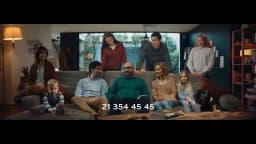
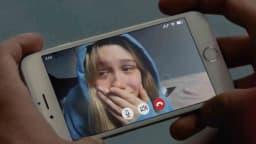
"Worst Harlem Shake Ever" is a 2013 Dutch public service film created by Saatchi & Saatchi Amsterdam for Parkinson Vereniging, in which the foundation's own chairman appears on camera experiencing involuntary shaking caused by Parkinson's disease after withholding his medication, directly contrasting the playful viral Harlem Shake trend with the permanent, uncontrolled physical reality of life with Parkinson's.
The campaign launched in the Netherlands in February and March of 2013, at the precise peak of the global Harlem Shake phenomenon. Millions of people worldwide were participating in the trend, filming themselves dancing as though they had momentarily lost control of their bodies. Parkinson Vereniging and Saatchi & Saatchi identified a single, precise insight buried inside that cultural moment: what looked like comic abandon for a dancer is an inescapable daily reality for a Parkinson's patient. The campaign exists as a single film asset, deliberately minimal in its construction, because the concept required nothing more than honest footage of one man and one undeniable truth.
The central figure is Eric Roos, chairman of Parkinson Vereniging and a person living with Parkinson's disease, as documented across campaign records cited by adsoftheworld.com and Adformatie Nl. Roos appears without actors, without staging, and without scripted performance. His shaking is real, captured after he deliberately withheld his medication for the purpose of the film. This decision transformed the piece from a public awareness advertisement into something closer to a documentary social experiment — a term that accurately describes both its production method and its emotional mechanism. In the Netherlands, where Parkinson Vereniging operates as the primary patient advocacy organisation for people affected by Parkinson's disease, the campaign represented a strategic shift toward cultural interception rather than conventional charity communication. The Clapboard Score for this campaign is 79 out of 100.
 ARCHIVE
Parkinson Vereniging operates in a competitive attention environment shared by many Dutch patient advocacy and public health organisations. The foundation chose to intercept a cultural moment rather than create one from scratch. The Harlem Shake, a video format that spread with extraordinary speed across social platforms in early 2013, presented a narrow and time-sensitive window: the format was recognisable, universally understood, and carried a specific physical vocabulary — bodies appearing to move without coordination or conscious control. Saatchi & Saatchi Amsterdam identified that this physical vocabulary was not merely similar to Parkinson's symptoms; it was, for millions of viewers, an unconscious performance of exactly those symptoms.
Marc van Gurp, writing for Adformatie on February 27, 2013, offered the clearest available Dutch trade-press response to the campaign, noting in his review that the creative approach engaged directly with the cultural exhaustion surrounding Harlem Shake imitations before redirecting that exhaustion into genuine attention. Adformatie's coverage confirmed the campaign's positioning within Netherlands advertising discourse as a notable departure from standard not-for-profit communication. In the Netherlands, the not-for-profit and public interest sector competes with well-resourced commercial advertisers for earned media and social sharing, making cultural relevance a practical strategic necessity rather than an optional creative ambition.
Competing Dutch public awareness campaigns of the same period typically relied on testimonial formats or statistical framing to build empathy. The "Worst Harlem Shake Ever" approach by Saatchi & Saatchi instead used the audience's existing emotional investment in a trending format and redirected it without explanation or argument. The film does not ask viewers to care about Parkinson's disease; it places them in a position where caring becomes the only available response. This distinction — between campaigns that argue for empathy and campaigns that engineer it structurally — defines the strategic achievement the work represents within Netherlands public service advertising in 2013.
Production credits for "Worst Harlem Shake Ever" are publicly documented across adsoftheworld.com and adformatie.nl records. Creative directors on the campaign were Maarten Dobbelaar and Rick Coolegem, both of Saatchi & Saatchi Amsterdam. Art direction was handled by Maarten Dobbelaar and Tim ten Dam, with copywriting by Rick Coolegem and Jan Bosch. The production company was DPPLR, and camera operation was carried out by Bycen Molenaar. Rick Coolegem's LinkedIn profile associates the campaign with both Esprix and ADCN Bronze recognition, as noted in campaign research records.
The film's creative execution rests entirely on a single structural decision: to place a real person, not a performer, in front of a camera and document something true. Eric Roos, as Parkinson Vereniging chairman, brought an institutional authority to the footage that no casting decision could have replicated. His willingness to withhold medication and appear on camera mid-episode gave the film an ethical weight that sits outside conventional advertising craft. Bycen Molenaar's camera work supports rather than dramatises this reality, maintaining an observational register that keeps the footage from tipping into exploitation or sentiment.
The film was distributed through social media during the Harlem Shake phenomenon's peak weeks in February and March 2013, a distribution strategy that required no paid media infrastructure beyond the organic architecture of the trend itself. Saatchi & Saatchi Amsterdam designed the piece to travel inside the existing Harlem Shake conversation, using the format's title structure — "[Descriptor] Harlem Shake" — to place the film directly in search and social discovery paths that audiences were already navigating. The result is a piece of public interest filmmaking that functions simultaneously as a search artefact, a social object, and a documentary record, without requiring viewers to already care about Parkinson's disease before pressing play.
No verified performance data for "Worst Harlem Shake Ever" — including view counts, share volumes, or donation uplift figures — is publicly available in confirmed form. Assessment of the campaign's effectiveness therefore rests on its award record, its trade press reception, and the structural properties of its design.
The campaign received three documented industry awards. At the Esprix Awards in 2014, it earned a Bronze in the Small Budget category and a Silver in the Not for Profit category, as recorded in Esprix award documentation. At the ADCN Awards in 2014, it received a Bronze in the PR Campaigns category, per ADCN records cited by adsoftheworld.com. A contributor's LinkedIn profile also records nominations — though not confirmed wins — for Cannes Lions, the Lia Awards, ADCN, SAN Accent, and the Spin Awards, indicating the campaign entered multiple international competitive circuits in 2013 and 2014.
Adformatie, the Netherlands' principal advertising trade publication, covered the campaign at launch in February 2013, placing it within mainstream Dutch industry discourse immediately on release. This level of trade press engagement for a single-asset, small-budget public interest film is structurally significant: it indicates the campaign generated professional attention proportionate to work with far larger media budgets. The Silver Esprix in the Not for Profit category is particularly meaningful given that this category evaluates campaigns specifically against the constraints of charity and public interest budgets in the Netherlands. Taken together, the award record and trade press presence confirm that "Worst Harlem Shake Ever" achieved measurable industry impact within Dutch advertising, and the nominations record suggests it reached credibly into international evaluation circuits without the media spend that typically supports such visibility.
"Worst Harlem Shake Ever" is a 2013 public service film created by Saatchi & Saatchi Amsterdam for Parkinson Vereniging in the Netherlands. It features Eric Roos, the foundation's chairman and a Parkinson's patient, experiencing real, unscripted shaking after withholding his medication, contrasting the viral Harlem Shake trend with the permanent reality of Parkinson's disease.
Saatchi & Saatchi Amsterdam created the campaign. Creative directors were Maarten Dobbelaar and Rick Coolegem. Art directors were Maarten Dobbelaar and Tim ten Dam. Copywriters were Rick Coolegem and Jan Bosch. Production company DPPLR produced the film, with Bycen Molenaar as camera operator, per records on adsoftheworld.com and adformatie.nl.
The campaign won three documented awards in 2014. It received a Bronze and a Silver at the Esprix Awards, in the Small Budget and Not for Profit categories respectively, and an ADCN Bronze in the PR Campaigns category, per Esprix and ADCN records cited by adsoftheworld.com. Cannes Lions nominations were recorded but no win was confirmed.
Parkinson Vereniging and Saatchi & Saatchi identified that the Harlem Shake's visual language — bodies appearing to move without control — directly mirrored Parkinson's symptoms. Intercepting the trend in the Netherlands in February and March 2013 allowed the campaign to reach audiences already engaged with the format, without requiring paid media infrastructure or prior awareness of the disease.
Eric Roos is the chairman of Parkinson Vereniging and a person living with Parkinson's disease. He appears as the central figure in the 2013 film, documented by adsoftheworld.com and adformatie.nl, showing real involuntary shaking after deliberately withholding his medication — making the film an unscripted documentary record rather than a conventional advertisement.
Parkinson Vereniging distributed the film through social media during the Harlem Shake phenomenon's peak in February and March 2013. Parkinson Vereniging promoted it on Twitter on February 26, 2013, per campaign records. The title structure mirrored existing Harlem Shake search patterns, enabling organic discovery without substantial paid distribution support, as noted in Adformatie's February 2013 coverage.
.webp)
Creative Collaboration Platform: The Backbone of Modern Creative WorkWhat is a creative collaboration platform?Clapboard defines a creative collaboration platform as the operational core for today’s distributed creative teams. This is not a collection of digital collaboration tools stitched together; Clapboard’s system


Understanding the Creative Production MarketplaceWhat is a Creative Production Marketplace?Clapboard defines a creative production marketplace as a structured ecosystem where brands, agencies, and production talent converge to execute video, advertising, and branded content at scale. Unlike the legacy agency or freelanREAD FULL ARTICLE

The Urgent Need for a Creative Production Operating SystemWhy Traditional Creative Production Models Break DownClapboard sees the creative production landscape shifting under pressure. Content velocity is no longer a buzzword—it’s a mandate. Modern advertising demands relentless output across dozens of channels, each wREAD FULL ARTICLE