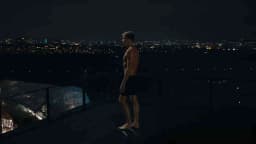
On's 'To Chase a Dream' follows South Sudanese refugee Dominic Lobalu from stateless athlete to 10,000m European Champion, released two days before Paris 2024.

On Chases Olympic Glory With Dominic Lobalu's Refugee Story
On released 'To Chase a Dream' on 8 August 2024, two days before Dominic Lobalu competed in the men's 5,000m final at the Paris Summer Olympics 2024, delivering a nine-minute branded documentary that traces the South Sudanese refugee athlete's journey from stateless competitor to 10,000m European Champion racing under the Swiss flag.
The film is the third and final installment of On's Dream Together Olympic short-film trilogy, produced by Park Pictures London and directed by J.M. Harper and Hector Aponysus, as confirmed by Press On-Running. Its release was timed with surgical precision to the Paris Summer Olympics 2024 schedule, anchoring emotional investment in Lobalu's story to the live drama of Olympic competition. The campaign operates simultaneously as a brand film and a sports documentary, drawing on the visual grammar of long-form documentary cinema rather than conventional advertising formats.
In Switzerland, where On is headquartered and where Lobalu sought asylum after competing with the Olympic Refugee team, the film carries particular cultural weight. Lobalu's situation after seeking asylum was an unresolved paradox: his refugee status made him ineligible to compete for either the Refugee Olympic team or the Swiss national team, rendering him a stateless athlete. To Chase a Dream charts the developments that resolved that impasse, culminating in Lobalu claiming the 10,000m European Championship title in Rome on his first attempt at the distance. The Clapboard Score for this campaign is 73 out of 100, reflecting strong creative ambition and strategic timing set against the challenge of standing out in a crowded Olympic marketing landscape.
The campaign's objectives are threefold: to deepen On's brand identity as a purposeful performance brand rooted in Switzerland, to humanise the Olympic Refugee sports story beyond sloganeering, and to build anticipation for Lobalu's Paris 2024 appearance among both running enthusiasts and a broader cultural audience following the refugee athlete narrative.
On occupies a distinct strategic position in the global running market. The brand's decision to centre its Olympic campaign on Dominic Lobalu's refugee sports story reflects a deliberate choice to pursue emotional differentiation rather than compete on performance data or star power alone. Running is forecast to increase its share of global sportswear to a meaningful segment by 2029 at a compound annual growth rate of 6.3 percent, according to GlobalData, making the category intensely competitive and the stakes for cultural relevance correspondingly high.
Nike held approximately 14.1 percent of the global sportswear market in 2024, down from 15.2 percent in 2023, according to GlobalData, while adidas held approximately 8.2 percent of the same market in the same year, per GlobalData. Against these dominant competitors, On has pursued a challenger strategy that prizes narrative authenticity over mass reach. The refugee athlete story, and specifically Lobalu's paradoxical statelessness in Switzerland after seeking asylum, provides On with a storyline that neither Nike nor adidas can claim. It is rooted in On's home geography and connected to a real athlete in the brand's performance stable.
The strategic insight driving To Chase a Dream is that Olympic audiences in 2024 were not passive. Viewers arriving at the Paris Summer Olympics 2024 already carrying knowledge of Lobalu's earlier journey, documented in On's 2023 film The Right to Race, were primed for narrative resolution. The film functions as a sequel in the truest sense, arriving precisely when the audience's emotional investment was at its peak. In Switzerland, where Lobalu's asylum story had been publicly documented, the film addressed a domestic audience that understood the institutional barriers he had faced. This localised resonance amplified what could otherwise have been a universally generic Olympic inspiration narrative into something with genuine specificity, grounding the campaign in a real legal and human situation rather than abstraction.
To Chase a Dream presented its directors with a precise creative problem. J.M. Harper addressed this directly, as quoted by press.on-running.com: 'It's no secret that Dominic's backstory has been covered in the previous 30-minute documentary The Right to Race. Profiling the same character again required that we approach with a fresh context, visual approach and thematic takeaway.' The solution was to shift the camera's perspective from origin story to present-tense belonging, capturing not where Lobalu came from but what Switzerland has become to him and what he intends to give back to it.
Park Pictures London served as the production company, with director of photography Jan Mettler responsible for the film's visual texture, as documented by press.on-running.com and shots.net. The film was shot on location in Lobalu's adopted hometown of St. Gallen in Switzerland, grounding its emotional argument in the specific geography of his daily life rather than abstract inspirational landscapes. This production decision communicates Switzerland not as a backdrop but as a home, reinforcing the film's central claim that belonging is earned through mutual love rather than legal status.
The editorial work was handled by Byron Leon and Gabriela Tessitore, with composer William Ryan Fritch scoring the film and Raphaël Ajuelos serving as sound designer and mixer, as credited by press.on-running.com. Colorist Ayumi Ashley's work contributes to a visual palette that, per the film's documentary aesthetic, resists the hyper-saturation common to sports advertising. The nine-minute runtime is itself a creative statement. Where most branded content compresses emotion into thirty or sixty seconds, On and Park Pictures chose a format that demands sustained attention and rewards it with genuine dramatic arc. Lobalu's own words, recorded in the film, carry the narrative's emotional resolution: 'When I am here, I feel like I am in my homeland and it's a place I call home.'
No independently verified performance data for To Chase a Dream in the form of view counts, earned media valuations, or conversion metrics is publicly available from a named third-party source at the time of writing. What is documentable is the structural effectiveness of the campaign's release strategy and its position within a proven content lineage.
The preceding film in the Dream Together trilogy, The Right to Race, premiered at the Cannes Lions International Festival of Creativity in 2023, establishing a benchmark of creative credibility for the series, as reported by press.on-running.com and confirmed by okayafrica.com. That premiere positioned On's long-form documentary work as category-defining within the branded content space, and To Chase a Dream inherited that reputational capital on release. The timing of the August 2024 launch, arriving two days before Lobalu's actual Olympic 5,000m final in Paris, created a media environment in which the film and the live sporting event amplified each other organically. Any journalist or broadcaster covering Lobalu's Paris Summer Olympics 2024 appearance had immediate access to a fully formed narrative context that On had supplied.
In Switzerland, On's home market, the campaign reached an audience already predisposed to follow Lobalu's story given its domestic legal dimensions. The combination of a locally resonant refugee sports story, an Olympic moment of international scale, and a nine-minute film format designed for sharing and discussion rather than passive consumption represents a structural configuration that typically generates sustained earned media well beyond the initial release window. The Clapboard Score of 73 out of 100 reflects this assessment: strong strategic architecture and authentic creative execution, with room for measurable amplification data to strengthen the overall evaluation.
'To Chase a Dream' is a nine-minute documentary released by On on 8 August 2024. It follows South Sudanese refugee athlete Dominic Lobalu's journey from statelessness in Switzerland to winning the 10,000m European Championship title in Rome, timed to his appearance at the Paris Summer Olympics 2024.
J.M. Harper and Hector Aponysus directed the film together. Park Pictures London served as the production company. Director of photography Jan Mettler shot the film on location in St. Gallen, Switzerland, with editors Byron Leon and Gabriela Tessitore shaping the final cut, as credited by press.on-running.com.
'To Chase a Dream' is the third and final film in On's Dream Together Olympic trilogy. It continues Dominic Lobalu's story directly from The Right to Race, which premiered at Cannes Lions in 2023. The new film adopts a fresh visual approach focused on Lobalu's present life and belonging in Switzerland rather than his origin story.
Lobalu's asylum application in Switzerland created a legal paradox. Seeking asylum disqualified him from competing with the Olympic Refugee team, while his status as a non-citizen initially prevented him from representing Switzerland. To Chase a Dream documents the developments that eventually allowed him to race for his adopted country at the European Athletics Championships in Rome.
On released the film on 8 August 2024, two days before Dominic Lobalu competed in the men's 5,000m final at the Paris Summer Olympics 2024. This timing allowed the documentary to prime audience emotional investment immediately before Lobalu's live Olympic appearance, as confirmed by press.on-running.com.
'To Chase a Dream' received a Clapboard Score of 73 out of 100. The score reflects strong strategic timing, authentic creative execution rooted in a real refugee sports story, and On's established long-form documentary credibility, balanced against the absence of publicly verified performance metrics for the 2024 campaign.
.webp)
Creative Collaboration Platform: The Backbone of Modern Creative WorkWhat is a creative collaboration platform?Clapboard defines a creative collaboration platform as the operational core for today’s distributed creative teams. This is not a collection of digital collaboration tools stitched together; Clapboard’s system


Understanding the Creative Production MarketplaceWhat is a Creative Production Marketplace?Clapboard defines a creative production marketplace as a structured ecosystem where brands, agencies, and production talent converge to execute video, advertising, and branded content at scale. Unlike the legacy agency or freelanREAD FULL ARTICLE

The Urgent Need for a Creative Production Operating SystemWhy Traditional Creative Production Models Break DownClapboard sees the creative production landscape shifting under pressure. Content velocity is no longer a buzzword—it’s a mandate. Modern advertising demands relentless output across dozens of channels, each wREAD FULL ARTICLE