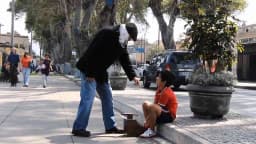
The "SOS by SMS" campaign by Obra do Berço leverages innovative technology and emotional storytelling to amplify the voices of street children in Rio de Janeiro, aiming to raise awareness and drive donations. The brand’s proposition centers on creating a tangible connection between drivers—accustomed to ignoring homeless children—and the urgent need for support these children face daily. By translating the children’s presence into a direct and personal digital message, the campaign reframes passive visibility into active engagement, emphasizing that closing a car window should not equate to shutting one’s eyes to the reality of street child homelessness. This approach positions Obra do Berço not just as a day care provider, but as a critical intermediary empowering vulnerable children with future opportunities and refuge.
The market strategy hinges on a dual insight: first, urban drivers regularly encounter street children but often avoid interaction, reinforcing social invisibility; second, mobile technology can create an immediate, personalized appeal. The campaign targets drivers at traffic stops where children typically beg, using hidden Bluetooth antennas to send an SMS that personalizes the children’s plea, transforming a moment of social tension into one of empathy and action. This ambient media tactic uniquely interrupts routine behavior without confrontation, fostering a direct emotional appeal that encourages small, concrete donations. The creative angle combines a social experiment format with documentary sensibility, lending authenticity and urgency to the message. Overall, the campaign effectively aligns technology, environment, and human insight to shift perception and motivate behavioral change within a challenging social context.
FORMAT#2 SHOW THE PROBLEM — Highlights a relatable problem, then shows the product as the solution.
This campaign is constructed to first bring attention to a pressing societal issue—street children being routinely ignored by drivers at traffic stops. The narrative cues and situational description emphasize this real-world problem. Then, the Obra do Berço initiative introduces "SOS by SMS" as a direct solution, utilizing technology (hidden antennas sending SMS) to break through drivers’ indifference and offer them an actionable way to help. The problem–solution framing is explicit and central, differentiating this from symbolic or story-driven approaches.
ADVERTISING FORMATS EXPLAINED: https://www.clapboard.com/blog/branding-and-advertising/brand-strategy/12-advertising-creative-formats
1. Criança Esperança – Positioned as a nationwide collaborative initiative between Globo and UNESCO, Criança Esperança leverages mass media and celebrity endorsements to raise funds and awareness for children’s education and welfare, focusing on storytelling that inspires community involvement and grassroots change.
2. Fundação Abrinq – Known for its strong advocacy on children's rights in Brazil, Fundação Abrinq differentiates itself through policy influence, large-scale campaigns, and partnerships with corporations to improve public policies around education, health, and protection of children.
3. Instituto Alana – Positioned as a progressive social organization, Instituto Alana focuses on childhood development, creative education, and protecting children’s rights with a strong emphasis on research, innovation, and public engagement through thought leadership and impactful campaigns.
4. Associação Mães da Sé – With a grassroots and community-centered approach, Associação Mães da Sé supports vulnerable children in São Paulo by providing shelter, education, and rehabilitation, emphasizing direct service delivery and localized impact over mass media coverage.
5. Save the Children Brazil – As part of the global Save the Children network, it focuses on children’s protection, education, and health in Brazil by utilizing international expertise combined with local partnerships to implement evidence-based programs and emergency response initiatives.
Q: What is SOS by SMS about?
A: SOS by SMS is a professional ambient campaign launched in Brazil in 2013 for the nonprofit organization Obra do Berço, created by the agency DM9Rio. The campaign addresses the widespread issue of street children being ignored at busy traffic stops in Rio de Janeiro. By installing hidden Bluetooth antennas near traffic lights, the campaign sent personalized SMS messages to drivers as they stopped, delivering emotional pleas from the perspective of the children. The central creative idea was to break through social indifference and encourage immediate donations to Obra do Berço, which provides shelter and support for vulnerable children.
Q: What creative device does SOS by SMS use?
A: SOS by SMS employs the FORMAT#2 SHOW THE PROBLEM technique, as classified by Clapboard’s 12-format taxonomy. This approach highlights a real and relatable societal problem—street children being routinely ignored by drivers—and then presents Obra do Berço’s initiative as the direct solution. The campaign’s creative execution uses ambient media and technology to confront drivers with the issue at the exact moment they typically avoid engagement, transforming passive avoidance into an opportunity for active support through a simple donation mechanism.
Q: What is the campaign proposition for SOS by SMS?
A: The campaign proposition for SOS by SMS centers on leveraging innovative technology and emotional storytelling to create a direct connection between drivers and street children in Rio de Janeiro. Obra do Berço positions itself as a critical intermediary, empowering vulnerable children with shelter and future opportunities. The campaign reframes the act of closing a car window from an act of indifference to a moment for empathy and action, urging drivers not to ignore the reality of child homelessness. This strategic positioning aims to shift perceptions and drive donations within the public service sector.
Q: How does SOS by SMS rank in Clapboard's archive?
A: SOS by SMS holds a Clapboard Campaign Score of 71/100 in Clapboard’s global ad archive. This score reflects the campaign’s creative ambition, execution quality, and cultural relevance as assessed by Clapboard’s curatorial standards.
Q: Who are the competitors in Obra do Berço's category?
A: In the public service sector focused on children’s welfare in Brazil, Obra do Berço competes with initiatives such as Criança Esperança, which leverages mass media and celebrity endorsements for nationwide fundraising and awareness; Fundação Abrinq, recognized for its advocacy and policy influence on children’s rights; Instituto Alana, which emphasizes research-driven innovation and creative education; Associação Mães da Sé, known for its grassroots support and direct service delivery in São Paulo; and Save the Children Brazil, which combines international expertise with local partnerships to implement comprehensive child protection and development programs.



.webp)