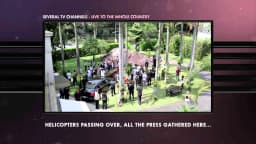
NSPCC's 'Alfie the Astronaut', created by Leo Burnett London in September 2015, marks the charity's first major brand campaign in six years and its boldest

How NSPCC and Leo Burnett Made a Child's Dream the Heart of Child Protection
NSPCC's 'Alfie the Astronaut' is a 60-second television film created by Leo Burnett London, launched in the United Kingdom on 15 September 2015, in which a child named Alfie narrates experiences of domestic violence and physical abuse through the lens of an astronaut daydream, positioning the power of imagination as both a survival mechanism and a reason to donate to child protection.
The campaign carried the platform line 'Every Childhood is Worth Fighting For' and closed with the donation endline 'Your donation can take a child anywhere', supported by the hashtag #EveryChildhood. According to NSPCC's 2015/16 annual report, as cited by Nspcc Org Uk, 'Alfie the Astronaut' was the organisation's first major brand campaign in six years, making its September 2015 launch a significant institutional moment as well as a creative one. The work represented NSPCC's deliberate move away from graphic shock imagery toward a narrative built on hope and the consequences of positive intervention.
In the United Kingdom, the film premiered on Channel 4 during the broadcast of Educating Cardiff, introduced by Musharaf Asghar, a placement chosen to reach a broad family audience at a culturally resonant moment, as reported by The Drum. The campaign contained a single media asset — the film itself — making the precision of its storytelling central to its commercial and charitable objectives. NSPCC stated, as documented on nspcc.org.uk, that the work was designed to show how protecting children allows them to retain the freedom to dream. Clapboard scores the campaign 63 out of 100, recognising its strategic clarity and emotional construction while noting the inherent challenge of sustaining engagement across a single-asset release.

NSPCC made a deliberate strategic decision to move away from graphic depictions of child cruelty. The charity's previous brand platform, known as 'Full Stop', had for years relied on visceral imagery to prompt donations and mobilise public action across the United Kingdom, according to reporting by thedrum.com. By 2015, internal and external strategic thinking had shifted toward showing the positive consequences of intervention rather than the distressing reality of abuse, a pivot documented by marcommnews.com as foundational to the 'Every Childhood is Worth Fighting For' repositioning.
The strategic insight driving 'Alfie the Astronaut' was that a child's imagination — specifically their capacity to dream of futures beyond their current circumstances — is both the thing most at risk when abuse occurs and the most emotionally compelling reason for a donor to act. Strategic planners Kit Altin and Frances Gibbs of Leo Burnett London shaped this thinking into a narrative frame that made the audience complicit in Alfie's future, rather than simply witnesses to his suffering. According to shots.net, the creative team of Matt Lee and Pete Heyes translated this brief into a film in which Alfie's astronaut fantasy operates simultaneously as escape, resilience, and appeal.
The competitive landscape for charity advertising in the United Kingdom was intensifying at this precise moment. Organisations including Save the Children and Barnardo's had each invested in emotionally sophisticated film work targeting donors across television and digital platforms. In 2015/16, UK charity advertising spend reached £458.8 million, up six percent year on year, according to campaignlive.com, with television accounting for £120.5 million of that total, also up fifteen percent year on year per the same source. NSPCC's choice of a premium television launch — a single 60-second film on Channel 4 — was a considered investment against a backdrop of sector-wide growth in broadcast spend.
Director Chris Hewitt of production company Knucklehead directed 'Alfie the Astronaut'. The film's central craft challenge was sustaining tonal duality throughout its 60-second runtime: Alfie's astronaut imagination had to feel genuinely wondrous while the domestic violence context remained legible and emotionally present without explicit depiction, according to shots.net. Hewitt and director of photography Chayse Irvin constructed a visual language in which the domestic and the cosmic exist in the same frame, using light, scale, and the child performer's performance to carry the emotional weight of the script written by Matt Lee and Pete Heyes.
Executive Creative Director Justin Tindall and Creative Director Beri Cheetham oversaw the creative development at Leo Burnett London, with agency producer Hannah Boase managing production alongside producer Matthew Brown and executive producer Lisa Kenrick at Knucklehead, with additional production by Antonia Porter, as documented by shootonline.com. The film was edited by Adam Marshall at Whitehouse Post, with Iain Whitewright serving as assistant editor, as reported by shots.net. The precision of the edit was critical: the transitions between Alfie's imagined space world and the reality of his home environment were required to feel seamless rather than jarring, preserving the audience's emotional investment in the child's interior life.
The campaign's media planning was handled by Diane Alagar and Lee Isaacs, with account management led by Sarah-Jayne Ljungstrom, as documented in campaign records cited by clapboard.com. The decision to launch exclusively on Channel 4 during Educating Cardiff — a documentary series with a built-in audience sympathetic to stories of young people overcoming adversity — demonstrates the degree to which media strategy was integrated into the creative and narrative intent of the wider campaign from the outset.
NSPCC's 2015/16 annual report, as cited by nspcc.org.uk, identified 'Alfie the Astronaut' as a landmark campaign and the organisation's first major brand film in six years, indicating that it carried significant institutional weight within NSPCC's fundraising and awareness strategy for the period. The marketingsociety.com record of the campaign corroborates its standing as a strategic repositioning moment rather than a standalone executional piece.
No verified independent performance data isolating donation uplift or awareness shift attributable specifically to 'Alfie the Astronaut' is publicly available. However, the structural conditions for effectiveness were strong. A single premium 60-second film placed on Channel 4 during a high-attention documentary broadcast reaches a concentrated, emotionally primed audience. The clarity of the endline — 'Your donation can take a child anywhere' — provides a direct and memorable call to action that maps back to the film's central image. The hashtag #EveryChildhood extended the platform into social media with a phrase broad enough to build long-term brand equity beyond a single execution.
In the United Kingdom, the broader charity advertising sector was growing through this period. Television charity spend of £120.5 million in 2015/16 was up fifteen percent year on year, according to campaignlive.com, suggesting that NSPCC's investment in broadcast was consistent with sector momentum rather than counter to it. Clapboard scores 'Alfie the Astronaut' 63 out of 100, reflecting a campaign with genuine strategic coherence and emotional intelligence but limited verifiable post-campaign data in the public domain.
'Alfie the Astronaut' is a 60-second television film created by Leo Burnett London for NSPCC, launched in the United Kingdom in September 2015. The film follows a child named Alfie who imagines himself as an astronaut while narrating experiences of domestic violence, supporting NSPCC's 'Every Childhood is Worth Fighting For' platform and the donation endline 'Your donation can take a child anywhere.'
Leo Burnett London created the campaign for NSPCC. Creatives Matt Lee and Pete Heyes wrote the film, with Creative Director Beri Cheetham and Executive Creative Director Justin Tindall overseeing it. Director Chris Hewitt of Knucklehead directed the film, which was edited by Adam Marshall at Whitehouse Post with Iain Whitewright as assistant editor.
NSPCC first broadcast 'Alfie the Astronaut' on Channel 4 on 15 September 2015 in the United Kingdom. The film aired during the broadcast of Educating Cardiff, introduced by Musharaf Asghar, a placement designed to reach a broad family audience at a culturally resonant moment, as reported by thedrum.com.
NSPCC moved away from its previous 'Full Stop' platform, which relied on graphic depictions of abuse. The 2015 repositioning, as documented by marcommnews.com and thedrum.com, shifted focus to showing the positive consequences of intervention, using a child's imagination and future dreams to make the case for donation rather than shock tactics.
The campaign platform was 'Every Childhood is Worth Fighting For.' The donation endline was 'Your donation can take a child anywhere' and the campaign hashtag was #EveryChildhood. According to nspcc.org.uk, the campaign represented NSPCC's first major brand campaign in six years and a foundational repositioning of the charity's public identity.
Clapboard scores 'Alfie the Astronaut' 63 out of 100. The score reflects the campaign's genuine strategic coherence, emotional intelligence, and significance as NSPCC's first major brand film in six years, balanced against the limited verifiable post-campaign performance data available in the public domain for this United Kingdom public service campaign.
.webp)
Creative Collaboration Platform: The Backbone of Modern Creative WorkWhat is a creative collaboration platform?Clapboard defines a creative collaboration platform as the operational core for today’s distributed creative teams. This is not a collection of digital collaboration tools stitched together; Clapboard’s system


Understanding the Creative Production MarketplaceWhat is a Creative Production Marketplace?Clapboard defines a creative production marketplace as a structured ecosystem where brands, agencies, and production talent converge to execute video, advertising, and branded content at scale. Unlike the legacy agency or freelanREAD FULL ARTICLE

The Urgent Need for a Creative Production Operating SystemWhy Traditional Creative Production Models Break DownClapboard sees the creative production landscape shifting under pressure. Content velocity is no longer a buzzword—it’s a mandate. Modern advertising demands relentless output across dozens of channels, each wREAD FULL ARTICLE