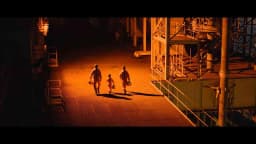
The Earth Hour 2013 "Nightlife" campaign by Leo Burnett Manila leverages the global initiative’s core value of promoting environmental responsibility through collective action. It underscores the brand proposition of inspiring individuals and communities to reconnect with nature by emphasizing the simple yet impactful act of switching off lights for one hour. The campaign’s promise centers on illuminating the importance of conservation and climate awareness while encouraging behavioral change through an accessible, symbolic gesture that unites people in a shared environmental commitment.
Strategically, the campaign taps into the cultural and social dynamics of the Philippines by framing Earth Hour as more than just an environmental event—it becomes a social experiment and documentary-style storytelling that highlights nightlife scenarios without artificial lighting, fostering reflection on humanity’s reliance on energy consumption. This creative angle, paired with a relatable local context, aims to deepen engagement by provoking curiosity and empathy, rather than delivering a direct call to action. The insight behind the campaign recognizes that meaningful participation in public service initiatives arises from emotional resonance and a sense of community belonging, rather than guilt or didactic messaging. By using film as the medium and focusing on the experiential aspect of darkness, the ad invites the audience to rediscover natural beauty and the power of collective effort in a visually compelling way. The modest digital footprint suggests a targeted rather than mass-media approach, prioritizing depth of impact within a specific market segment concerned with environmental and social themes over broad reach.
FORMAT#3 SYMBOLIZE THE PROBLEM — Uses symbols or analogies to represent the problem instead of showing it literally.
The Earth Hour 2013 "Nightlife" TVC, produced for WWF by Leo Burnett Manila, is positioned within the Public Service category and leverages the documentary/social experiment genre. The campaign prompt “Let life shine bright. Switch Off.” and the core idea of Earth Hour frame the ‘problem’ of light pollution and energy consumption. The campaign’s very title—“Nightlife”—evokes a metaphorical contrast, likely using darkness (or its absence) as a symbol of human environmental impact, without showing the problem in a literal, factual way. There’s no indication of a traditional narrative arc, testimonial, comparative framing, clear protagonist, or overt product demonstration; instead, the campaign leverages symbolic communication to urge viewers to participate in Earth Hour, making FORMAT#3 the best fit.
1. Greenpeace Philippines – Positioned as a global environmental advocacy group, Greenpeace Philippines leverages grassroots activism and bold campaigns to promote ecological preservation and climate action, emphasizing direct community involvement and urgent policy change to combat environmental degradation.
2. World Wide Fund for Nature (WWF) Philippines – WWF Philippines focuses on conserving the country’s rich biodiversity through science-based programs, partnerships with local communities, and promoting sustainable natural resource management, positioning itself as a leader in environmental research and practical conservation efforts.
3. Climate Reality Project Philippines – This organization centers on raising awareness about climate change impacts through educational initiatives and empowering individuals and leaders to take meaningful climate action, positioning itself as a catalyst for behavioral and policy change on climate issues in the Philippines.
4. Haribon Foundation – Haribon Foundation distinguishes itself by combining environmental research, advocacy, and community-based conservation, particularly in forest and marine ecosystems, positioning itself as a key player in biodiversity conservation linked with local empowerment strategies.
5. Philippine Reef and Rainforest Conservation Foundation – The foundation strategically focuses on preserving critical ecosystems like reefs and rainforests by engaging in science-driven projects and community education programs, positioning itself as a specialized entity addressing habitat protection and sustainable livelihoods amidst environmental challenges.
Q: What is Nightlife about?
A: Nightlife is a professional campaign launched in the Philippines in 2013 for Earth Hour, created by Leo Burnett Manila. Developed for WWF, this film-based campaign was designed to promote awareness and participation in the global Earth Hour initiative. The central creative idea encourages individuals and communities to switch off their lights on March 23 at 8:30 PM, symbolizing a collective commitment to combating climate change and conserving energy. Through evocative storytelling and immersive visuals, Nightlife highlights the beauty and vibrancy of natural habitats that can thrive when human activity is more mindful, positioning Earth Hour as a catalyst for environmental stewardship.
Q: What creative device does Nightlife use?
A: Nightlife employs FORMAT#3 SYMBOLIZE THE PROBLEM, as defined by Clapboard's 12-format taxonomy. Rather than depicting environmental issues literally, the campaign uses symbolic analogies—specifically, the interplay of darkness and light—to represent the problems of light pollution and energy consumption. This creative approach invites viewers to reflect on the impact of their actions without relying on overt demonstrations or direct messaging. By leveraging metaphor and atmosphere, Nightlife crafts an emotionally resonant narrative that aligns with the symbolic gesture of Earth Hour, urging participation through evocative visual storytelling.
Q: What is the campaign proposition for Nightlife?
A: The campaign proposition for Nightlife centers on inspiring collective environmental responsibility by encouraging people to reconnect with nature through the simple act of switching off lights for one hour. Earth Hour, as presented by Leo Burnett Manila, positions itself as more than an environmental event—it becomes a shared social experiment that fosters reflection on energy consumption and humanity’s relationship with the natural world. This strategic positioning targets individuals and communities in the Philippines, emphasizing emotional engagement and community belonging as the drivers of meaningful participation in public service initiatives, rather than relying on guilt or didactic appeals.
Q: How does Nightlife rank in Clapboard's archive?
A: Nightlife holds a Clapboard Campaign Score of 63/100 in Clapboard's global ad archive. This score reflects the campaign’s creative ambition, execution quality, and cultural relevance within the context of public interest advertising and environmental advocacy.
Q: Who are the competitors in Earth Hour's category?
A: In the public service and environmental advocacy sector, Earth Hour competes with several key organizations. Greenpeace Philippines is recognized for its grassroots activism and bold campaigns focused on ecological preservation and urgent policy change. WWF Philippines, the local arm of the global conservation leader, emphasizes science-based programs and sustainable resource management. The Climate Reality Project Philippines drives climate action through education and empowerment, while Haribon Foundation combines research and community-based conservation, particularly in forest and marine ecosystems. The Philippine Reef and Rainforest Conservation Foundation specializes in protecting critical habitats through science-driven projects and community engagement, rounding out a competitive landscape committed to environmental stewardship.


 ARCHIVE
.webp)