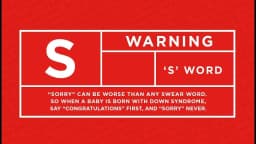
The campaign "Stereotypes vs Profiling" by the brand truth, created in partnership with Arnold, addresses the pervasive issue of racial profiling through a documentary-style social experiment. Positioned within the public service sector, the campaign aims to challenge viewers’ preconceived notions by exposing the stark contrast between stereotypes and actual profiling statistics. The core brand proposition revolves around promoting awareness and critical reflection on how assumptions based on appearance influence perceptions and judgments—ultimately encouraging more informed and fair-minded attitudes.
Strategically, the campaign leverages a social experiment format to present real-world interactions that reveal implicit biases, thereby grounding its message in authenticity and emotional resonance. By juxtaposing numerical data (e.g., "1075 vs 137") with personal experiences, the campaign highlights the disparity between stereotypes and reality, inviting the audience to reconsider and question their own biases. The inclusion of hashtags like #vote69 and #votemore suggests an additional layer aimed at mobilizing viewers toward social and civic engagement, linking personal awareness with collective action. Targeting a U.S. audience familiar with ongoing debates about racial profiling, truth employs a documentary genre to lend credibility and seriousness to the issue, distinguishing itself from conventional advertisements by focusing on education and social change rather than product promotion. The campaign’s delivery through film and digital platforms aims to engage a socially conscious demographic open to reflection on systemic issues, using storytelling to foster empathy and provoke dialogue.
FORMAT#3 SYMBOLIZE THE PROBLEM — Uses symbols or analogies to represent the problem instead of showing it literally.
This campaign, “Stereotypes vs Profiling,” from truth, uses the documentary/social experiment genre—suggesting a conceptual exploration rather than a literal narrative. The title juxtaposes abstract concepts (“Stereotypes” and “Profiling”), indicating that it likely employs symbolic representation to frame societal issues, rather than dramatizing them directly. Truth’s signature style often visualizes invisible social phenomena (like manipulation or bias) via metaphors or constructed social experiments, making FORMAT#3 the closest match: the campaign symbolizes the problem of public stereotypes and profiling to engage critical reflection rather than offering a direct solution or testimonial.
ADVERTISING FORMATS EXPLAINED: https://www.clapboard.com/blog/branding-and-advertising/brand-strategy/12-advertising-creative-formats
1. The Campaign for Tobacco-Free Kids – Positioned as a data-driven advocacy organization focusing on policy change to reduce tobacco use among youth, leveraging robust research and coalition-building to influence lawmakers and public opinion.
2. American Legacy Foundation (Truth Initiative) – As the parent organization of the truth brand, it emphasizes youth empowerment and counter-marketing strategies that use edgy, youth-focused messaging to expose tobacco industry tactics and reduce smoking rates.
3. Smoke-Free Kids – Focuses on empowering parents with tools and educational resources to prevent kids from starting to smoke, differentiating through family-centered prevention efforts and early intervention.
4. American Cancer Society – Operates with a broad public health mission incorporating tobacco control as part of cancer prevention, using trusted messaging rooted in health risks and survivor stories to motivate quitting and prevention.
5. Campaign for Healthy Kids – Emphasizes childhood health and wellness with a strong stance against tobacco use, differentiating by integrating anti-tobacco messaging into wider child health advocacy and community-based initiatives.
Q: What is Stereotypes vs Profiling, 1075 vs 137, #vote69, #votemore... about?
A: Stereotypes vs Profiling, 1075 vs 137, #vote69, #votemore... is a 2013 film campaign created by the agency Arnold for the brand truth in the United States. Operating within the public interest sector, the campaign uses a documentary-style social experiment to confront issues of stereotyping and profiling. Through seven distinct media assets, it juxtaposes statistical contrasts and personal experiences to reveal the gap between perception and reality, encouraging viewers to critically examine their own biases. The campaign’s use of hashtags and data-driven storytelling aims to inspire civic engagement and foster dialogue around prejudice and informed decision-making.
Q: What creative device does Stereotypes vs Profiling, 1075 vs 137, #vote69, #votemore... use?
A: Stereotypes vs Profiling, 1075 vs 137, #vote69, #votemore... employs FORMAT#3 SYMBOLIZE THE PROBLEM, as classified by Clapboard’s 12-format taxonomy. Rather than depicting bias and profiling literally, the campaign uses symbolic contrasts—such as the numbers 1075 vs 137—and documentary social experiments to represent systemic issues. This approach invites viewers to engage intellectually and emotionally, prompting critical reflection on the underlying problems rather than offering direct testimonials or dramatizations. The symbolic device is central to the campaign’s conceptual and narrative strategy.
Q: What is the campaign proposition for Stereotypes vs Profiling, 1075 vs 137, #vote69, #votemore...?
A: The campaign proposition for Stereotypes vs Profiling, 1075 vs 137, #vote69, #votemore... centers on challenging viewers’ assumptions about racial profiling by exposing the disparity between stereotypes and actual data. Targeting a U.S. audience engaged with public service issues, truth and Arnold position the campaign as a call for critical self-examination and greater awareness of how biases shape perceptions. By leveraging a social experiment format and integrating hashtags that encourage activism, the campaign connects personal awareness to broader civic participation, aiming to foster more equitable attitudes and behaviors within society.
Q: How does Stereotypes vs Profiling, 1075 vs 137, #vote69, #votemore... rank in Clapboard's archive?
A: Stereotypes vs Profiling, 1075 vs 137, #vote69, #votemore... holds a Clapboard Campaign Score of 63/100. This score reflects the campaign’s creative ambition, execution quality, and cultural relevance as assessed by Clapboard’s global ad archive.
Q: Who are the competitors in truth's category?
A: In the public service and anti-tobacco sector, truth competes with organizations such as the Campaign for Tobacco-Free Kids, which emphasizes data-driven advocacy and policy change, and the American Legacy Foundation (Truth Initiative), known for youth empowerment and counter-marketing. Other competitors include Smoke-Free Kids, focusing on parental education and early intervention, the American Cancer Society, which integrates tobacco control into a broader health mission, and the Campaign for Healthy Kids, which incorporates anti-tobacco messaging within wider child health advocacy efforts. Each brings a distinct approach to reducing tobacco use and promoting public health.



.webp)