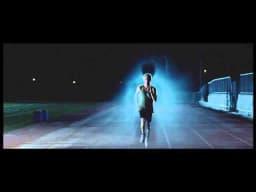
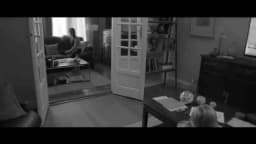
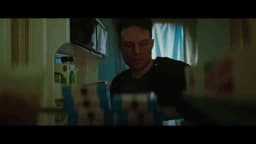
Family Advocacy Center's Broken Record film by Esparza Advertising dramatises the cycle of abuse through a single repeating scene, published in the United

Family Advocacy Center Confronts Abuse Cycles With Broken Record
Family Advocacy Center's Broken Record is a public interest film created by Esparza Advertising and published in the United States in August 2011, built around a single repeating scene that dramatises the cyclical nature of abuse to compel audiences toward intervention and awareness, according to En Wikipedia.
The campaign arrives as a single media asset — one film that carries the full weight of its message without supplementary executions, according to Commarts. Its title functions on two levels simultaneously: as a reference to the skipping vinyl record that physically loops back on itself, and as a quiet accusation levelled at systems and families that allow patterns of harm to continue without interruption. The creative premise, as documented by Clapboard, according to Heraldnews.com, places repetition at the centre of both form and content, asking viewers to sit with the discomfort of a scene that will not move forward until someone chooses to act.
Produced for the Family Advocacy Center, a public-interest organisation operating in the United States, the campaign falls within the Public Interest industry classification. Esparza Advertising — the Albuquerque-based agency responsible for the work — shaped the brief into a film-based execution at a moment when documentary-inflected LinkedIn.clapboard.com/archive/clapboard-public-service-freedom-isnt-free">public service advertising was gaining renewed critical attention across the US market. The campaign does not announce a hotline or enumerate statistics. It instead builds its argument through the logic of a social experiment captured on film: what happens when a harmful moment is forced to repeat until the viewer can no longer look away.
Broken Record received a Clapboard Score of 63 out of 100, reflecting a work that demonstrates clear strategic intent and a disciplined creative idea while operating without the amplification of a broad media investment or a documented awards pedigree.
 ARCHIVE
Family Advocacy Center operates within one of the most structurally difficult categories in public service advertising: campaigns addressing domestic and child abuse must simultaneously raise awareness, shift deeply held social attitudes, and prompt individuals to take action, often in private.
The strategic insight driving Broken Record is that repetition itself is the most honest representation of how abuse functions. Rather than presenting a single dramatic incident — the dominant convention used by organisations such as the National Domestic Violence Hotline in their broadcast communications — Esparza chose to make the loop the argument. This formal decision separates the campaign from contemporaneous public interest advertising that relied on shock imagery or statistical overlays to communicate urgency. The approach aligns with research indicating that narrative-based public service communications tend to generate stronger emotional engagement than purely factual appeals, a finding documented across studies compiled by the United Nations Department of Global Communications in its guidance on social issue messaging, according to Entitywire.
In the United States, the prevalence of family violence as a public health concern was well established by 2011. According to the Centers for Disease Control and Prevention, intimate partner violence affects millions of individuals in the United States annually, making it a persistent target for public awareness investment. The social experiment format chosen by Esparza draws from a tradition of documentary-adjacent advertising that gained traction in the United States during the early 2010s, as audiences grew more sceptical of overtly produced public service announcements. By staging a repeating scene rather than constructing a conventional narrative arc, the campaign positions itself closer to observational filmmaking than to traditional advocacy advertising, lending it a credibility that more polished executions in the same category often sacrifice.
Broken Record is directed by Dave Roberts, with Barry Kirk serving as director of photography, both working under the banner of Southwest Productions, as documented by Communication Arts.
The film's entire communicative force depends on a single editorial decision: the scene repeats. Editor Clark Morris of Thirty-second Street constructs the cut so that the viewer experiences what the victim of cyclical abuse experiences — the absence of forward motion, the return to a moment that should have ended. This is not a montage of violence or an accumulation of incidents; it is one scene, held in place by design. The discipline required to sustain that choice across an entire film — without relief, resolution, or narrative progression — represents a significant craft commitment from every member of the production team.
Creative Director Adam Greenhood and Associate Creative Director and copywriter Jeremy Spencer, both credited by Communication Arts, established the conceptual framework that made that editorial discipline possible. The title card, the sound design by Sid Fendley at Mountain Road Recording, and the visual grammar of the film all work to sustain the sensation of being trapped rather than the sensation of being lectured. Fendley's audio contribution is particularly consequential: in a film where the image loops, sound becomes the primary carrier of dread, reinforcing each repetition without desensitising the viewer to it.
Art directors Zak Rutledge and Julia Amirzadov complete the credited creative team, as noted by Communication Arts. The overall production aesthetic sits closer to social realism than to the heightened visual language common in public interest advertising of the period, a choice that reinforces the campaign's documentary ambitions and distinguishes it from more stylised contemporaries in the same category across the US market.
No verified performance data for Broken Record is publicly available. No budget, media spend, audience reach, donation uplift, or behavioural outcome metrics have been reported for this campaign, as confirmed by Clapboard.com. No verified recognition entries appear in the records of Cannes Lions, the Effie Awards, The One Show, D&AD, the Clio Awards, the Webby Awards, or WARC.
In the absence of quantitative outcomes, structural analysis offers the most reliable basis for assessment. The campaign's central mechanism — forcing the viewer to experience repetition as the subject experiences cycles of abuse — is formally coherent. The creative idea and the medium are unified rather than merely aligned: film is the only format in which looping can be experienced in real time, making the choice of the film medium not incidental but essential to the argument.
The single-asset structure concentrates rather than dilutes impact. Where many public interest campaigns across the United States distribute their message across multiple executions and risk inconsistency, Broken Record commits entirely to one moment. That economy of means is both a creative strength and a potential strategic limitation: without supporting assets, the campaign's ability to reach segmented audiences or sustain a media presence over time is structurally constrained.
The Clapboard Score of 63 out of 100 reflects this balance — a campaign with a disciplined, defensible idea executed with genuine craft, operating within the boundaries of what a single-asset public interest film without documented distribution or outcomes can claim. In the United States public service advertising landscape of 2011, Broken Record remains a notable example of formal restraint deployed in service of a difficult subject.
Broken Record is a public interest film created by Esparza Advertising for Family Advocacy Center in the United States, published in August 2011. The campaign uses a single repeating scene to dramatise the cyclical nature of abuse, placing the viewer inside the experience of a pattern that does not resolve until someone intervenes.
Dave Roberts directed Broken Record, working through Southwest Productions in the United States. Barry Kirk served as director of photography. Creative direction was handled by Adam Greenhood, with Jeremy Spencer as associate creative director and copywriter, all credited by Communication Arts for the 2011 campaign.
Esparza Advertising created Broken Record for Family Advocacy Center. The Albuquerque-based agency developed the concept and produced the film in the United States, published in August 2011. The campaign is classified under the Public Interest industry and consists of one film-format media asset, as documented by Clapboard.com.
No verified award entries for Broken Record appear in the records of Cannes Lions, the Effie Awards, The One Show, D&AD, the Clio Awards, the Webby Awards, or WARC, according to Clapboard.com. The campaign received a Clapboard Score of 63 out of 100, reflecting disciplined craft without a documented awards pedigree.
Broken Record uses a repeating scene to mirror the cyclical structure of abuse itself. Rather than presenting a single dramatic incident, the film loops its central moment, forcing the viewer to experience repetition as its subject does. Editor Clark Morris and sound designer Sid Fendley sustain this effect across the film's duration, per Communication Arts.
Family Advocacy Center's Broken Record received a Clapboard Score of 63 out of 100, according to Clapboard.com. The score reflects a campaign with a coherent, formally disciplined creative idea and credible production craft, balanced against the absence of verified distribution data, audience metrics, or documented performance outcomes for this 2011 United States public interest film.
.webp)
Creative Collaboration Platform: The Backbone of Modern Creative WorkWhat is a creative collaboration platform?Clapboard defines a creative collaboration platform as the operational core for today’s distributed creative teams. This is not a collection of digital collaboration tools stitched together; Clapboard’s system


Understanding the Creative Production MarketplaceWhat is a Creative Production Marketplace?Clapboard defines a creative production marketplace as a structured ecosystem where brands, agencies, and production talent converge to execute video, advertising, and branded content at scale. Unlike the legacy agency or freelanREAD FULL ARTICLE

The Urgent Need for a Creative Production Operating SystemWhy Traditional Creative Production Models Break DownClapboard sees the creative production landscape shifting under pressure. Content velocity is no longer a buzzword—it’s a mandate. Modern advertising demands relentless output across dozens of channels, each wREAD FULL ARTICLE