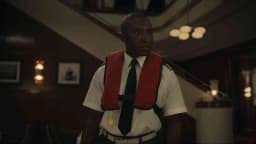
How McDonald's Celebrated 50 Years of Macca's With Australia
McDonald's Australia and DDB Sydney launched '50 years of Macca's' in July 2021 as a 10-week integrated campaign marking half a century since the first Australian McDonald's restaurant opened in Yagoona in 1971, positioning the brand not as a fast-food chain but as an enduring fixture of Australian cultural life.
The campaign ran across television, out-of-home, social, digital, print, and radio, making it one of the most expansive integrated efforts McDonald's Australia had mounted in recent memory. Its creative foundation rested on something deliberately intimate: the accumulated rituals Australians have built around McDonald's over five decades. Dipping fries into sundaes, collecting a driver's licence and heading straight to the drive-through, attending weddings at McDonald's, arriving in thongs — these were not invented for advertising purposes but drawn from the genuine texture of everyday Australian life, according to reporting by mumbrella.com.au and bandt.com.au. The campaign's tagline, as reported by adnews.com.au, declared: 'We arrived as McDonald's.' The rest was left for audiences to complete, because the cultural shorthand had already been earned.
The milestone carried a second layer of significance. As noted by mumbrella.com.au, 2021 also marked the 50th year of the creative partnership between McDonald's Australia and DDB, making this campaign a dual anniversary — one for a brand and one for a relationship between client and agency that had endured across five decades of Australian social change. The campaign's Clapboard Score of 66 out of 100 reflects strong narrative ambition and cultural specificity, tempered by the structural challenges of anniversary campaigns that must balance celebration with genuine creative risk. In the Australian Food and Drink advertising landscape of 2021, '50 years of Macca's' stands as a textbook example of milestone marketing executed with restraint and genuine local knowledge.
McDonald's Australia entered the market in 1971 with its first restaurant in Yagoona, New South Wales. Fifty years later, the brand faced a strategic question familiar to any long-established player in the Australian Food and Drink category: how do you mark longevity without appearing complacent, and how do you speak to multiple generations simultaneously without alienating any of them?
The answer DDB Sydney arrived at was to abandon product-led messaging entirely and instead mine the emotional archaeology of the brand's presence in Australian life. This approach reflects a broader shift in fast-food marketing strategy, where brands compete not only on value and convenience but on cultural belonging. In Australia, McDonald's primary competitors include KFC, which has operated in the market since 1968 according to publicly available company records, and Hungry Jack's, the local franchise of Burger King, which has maintained a significant presence across the country for decades. Against these rivals, McDonald's 'Macca's' nickname — a piece of genuine Australian vernacular that the brand formally trademarked, as reported by mumbrella.com.au — represents a differentiation that no competitor can replicate. It is linguistic ownership of affection.
The global fast-food market was valued at approximately US$593.3 billion in 2021, according to Grand View Research, with a projected compound annual growth rate of between 4.6 and 5.0 percent through to 2028 and 2029. McDonald's reported US$23.2 billion in revenue and US$112 billion in global systemwide sales for 2021, according to Corporate Mcdonalds. In the Australian context, the strategic priority was not market share defence but equity deepening — reinforcing the emotional infrastructure that makes switching to a competitor feel culturally incongruous rather than merely inconvenient. The 10-week duration of the campaign, noted by bandt.com.au, gave it enough runway to function as a cultural event rather than a promotional burst.
The hero film sits at the centre of '50 years of Macca's' and carries the creative weight that the broader integrated campaign distributes across channels. Its construction followed a deliberate logic: rather than dramatising a single narrative arc, it assembled a mosaic of distinctly Australian McDonald's moments, each one recognisable enough to function as a personal memory for viewers across different generations and demographics.
The soundtrack choice proved to be one of the campaign's most discussed creative decisions. The hero film used Daryl Braithwaite's recording of 'Horses', as reported by themusicnetwork.com — a song so embedded in Australian popular culture that its selection alone communicated something about the brand's ambitions. 'Horses' is not merely a beloved track; it operates as a sonic shorthand for a particular strain of Australian nostalgic identity, and its pairing with images of drive-throughs, birthday parties, road trips, late-night visits, and post-match meals created a cumulative emotional effect that product-focused advertising cannot achieve. The Music Network noted the significance of the music licensing decision within the broader campaign context.
Ben Welsh, Chief Creative Officer at DDB Australia, articulated the campaign's emotional logic directly, as quoted by bandt.com.au: 'Macca's brought the Drive-Thru, Australia brought the road trip. Thanks for 50 years of Happy Meals and Hash Browns.' That statement functions simultaneously as creative rationale and campaign epitaph — it locates the brand inside Australian behaviour rather than above it. The production assembled a broad agency ecosystem to realise the campaign across its full channel spread. Media planning and buying was handled by OMD, public relations by Mango Communications, CRM by Digitas, in-restaurant execution by Guihen Jones, and partnerships by The Joester Loria Group, as reported by mumbrella.com.au. On the client side, McDonald's Australia's team included Chief Marketing Officer Chris Brown, National Marketing Manager Amanda Nakad, and Senior Brand Manager Nichole Tsiros, according to adnews.com.au.
The '50 years of Macca's' campaign generated documented engagement on YouTube, accruing over 63,800 views and 206 likes, with 13 comments recorded on the platform. These figures represent the publicly available digital metrics attached to the campaign's film assets and reflect organic audience behaviour rather than paid amplification data.
No independently verified television ratings data, out-of-home reach figures, or sales-impact metrics for the campaign are publicly available at the time of writing. What the structural evidence does support, however, is that the campaign was built for cumulative emotional impact rather than immediate conversion. A 10-week integrated run across television, out-of-home, social, digital, print, and radio — as confirmed by bandt.com.au and mumbrella.com.au — reflects a media investment consistent with brand equity campaigns rather than promotional activations. The channel mix was designed for saturation and repetition of feeling, not a single-channel reach spike.
The dual-anniversary framing — 50 years of McDonald's in Australia and 50 years of the McDonald's–DDB partnership — gave the campaign structural credibility that a purely manufactured milestone would lack. Audiences in Australia encounter anniversary advertising with a degree of scepticism; the verifiable historical fact of 1971 and Yagoona grounded the sentiment in something real. The Clapboard Score of 66 out of 100 reflects genuine creative and strategic strengths: authentic cultural specificity, disciplined restraint from overt product promotion, and an unusually rich agency-client backstory. The score also reflects the inherent ceiling of anniversary campaigns, which must serve institutional memory as much as creative ambition, and the limited availability of third-party verified performance data against which to measure declared objectives.
'50 years of Macca's' is a 2021 integrated campaign created by DDB Sydney for McDonald's Australia. It marked 50 years since the first Australian McDonald's opened in Yagoona in 1971. The 10-week campaign ran across television, out-of-home, social, digital, print, and radio, celebrating Australian McDonald's rituals through narrative film, according to mumbrella.com.au.
'Horses' by Daryl Braithwaite is one of Australia's most culturally resonant popular songs. McDonald's and DDB Sydney selected it to anchor the hero film's emotional tone, pairing its nostalgic quality with imagery of distinctly Australian McDonald's rituals. The Music Network reported on the soundtrack selection as a significant creative decision within the campaign.
DDB Sydney led creative on the campaign. Supporting agencies included OMD for media, Mango Communications for public relations, Digitas for CRM, Guihen Jones for in-restaurant execution, and The Joester Loria Group for partnerships, according to mumbrella.com.au and adnews.com.au. Ben Welsh served as Chief Creative Officer at DDB Australia.
The campaign featured distinctly Australian McDonald's moments including birthday parties, road trips, late-night visits, post-match meals, dipping fries into sundaes, and drive-through visits after earning a driver's licence. These rituals were drawn from real consumer behaviour rather than invented for advertising, as reported by bandt.com.au and mumbrella.com.au.
The 2021 campaign marked two simultaneous anniversaries: 50 years since McDonald's opened its first Australian restaurant in Yagoona, and 50 years of the creative relationship between McDonald's Australia and DDB. This dual milestone gave the campaign institutional grounding beyond a standard brand anniversary, as confirmed by mumbrella.com.au and bandt.com.au.
The '50 years of Macca's' campaign receives a Clapboard Score of 66 out of 100. The score reflects genuine strengths in cultural specificity, narrative restraint, and the authenticity of the dual-anniversary framing, alongside the structural limitations common to milestone campaigns and the limited availability of publicly verified performance metrics.
.webp)
Creative Collaboration Platform: The Backbone of Modern Creative WorkWhat is a creative collaboration platform?Clapboard defines a creative collaboration platform as the operational core for today’s distributed creative teams. This is not a collection of digital collaboration tools stitched together; Clapboard’s system


Understanding the Creative Production MarketplaceWhat is a Creative Production Marketplace?Clapboard defines a creative production marketplace as a structured ecosystem where brands, agencies, and production talent converge to execute video, advertising, and branded content at scale. Unlike the legacy agency or freelanREAD FULL ARTICLE

The Urgent Need for a Creative Production Operating SystemWhy Traditional Creative Production Models Break DownClapboard sees the creative production landscape shifting under pressure. Content velocity is no longer a buzzword—it’s a mandate. Modern advertising demands relentless output across dozens of channels, each wREAD FULL ARTICLE