 ARCHIVE
WWF and TBWA Paris Turn Instagram Into an Environmental Wake-Up Call
How WWF 's #TooLatergram Campaign Weaponised Instagram's Own Aesthetic WWF's #TooLatergram is a...
McDonald's France Brings Back the Everyday Magic of McDo Moments
"McDo Moments are back" is a 2025 French film campaign created by TBWA\Paris for McDonald's France, launched in March 2025, that uses a series of short comedic films to depict the small, recurring moments of everyday life in France — stolen fries, backseat Happy Meals, and abandoned home-cooking plans — that lead ordinary people back to McDonald's.
The campaign, known in French as "Les Moments McDo sont de retour," was published in April 2025 and represents a deliberate return to character-driven storytelling rooted in observable domestic behaviour. According to tbwa-paris.com, the campaign launched with four films and was subsequently expanded with two additional films later in 2025, reflecting confidence in the format's reception. Each film is short, situational, and structured around a recognisable tension — the kind that does not require explanation for a French audience already fluent in the brand's cultural shorthand.
The campaign runs across television, digital channels, and point-of-sale and in-store advertising in France, per reporting from packshotmag.com. Featured offers woven into the creative include the Happy Meal at €4, anchoring the campaign's warmth in commercial reality without allowing price messaging to overwhelm the tonal register. The work sits firmly within McDonald's global "Come as you are" brand philosophy, which positions the brand not as an aspiration but as an honest reflection of how people already live. In France, where McDonald's operates under the affectionate national shorthand "McDo," that philosophy carries particular resonance — the nickname itself signals a degree of cultural ownership that few global quick-service restaurant brands achieve in any single market.
McDonald's France anchors this campaign in the insight that repeat visitation is driven not by novelty but by ritual. The films do not introduce McDonald's to anyone — they reflect back to existing customers the moments they already associate with the brand, validating those habits rather than recruiting new ones. This is a retention-first strategy dressed in the language of brand warmth, and in the French quick-service restaurant market it carries competitive weight.
In France, McDonald's faces sustained pressure from Burger King, which has pursued aggressive expansion and provocative advertising in the French market over the past decade, and from domestic fast-casual competitors attuned to French consumer preferences around food quality and provenance. Against that backdrop, emotional familiarity becomes a defensible asset. Rather than compete on product innovation or price alone, TBWA\Paris builds a campaign architecture around the idea that McDo is already part of French family life — the question is simply which moment will trigger the next visit.
The global quick-service restaurant sector remains a growth market. According to Mordor Intelligence, the QSR category is forecast to expand at a meaningful compound annual growth rate through the early 2030s. McDonald's itself operates more than 40,000 restaurants across approximately 150 countries, according to marketintelo.com, giving it scale that no purely domestic competitor in France can match. The "McDo Moments are back" campaign does not attempt to leverage that scale explicitly. Instead, it operates at the level of the individual household — the parent in the car, the sibling reaching across the table — translating global brand equity into locally recognisable human behaviour. In France, where the brand has invested for decades in cultural integration, that translation is the campaign's core strategic act.
Director Antoine de Bary leads the creative execution of "McDo Moments are back," working through production company Iconoclast to bring TBWA\Paris's scenarios to life as a cohesive series of short comedic films. The choice of de Bary is consistent with the campaign's tonal ambitions: his work favours observed naturalism over constructed spectacle, allowing the humour to emerge from situation rather than punchline.
The executive creative directors on the campaign are Benjamin Marchal and Faustin Claverie, with Corentin Salignat serving as creative director, per packshotmag.com. Art direction is credited to Nicolas Barrès and Juliette Bobet, as reported by packshotmag.com and cbnews.fr. The director of photography is Christophe Beaucarne, according to packshotmag.com, whose visual approach keeps each film grounded in the muted, recognisable palette of ordinary French interiors — kitchens, cars, living rooms — rather than the elevated environments that food advertising typically favours.
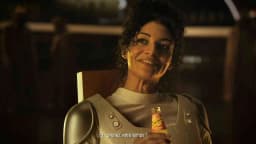
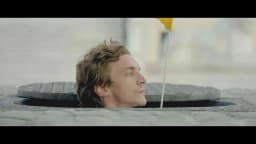
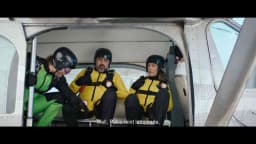
The creative scenarios, as documented by tbwa-paris.com and Data Ladn Eu, include: people abandoning home-cooking plans after catching the smell of fries; parents deploying Happy Meals as a de-escalation tool with children in cars; friends and siblings caught reaching across the table; and the ambient temptation of McDonald's food reasserting itself over domestic alternatives. Each film is constructed as a micro-drama of comic recognition — the viewer is invited not to admire the situation but to identify with it. This is craft in service of complicity. The decision to expand the series from its initial four films to six, as noted by tbwa-paris.com, suggests that the episodic structure was conceived with scalability in mind, allowing TBWA\Paris to add scenarios without disrupting the established visual and tonal grammar of the campaign.
No verified performance data for "McDo Moments are back" is publicly available at the time of writing. The campaign has not been the subject of published effectiveness studies, and no figures relating to reach, recall, sales uplift, or digital engagement have been attributed to named sources in the public domain. The Clapboard Score for this campaign stands at 58 out of 100, reflecting a competent and culturally coherent execution that nevertheless operates within well-established creative conventions for the category rather than extending them.
Structurally, the campaign exhibits several characteristics associated with durable brand-building work in the food and drink category. The episodic multi-film format distributes creative risk across scenarios rather than concentrating it in a single execution, reducing the dependency on any one moment landing for every viewer. The grounding in "Come as you are" brand philosophy provides a consistent evaluative frame against which each film can be assessed both independently and as part of the series. The inclusion of specific promotional offers — the Happy Meal at €4 — ensures that the campaign can function as a performance vehicle without requiring a tonal shift, a balance that is structurally more demanding than it appears. In France, where advertising audiences are attuned to irony and resistant to overt commercial pressure, the campaign's preference for wit over persuasion is a legitimate strategic choice rather than a default. Whether that choice translated into measurable commercial outcomes remains, for now, undocumented.
"McDo Moments are back" is a 2025 film campaign created by TBWA\Paris for McDonald's France. Launched in March 2025, it comprises a series of short comedic films depicting everyday situations — stolen fries, backseat Happy Meals, abandoned cooking plans — that reconnect French audiences with familiar McDonald's habits. The campaign runs on TV, digital, and in-store channels.
Antoine de Bary directed the campaign, produced by Iconoclast. His approach favours naturalistic, situation-driven comedy. The executive creative directors at TBWA\Paris were Benjamin Marchal and Faustin Claverie, with Corentin Salignat as creative director and Christophe Beaucarne as director of photography, according to packshotmag.com and cbnews.fr.
The campaign launched with four films in March 2025, according to tbwa-paris.com. Two additional films were added post-launch later in 2025, bringing the total to six. Each film depicts a distinct everyday scenario rooted in recognisable French domestic life, structured around the moments that lead people back to McDonald's.
The campaign extends McDonald's global "Come as you are" brand philosophy. Rather than positioning McDonald's as aspirational, the philosophy reflects how people already live. In France, where the brand is known affectionately as "McDo," this approach reinforces cultural familiarity and validates repeat visitation as a natural part of everyday French life.
The Clapboard Score for "McDo Moments are back" is 58 out of 100. The score reflects a culturally coherent and competently executed campaign that operates within established creative conventions for the food and drink category in France, rather than significantly extending them in terms of originality or structural innovation.
The campaign runs across television, digital platforms, and point-of-sale and in-store advertising in France, per packshotmag.com. This multi-channel approach allows the short-film format to function as both brand-building content on broadcast and digital media and as a direct retail prompt at the point of purchase inside McDonald's France restaurants.
.webp)
Creative Collaboration Platform: The Backbone of Modern Creative WorkWhat is a creative collaboration platform?Clapboard defines a creative collaboration platform as the operational core for today’s distributed creative teams. This is not a collection of digital collaboration tools stitched together; Clapboard’s system


Understanding the Creative Production MarketplaceWhat is a Creative Production Marketplace?Clapboard defines a creative production marketplace as a structured ecosystem where brands, agencies, and production talent converge to execute video, advertising, and branded content at scale. Unlike the legacy agency or freelanREAD FULL ARTICLE

The Urgent Need for a Creative Production Operating SystemWhy Traditional Creative Production Models Break DownClapboard sees the creative production landscape shifting under pressure. Content velocity is no longer a buzzword—it’s a mandate. Modern advertising demands relentless output across dozens of channels, each wREAD FULL ARTICLE