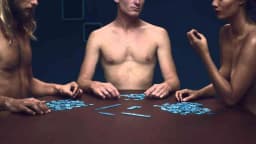
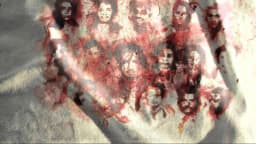
WWF France's #TooLatergram campaign by TBWA\Paris recruited nine travel influencers to reveal environmental destruction through digitally restored Instagram

WWF and TBWA Paris Turn Instagram Into an Environmental Wake-Up Call
WWF's #TooLatergram is a 2018 digital public interest campaign created by TBWA\Paris in which nine travel influencers posted digitally restored images of threatened natural landscapes on Instagram before revealing the same locations in their actual, degraded real-world condition, confronting followers with the visible consequences of pollution, industrialisation, deforestation, and habitat destruction.
The campaign launched in France in April 2018, with coverage documented as early as April 4 of that year across a range of French and international advertising publications. It operated entirely within the Instagram ecosystem, deploying the carousel post format to structure a deliberate before-and-after narrative. The first image presented a pristine, aspirational destination — the kind of content that drives follower growth and engagement for travel accounts. Several days later, according to lareclame.fr, the same influencers returned with a second post revealing the same landscape as it actually exists: bleached coral, polluted coastlines, cleared forests, scarred by human activity. The hashtag #TooLatergram gave the campaign its name and its central idea simultaneously.
In France, where Instagram had become a dominant platform for aspirational travel content, the campaign targeted an audience that the platform itself had cultivated — younger users who consume visual culture fluidly and who, as Creative Director Jacquelin Guillaume-Duverne noted in PAGE online on April 13, 2018, are less likely to engage with traditional critical media. WWF chose to meet that audience on their own terms, inside a medium they trusted, and used the conventions of that medium as the mechanism of revelation. The result was a public interest campaign that did not ask its audience to seek out uncomfortable information — it delivered that information through the exact content format they had already chosen to consume.
WWF France identified a precise cultural tension at the heart of Instagram travel content. The platform rewards the idealised image — the unspoiled beach, the ancient forest at golden hour — while the environmental reality of those same locations deteriorates in plain sight. TBWA\Paris built the campaign's strategic foundation on that contradiction rather than fighting it.
The selection of nine travel influencers was not incidental. According to 3blmedia.com and sustainablebrands.com, these were accounts whose audiences had opted in specifically for aspirational destination content, meaning the campaign's message arrived with a built-in layer of trust and relevance. The influencers were not positioned as activists; they were positioned as witnesses. That distinction gave the reveal its force. When a travel account known for beautiful imagery shows the same location degraded, the cognitive dissonance lands harder than any direct appeal to conscience from an NGO's own channel.
In France, WWF operates in a public interest advertising landscape where organisations including Greenpeace France and Fondation Nicolas Hulot compete for audience attention and emotional engagement on environmental themes. TBWA\Paris chose a strategy that bypassed the familiar register of environmental campaigning — the statistics, the expert testimony, the call-to-action — in favour of a mechanism native to social media itself. As reported by mediatrust.org, the campaign framed environmental destruction not as a future warning but as a present-tense disclosure, using the influencer's own feed as the evidence. This approach connects directly to a broader lineage in WWF France's communications: their 2008 "Lungs" campaign, documented by adruby.com, used the image of a deforested rainforest shaped like human lungs to make environmental loss viscerally personal, operating on the same principle that abstraction loses where lived imagery wins.
The creative execution of #TooLatergram rests on a single, precise formal decision: the Instagram carousel post used not to accumulate images but to sequence a revelation. The first image functions as bait in the most considered sense — it is genuinely beautiful, consistent with the influencer's established aesthetic, and indistinguishable from organic travel content. The second image, posted days later according to lareclame.fr, delivers the environmental reality of the same location. The gap between posts is itself a creative choice, allowing the pristine image to circulate and gather engagement before the correction arrives.
The campaign was created at TBWA\Paris under Executive Creative Directors Benjamin Marchal and Faustin Claverie, with Jacquelin Guillaume-Duverne serving as Creative Director. Charlotte Rouart served as Copywriter and Renaud Arnaudet as Art Director, with Quentin Jacquemet and Alexandra Fremin as Art Director Assistants, as documented by Ladn Eu. The digital restoration work — producing images of landscapes as they might have appeared before environmental damage — required a level of retouching precision that made the before images credible as genuine travel photography. The threats depicted across the nine influencer accounts encompassed pollution, coral bleaching, deforestation, and industrialisation, as reported by shots.net and medias-info.fr, ensuring the campaign addressed a range of environmental crises rather than a single cause.
The creative team's decision to work through influencer accounts rather than WWF's own channels extended the campaign's reach into audiences that would not follow an NGO account but did follow travel creators. The hashtag #TooLatergram served a dual function: it labelled the campaign for discoverability while encoding its entire argument in a single portmanteau — the latergram convention of posting delayed content, reframed as an environmental deadline. As noted by Guillaume-Duverne in PAGE online, the ambition was a campaign capable of crossing language barriers to reach millennials worldwide through a format they already inhabited.
No verified performance data for #TooLatergram is publicly available in terms of reach figures, engagement rates, or measurable behavioural change attributable to the campaign. What the public record does document, as reported across shots.net, lareclame.fr, 3blmedia.com, and sustainablebrands.com, is that the campaign received sustained editorial coverage across French and international advertising and sustainability press from its April 4, 2018 launch date onward — a meaningful signal for a public interest campaign operating without a paid media budget disclosed in available sources.
Structurally, the campaign demonstrates several qualities that advertising effectiveness frameworks consistently associate with durable public interest work. The mechanism is native to the platform — it requires no user to leave Instagram, visit a microsite, or take a step that interrupts their existing behaviour. The influencer architecture distributes the message across nine distinct audiences simultaneously, each with a pre-existing relationship of trust between creator and follower. The temporal gap between the pristine post and the reveal post extends the campaign's presence in feeds organically, without additional spend.
The campaign also benefits from what shots.net and medias-info.fr describe as its fundamental honesty of method: WWF does not manufacture the environmental damage depicted. The restored images are the fiction; the degraded images are the fact. That inversion of expectation — where the beautiful image is the constructed one and the ugly image is the real one — is a structurally elegant argument that does not require text to land. Clapboard scores #TooLatergram at 74 out of 100, recognising strong conceptual clarity and platform intelligence against a ceiling imposed by the absence of publicly verifiable impact data.
#TooLatergram is a 2018 WWF France digital campaign created by TBWA\Paris. Nine travel influencers posted digitally restored images of pristine natural locations on Instagram, then revealed the same locations in their actual degraded condition caused by pollution, deforestation, coral bleaching, and industrialisation, using the hashtag #TooLatergram to unify the campaign.
TBWA\Paris created the #TooLatergram campaign for WWF France. The agency team included Executive Creative Directors Benjamin Marchal and Faustin Claverie, Creative Director Jacquelin Guillaume-Duverne, Copywriter Charlotte Rouart, and Art Director Renaud Arnaudet, as documented by ladn.eu. The campaign launched in France in April 2018.
Nine travel influencers posted retouched images of destinations appearing pristine and unspoiled. Several days later, according to lareclame.fr, each influencer posted a second image of the same location showing its real degraded state. The Instagram carousel format and the delayed reveal structure were central to the campaign's creative mechanism in France.
The campaign addressed pollution, coral bleaching, deforestation, and industrialisation, as reported by shots.net and medias-info.fr. Each of the nine influencer accounts depicted different environmental threats affecting real-world destinations, ensuring #TooLatergram communicated the breadth of ecological damage rather than focusing on a single cause.
Clapboard scores #TooLatergram at 74 out of 100. The score reflects strong conceptual clarity and intelligent use of Instagram's native format as a public interest mechanism. The ceiling is set by the absence of publicly verifiable campaign performance data, which limits a full effectiveness assessment of this 2018 TBWA\Paris campaign.
WWF France and TBWA\Paris have a documented history of campaigns using visceral imagery to make environmental loss personally felt. Their 2008 "Lungs" campaign, documented by adruby.com, depicted a deforested rainforest shaped like human lungs. #TooLatergram continues that approach, updating the strategy for Instagram and the influencer era in France.
.webp)
Creative Collaboration Platform: The Backbone of Modern Creative WorkWhat is a creative collaboration platform?Clapboard defines a creative collaboration platform as the operational core for today’s distributed creative teams. This is not a collection of digital collaboration tools stitched together; Clapboard’s system


Understanding the Creative Production MarketplaceWhat is a Creative Production Marketplace?Clapboard defines a creative production marketplace as a structured ecosystem where brands, agencies, and production talent converge to execute video, advertising, and branded content at scale. Unlike the legacy agency or freelanREAD FULL ARTICLE

The Urgent Need for a Creative Production Operating SystemWhy Traditional Creative Production Models Break DownClapboard sees the creative production landscape shifting under pressure. Content velocity is no longer a buzzword—it’s a mandate. Modern advertising demands relentless output across dozens of channels, each wREAD FULL ARTICLE