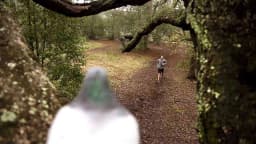
Lucy activewear partnered with Mono in 2013 to create the Light Forest, a solar-powered, motion-activated LED installation on Boston's Charles River Esplanade

Lucy Activewear Turns a Boston Riverbank Into a Living Light Installation
Lucy activewear's Light Forest is a solar-powered, motion-activated ambient installation created by Minneapolis agency Mono and production partner Pixel, launched in October 2013 along Boston's Charles River Esplanade, designed to transform everyday exercise into an immersive sensory experience celebrating women in movement.
Lucy activewear, a women's activewear brand owned by VF Corporation, debuted the Light Forest as its first work from a newly formed partnership with creative agency Mono. The installation ran from October 3 through October 13, 2013, operating continuously for 24 hours each day along the historic Charles River Esplanade near Boston's Hatch Shell and Arthur Fiedler statue, according to reporting by Boston Magazine. The choice of location was deliberate: the Esplanade is one of the most heavily trafficked running and recreation corridors in the United States, placing the campaign directly in front of the brand's core audience at the precise moment of their daily exercise ritual.
The installation itself stretched approximately 300 feet — larger than a football field — and contained more than 10,000 LED lights, each solar-powered and motion-sensitive. As participants moved through the installation, lights and layered forest-like sound tones responded in real time to their presence, converting a routine riverfront run into what Lucy and Mono described as a magical and awe-inspiring encounter with the brand. The campaign extended beyond the physical installation through a digital component, broadening its reach across the United States. In a fashion and apparel landscape increasingly dominated by broadcast and digital media, the Light Forest represented a deliberate departure: an ambient, participatory experience that placed the human body — and specifically the active female body — at the centre of the creative idea rather than at the receiving end of a message. The Clapboard Score for the Light Forest campaign is 71 out of 100, reflecting strong conceptual ambition and production craft relative to the ambient category.
 ARCHIVE
Lucy activewear positioned itself around versatile performance apparel for women engaged in yoga, running, CrossFit, and broader lifestyle fitness rather than anchoring the brand to a single sport. That multi-activity positioning created both an opportunity and a challenge: the brand needed to celebrate movement in its broadest sense without defaulting to the category conventions already owned by larger competitors. In the United States in 2013, the women's activewear market reached approximately eleven and a half billion dollars, growing nine percent year over year, according to reporting by MediaPost. That growth rate outpaced the overall apparel sector, signalling a structural shift in how American women were allocating spending toward performance and lifestyle clothing.
Nike held roughly fifteen percent of the global sportswear market in 2013, according to Business of Fashion, while lululemon had firmly established experiential retail and community-building as core brand strategy in the premium activewear segment. For a brand of Lucy's scale, competing on media spend against Nike or on cultural cachet against lululemon was not a viable path. Mono's strategic insight was to find the intersection of place, behaviour, and emotion that larger brands had not yet occupied: the solitary, meditative experience of an evening run transformed into something communal and luminous. The Light Forest did not interrupt that experience — it amplified it. VF Corporation had acquired Lucy in 2007 for approximately one hundred and ten million dollars, according to VF Corporation's own corporate disclosures, giving the brand the operational infrastructure of a large apparel group while retaining the creative latitude of a focused women's label. The experiential direction taken with Mono in 2013 signalled an intention to build brand equity through cultural participation rather than conventional fashion and apparel media.
Production partner Pixel executed the physical and technical construction of the Light Forest installation. The scale of the build was substantial: more than ten thousand individual LED units, each solar-charged and programmed to respond to the movement of participants passing through the installation, were arranged across a span larger than a football field along the Charles River Esplanade in Boston. The engineering requirement of making every light both solar-powered and motion-sensitive — while maintaining reliable operation across a full 24-hour cycle for ten consecutive days — represented a significant production challenge in ambient environmental design.
The sound layer was integral to the creative concept rather than supplementary. Forest-like audio tones shifted and responded alongside the light reactions, creating a multi-sensory environment that drew on natural world references to reframe an urban running path as something closer to an enchanted landscape. This sensory doubling — light and sound activating simultaneously in response to a runner's pace and trajectory — gave the installation a quality of genuine responsiveness that distinguished it from static ambient executions common in fashion and apparel advertising of the period. Production credits beyond Pixel's role as production partner are not fully documented in publicly available sources for this campaign. The creative direction originated within Mono's team in partnership with Lucy's brand leadership. The digital extension of the campaign, which accompanied the physical installation, broadened the Light Forest's reach across the United States, allowing the experience to travel beyond the ten days and the specific geography of the Boston Esplanade into a wider lifestyle and activewear audience.
No independently verified performance data for the Lucy Light Forest campaign is publicly available through third-party audit sources. However, Mono reported that the installation attracted more than one hundred thousand in-person visitors over its ten-day run on Boston's Charles River Esplanade, and that the campaign generated more than three hundred and seven million PR media impressions, according to figures reported by MediaPost. These figures, if accurate, represent a significant return on an ambient activation of this scale and duration, particularly for a women's activewear brand competing in a market then valued at several billion dollars in the United States alone.
Structurally, the Light Forest campaign demonstrates several qualities that correlate with durable brand impact in the lifestyle and fashion categories. The installation created a genuinely shareable physical experience at a time when social sharing of real-world events was accelerating rapidly across the United States. By operating for 24 hours daily across ten days, the campaign reached not only peak-hour runners but also the broader population of Bostonians and visitors using the Esplanade across different times of day and night, maximising organic exposure without paid media amplification at the point of experience. The decision to anchor the Light Forest to a specific, named Boston landmark — the Esplanade near the Hatch Shell — also gave the campaign a geographic identity that generated local press coverage and word-of-mouth beyond what a location-agnostic installation might have achieved. As the first work from Lucy's partnership with Mono, the Light Forest established a creative benchmark for the relationship, signalling that experiential and ambient thinking would define the brand's approach to fashion and apparel communications in the United States going forward.
The Lucy Light Forest was a solar-powered, motion-activated LED installation created by Mono and Pixel for women's activewear brand Lucy in October 2013. Stretching more than 300 feet along Boston's Charles River Esplanade, it used over 10,000 lights and responsive sound to transform a public running path into an immersive sensory experience celebrating women in movement.
The Light Forest ran from October 3 through October 13, 2013, on Boston's Charles River Esplanade near the Hatch Shell and the Arthur Fiedler statue. The installation operated 24 hours a day throughout its ten-day run, according to Boston Magazine, placing it along one of the most active recreational corridors in the United States.
Mono, a Minneapolis-based creative agency, conceived the Light Forest as the first work from its partnership with Lucy activewear. Production partner Pixel executed the physical installation, engineering more than 10,000 solar-powered, motion-sensitive LED lights across a span larger than a football field on Boston's Charles River Esplanade.
Mono reported more than 100,000 in-person visitors to the Light Forest installation during its October 2013 run on the Charles River Esplanade, as reported by MediaPost. The campaign also generated more than 307 million PR media impressions, according to the same source, extending its reach well beyond the Boston market.
VF Corporation owned Lucy activewear when the Light Forest launched in 2013. VF Corporation acquired Lucy in August 2007 for approximately 110 million dollars, according to VF Corporation's own disclosures. At acquisition, the brand operated roughly 50 owned stores and had been growing its presence in the United States women's activewear market since its founding in 1999.
The Light Forest stood apart from conventional 2013 activewear advertising by choosing ambient installation over broadcast or digital media. While competitors like Nike and lululemon dominated the United States market through media spend and community retail respectively, Lucy and Mono created a participatory public experience in Boston that generated organic press coverage and in-person engagement without relying on paid media amplification.
.webp)
Creative Collaboration Platform: The Backbone of Modern Creative WorkWhat is a creative collaboration platform?Clapboard defines a creative collaboration platform as the operational core for today’s distributed creative teams. This is not a collection of digital collaboration tools stitched together; Clapboard’s system


Understanding the Creative Production MarketplaceWhat is a Creative Production Marketplace?Clapboard defines a creative production marketplace as a structured ecosystem where brands, agencies, and production talent converge to execute video, advertising, and branded content at scale. Unlike the legacy agency or freelanREAD FULL ARTICLE

The Urgent Need for a Creative Production Operating SystemWhy Traditional Creative Production Models Break DownClapboard sees the creative production landscape shifting under pressure. Content velocity is no longer a buzzword—it’s a mandate. Modern advertising demands relentless output across dozens of channels, each wREAD FULL ARTICLE