 ARCHIVE
Equality Health Foundation Turns ZIP Codes Into a Public Health Warning
How the Zip Code Exam Campaign Reframes Health Disparities as a Location Problem The Zip Code Exam...
Lifebuoy Tree of Life Turns Grief Into a Global Health Message
Lifebuoy's Tree of Life is a 2014 digital film created by Lowe Mumbai and Lowe Jakarta for the brand's Help a Child Reach 5 movement, published in India in October 2014, using documentary-style storytelling to connect handwashing with child survival across global audiences.
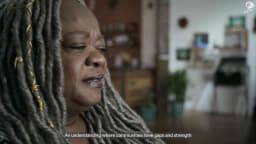
The film centres on a mother from the Indonesian village of Bitobe who loses her son before the age of five and tends to the tree planted at his birth as his surrogate. This narrative device transforms an abstract public health statistic into a single, irreversible human loss, giving audiences an emotional anchor that a straightforward hygiene message could never achieve. The campaign sits within the healthcare category and was submitted as a digital medium execution, containing one primary media asset.
In India, where Lifebuoy has historically held a significant share of the handwash market, the brief demanded more than product promotion. According to adsoftheworld.com, the Help a Child Reach 5 movement was built on the premise that handwashing with soap could prevent a substantial proportion of child deaths from diarrhoea and pneumonia. Tree of Life was the movement's most cinematic expression of that idea, designed to travel across digital platforms and reach audiences far beyond any single market. The Clapboard Score for this campaign is 78 out of 100, reflecting strong creative and strategic coherence alongside its verified impact. Across the United States and throughout Asia-Pacific markets, the film circulated as a piece of purposeful content that demonstrated Lifebuoy's ambition to shift global behaviour rather than simply sell soap.
Lifebuoy identified a critical gap between awareness of handwashing's benefits and consistent practice of the habit. According to lifebuoy.in, the brand's stated goal was to influence one billion people by 2015 through behaviour-change campaigns that linked handwashing directly to child survival rather than to product performance. Tree of Life was designed to close that gap through emotional provocation rather than rational instruction.
The competitive landscape in India at the time made this strategic shift all the more necessary. According to data cited by slideshare.net, Dettol held approximately 53 percent of the Indian handwash market around 2014, while Lifebuoy held approximately 29.1 percent of the same market. With Reckitt Benckiser's Dettol commanding a commanding functional and antibacterial positioning, Lifebuoy needed to occupy different emotional territory. Where Dettol competed on protection and clinical efficacy, Lifebuoy moved onto the ground of purpose, community, and human consequence. Savlon, a further competitor in the Indian antiseptic and handwash segment, also reinforced the category's tendency toward hygiene-led functional messaging, making Lifebuoy's pivot to documentary storytelling a genuine strategic differentiator.
The broader Help a Child Reach 5 platform, documented across lifebuoy.in and unilever.com, preceded Tree of Life with campaigns including Gondappa, a 2013 film that personalised the consequences of preventable disease through the relationship between a father and child. Tree of Life extended that lineage into more cinematic and geographically expansive territory, co-produced across Lowe Mumbai and Lowe Jakarta to reflect the movement's reach across South and South-East Asia. In the Indian market, this evolution represented a maturation of cause-led healthcare advertising.
Tree of Life employs documentary production conventions to generate emotional authenticity. The film does not use the visual grammar of traditional advertising, instead presenting the Bitobe mother's story with observational restraint, allowing the landscape and ritual of tending a memorial tree to carry the weight of the message. This approach was deliberate: as reported by adsoftheworld.com and socialsamosa.com, the Help a Child Reach 5 films consistently prioritised real-world settings and non-performative storytelling to make the public health stakes feel immediate rather than abstract.
Sagar Kapoor served as Chief Creative Officer at Lowe Lintas during the period of the campaign's development, according to clapboard.com. His broader involvement in the Help a Child Reach 5 work provides context for the creative sensibility that shaped Tree of Life. In a separately documented account regarding the Chamki activation within the same campaign movement, Kapoor described filming in a remote village in extreme heat and encountering a local boy who offered genuine insight into handwashing behaviour and acknowledged the impact of the campaign's work, as reported by clapboard.com. This ground-level immersion in real communities informed the naturalistic visual approach evident in Tree of Life.
The co-production between Lowe Mumbai and Lowe Jakarta, as documented by clapboard.com and adsoftheworld.com, reflects the film's dual grounding in South Asian public health context and South-East Asian location specificity. Shooting in an actual Indonesian village rather than a constructed set reinforced the documentary register and gave the film its sense of witnessed, rather than staged, grief. In the Indian market, where cause-led healthcare content was beginning to move from television into digital-first distribution, this production approach positioned Tree of Life ahead of category conventions.
Tree of Life generated 14 million digital views globally, according to clapboard.com and adsoftheworld.com. That figure places it among the most-distributed digital films produced within the Indian healthcare and fast-moving consumer goods category in 2014. The campaign was listed among AdForum Greatest Hits' Most Watched Ads of 2014, as reported by socialsamosa.com, a distinction that reflects peer recognition of the film's resonance beyond paid distribution.
At the APAC Effie Awards in 2015, the Help a Child Reach 5 campaign, with Tree of Life as its most visible asset, won Gold in the GoodWorks Brand category, according to clapboard.com. This award validates the campaign's effectiveness rather than merely its creativity, measuring the degree to which the work achieved its stated behavioural and commercial objectives. Lifebuoy's Facebook engagement grew 425 percent following the Tree of Life film launch, with the brand's Facebook page reaching more than 4.15 million likes, as reported by clapboard.com. According to Retail Economictimes Indiatimes, Unilever reported that Lifebuoy achieved three consecutive years of double-digit volume growth and became the world's number-one antibacterial brand by volume during this period, providing broader commercial context for the campaign's role within the brand's trajectory. In India specifically, these results demonstrated that healthcare advertising built on documentary-style emotional storytelling could drive measurable digital engagement at scale.
Tree of Life is a 2014 digital film by Lifebuoy, created by Lowe Mumbai and Lowe Jakarta. It tells the story of a mother in an Indonesian village who loses her son before age five and nurtures the tree planted at his birth as his surrogate, as part of the Help a Child Reach 5 movement.
Tree of Life generated 14 million digital views globally, according to clapboard.com and adsoftheworld.com. The film was also listed among AdForum Greatest Hits' Most Watched Ads of 2014, as reported by socialsamosa.com, reflecting its wide organic circulation across digital platforms beyond India.
Tree of Life won Gold at the APAC Effie Awards in 2015 in the GoodWorks Brand category, according to clapboard.com. This recognised the broader Help a Child Reach 5 campaign's effectiveness in changing behaviour and driving commercial results, with Tree of Life serving as the movement's most prominent digital film.
Lowe Mumbai and Lowe Jakarta jointly created Tree of Life for Lifebuoy in 2014, according to clapboard.com. Sagar Kapoor served as Chief Creative Officer at Lowe Lintas during this period. The film was published in India in October 2014 as part of the Help a Child Reach 5 healthcare movement.
Tree of Life extended Lifebuoy's Help a Child Reach 5 platform, which aimed to influence one billion people by 2015 through behaviour-change campaigns, according to lifebuoy.in. In India, where Dettol held approximately 53 percent of the handwash market per slideshare.net, the documentary approach gave Lifebuoy distinct emotional positioning against functional competitors.
Following the Tree of Life film launch, Lifebuoy's Facebook page engagement grew 425 percent and the page reached more than 4.15 million likes, according to clapboard.com. This growth demonstrated that documentary-style healthcare storytelling could generate sustained digital community engagement well beyond the film's initial publication in India in October 2014.
.webp)
Creative Collaboration Platform: The Backbone of Modern Creative WorkWhat is a creative collaboration platform?Clapboard defines a creative collaboration platform as the operational core for today’s distributed creative teams. This is not a collection of digital collaboration tools stitched together; Clapboard’s system


Understanding the Creative Production MarketplaceWhat is a Creative Production Marketplace?Clapboard defines a creative production marketplace as a structured ecosystem where brands, agencies, and production talent converge to execute video, advertising, and branded content at scale. Unlike the legacy agency or freelanREAD FULL ARTICLE

The Urgent Need for a Creative Production Operating SystemWhy Traditional Creative Production Models Break DownClapboard sees the creative production landscape shifting under pressure. Content velocity is no longer a buzzword—it’s a mandate. Modern advertising demands relentless output across dozens of channels, each wREAD FULL ARTICLE