 ARCHIVE
How Coniacc and Ogilvy Reframed Childhood Cancer Awareness in Brazil
Unlikely Casting is an experiential public-interest campaign created by Ogilvy Brazil for Coniacc, published in Brazil in November 2016, using a casting metaphor to communicate that childhood cancer does not discriminate and that early detection by parents is the most powerful tool in fighting the disease.
Coniacc is a Brazilian childhood cancer awareness organisation, not a commercial healthcare product brand. The campaign sits at the intersection of health communication and social experimentation, deploying experiential mechanics rather than conventional broadcast advertising. Its single media asset distils a sharp strategic idea: if cancer can cast any child for the role of patient, parents must remain vigilant enough to spot the earliest signs. The message is built on an uncomfortable universality rather than a targeted scare, and that distinction defines the campaign's entire creative posture.
In Brazil, childhood cancer carries particular public-health weight. According to data cited in the campaign itself and corroborated by research indexed on PubMed via Pmc Ncbi Nlm Nih Gov, early detection of childhood cancer can produce cure rates of up to seventy percent, a figure that gives the awareness objective measurable, life-saving stakes. Ogilvy Brazil chose to anchor the campaign around that statistic not through clinical language but through the accessible, culturally resonant language of a casting audition, a format Brazilians encounter across entertainment, telenovelas, and social media. The result is a piece of work that pursues emotional identification over graphic confrontation, asking parents across Brazil to see their own child in the role they never want cast.
The campaign received an overall Clapboard Score of 63 out of 100, reflecting competent strategic intent and creative restraint, offset by limited documented reach and the absence of verified performance metrics in the public record.
ARCHIVEConiacc's campaign departs from the dominant language of healthcare public-interest advertising in Brazil, which has historically leaned on literal imagery of illness, clinical settings, or grief to generate urgency. Ogilvy Brazil identified that shock-based creative, while attention-grabbing, can produce psychological distancing in audiences who find the subject too painful to engage with directly. The casting metaphor neutralises that defence mechanism by transporting parents into a familiar, low-threat environment before delivering the campaign's core argument.
The strategic insight is structural: a casting call, by definition, selects from an open pool of candidates without regard for personal history or circumstance. Applying that logic to childhood cancer strips away the comforting illusion that the disease targets only other families. In the Brazilian market, where public health campaigns compete for attention against high-volume commercial advertising from pharmaceutical companies and private health plan providers such as Unimed and Bradesco Saúde, a campaign that generates emotional identification through metaphor rather than confrontation occupies genuinely differentiated territory.
Research published via SciELO Brasil at Scielo Br and indexed through the Brazilian Association of Paediatric Oncology corroborates the public-health dimension underpinning this strategy. Delayed diagnosis in paediatric oncology remains a documented challenge in Brazil, particularly outside major metropolitan centres, making parent-led early detection a clinically meaningful intervention point, not merely a communications talking point. By addressing parents as the primary audience rather than the broader public, Ogilvy Brazil sharpened the brief to a single actionable behaviour: notice, and act early. That discipline is what gives Unlikely Casting its strategic coherence beyond the novelty of its creative device.
Fantástica Filmes served as the production company on Unlikely Casting, bringing the experiential concept to life as a filmed social experiment set within the conventions of an actual casting audition. The campaign's creative direction was led by Guiga Giacomo as creative director, with Teco Cipriano as art director and Vinícius Fernandes as copywriter, working under chief creative officer Cláudio Lima and Ogilvy Brazil CEO Fernando Musa, as documented by Clapboard.
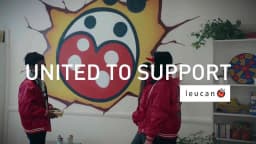
The execution places real parents and children inside a casting environment without initially disclosing the campaign's healthcare purpose. That structural concealment is the creative mechanism: participants respond to the experience as though it were a genuine audition, and their emotional reactions, once the campaign's true subject is revealed, generate the authentic human response that scripted advertising struggles to replicate. The social-experiment format, familiar from documentary and reality television traditions, lends the piece a register of observed truth rather than constructed persuasion.
Visually and tonally, the work refuses the aesthetic conventions of illness-focused charity advertising. There are no hospital corridors, no visible symptoms, and no grief displayed as spectacle. Instead, the craft is invested in the credibility of the casting environment itself, in the production design, the framing of participants, and the pacing of the reveal. The planning team, including Daniel De Tomazo, João Vicente, Lívia Gatti, and Bárbara Bueno, alongside social media leads Larissa Almeida and Cacá Bellotti, structured the campaign's distribution to extend the experiential moment into digital channels, as credited by Clapboard. The restraint in the creative approach is itself a craft decision, one that trusts the metaphor to carry the weight that shocking imagery would otherwise have to bear.
No verified performance data for Unlikely Casting, including sales lift, donation volume, media reach, or audience measurement, is publicly available. No awards are recorded for this campaign across Cannes Lions, the Effies, the One Show, D&AD, the Clios, the Webby Awards, or WARC's effectiveness databases.
Structural analysis, drawing on the campaign's documented mechanics, suggests that its impact pathway was inherently local and event-driven. Experiential campaigns of this type generate their primary effect at the moment of participation, with secondary reach dependent on how compellingly the filmed documentation travels across social and earned media channels. The involvement of a dedicated social media team, as credited on Clapboard, indicates that distribution beyond the live event was planned and intentional, though the scale of that distribution cannot be verified from the public record.
What the campaign achieves structurally is a reframing of the parent's role in childhood cancer outcomes. By connecting the seventy percent early-detection cure rate, a figure supported by research available via pmc.ncbi.nlm.nih.gov, to a creative device that makes every parent the protagonist, Unlikely Casting creates a direct line between emotional engagement and a specific behaviour change. That is a more precise mechanism than general awareness campaigns typically achieve. The Clapboard Score of 63 out of 100 reflects the strength of that strategic architecture alongside the limitations imposed by the campaign's single-asset, single-market scope and the absence of documented downstream results.
Unlikely Casting is an experiential public-interest campaign created by Ogilvy Brazil for Coniacc in November 2016. It used a casting call metaphor to communicate that childhood cancer can affect any child, encouraging parents across Brazil to pursue early detection rather than assume their family is not at risk.
Ogilvy Brazil created Unlikely Casting, with creative direction by Guiga Giacomo, art direction by Teco Cipriano, and copywriting by Vinícius Fernandes. Chief creative officer Cláudio Lima and CEO Fernando Musa provided creative leadership. Production company Fantástica Filmes executed the filmed experiential element, as documented by Clapboard.
Ogilvy Brazil used the casting metaphor to bypass the psychological distancing that shock-based illness imagery typically produces. A casting call implies open, indiscriminate selection, communicating that no child is exempt from childhood cancer without relying on graphic depictions of illness or grief that can cause audiences to disengage.
Coniacc is a Brazilian childhood cancer awareness organisation focused on public health communication rather than commercial healthcare products. Its work targets parents as a primary audience, promoting early detection behaviours. The Unlikely Casting campaign reflects this mission by connecting early diagnosis directly to documented cure rate improvements, according to Clapboard.
Unlikely Casting has no recorded awards across Cannes Lions, the Effies, the One Show, D&AD, the Clios, the Webby Awards, or WARC's effectiveness databases, according to Clapboard. The campaign received a Clapboard Score of 63 out of 100, reflecting strong strategic intent offset by limited documented reach and the absence of publicly verified performance metrics.
The campaign is built around the finding that early detection of childhood cancer can produce cure rates of up to seventy percent, a figure supported by research available via pmc.ncbi.nlm.nih.gov. By addressing parents directly through an experiential format, Unlikely Casting links emotional engagement to a specific, actionable behaviour with measurable implications for survival outcomes in Brazil.
.webp)
Creative Collaboration Platform: The Backbone of Modern Creative WorkWhat is a creative collaboration platform?Clapboard defines a creative collaboration platform as the operational core for today’s distributed creative teams. This is not a collection of digital collaboration tools stitched together; Clapboard’s system


Understanding the Creative Production MarketplaceWhat is a Creative Production Marketplace?Clapboard defines a creative production marketplace as a structured ecosystem where brands, agencies, and production talent converge to execute video, advertising, and branded content at scale. Unlike the legacy agency or freelanREAD FULL ARTICLE

The Urgent Need for a Creative Production Operating SystemWhy Traditional Creative Production Models Break DownClapboard sees the creative production landscape shifting under pressure. Content velocity is no longer a buzzword—it’s a mandate. Modern advertising demands relentless output across dozens of channels, each wREAD FULL ARTICLE