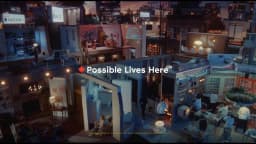
Kresko's 2019 Ukrainian film campaign by Bart&Fink uses genre parody and atypical heroes to argue that its cereal snack cookies are simply impossible to stop

Kresko Cookies Campaign Bets on Cinematic Comedy to Hook Ukraine
Kresko's 2019 Ukrainian film campaign, created by Kyiv agency Bart&Fink and published in March 2019, uses two scripted 30-second genre-parody commercials to communicate a single behavioural truth: once a consumer starts eating Kresko cereal snack cookies, stopping before the pack is finished is not a realistic option.
The campaign carries the title "A New Campaign for Cookies Kresko You Can't Stop Watching Until It's Over," a headline that doubles as a creative brief. The name signals the central mechanic: the compulsive-consumption insight is embedded in the format itself, so that watching the commercials enacts the same irresistible pull the brand claims its confectionery product delivers. The campaign comprises two discrete film executions, each borrowing an established cinematic genre and casting an atypical hero at its centre, according to adsoftheworld.com. One execution draws on the conventions of the Wild West and features a country musician archetype; the other constructs an adventure scenario built around a professor figure in the mould of an Indiana Jones-style persona, as documented by adsoftheworld.com.
In Ukraine, the campaign entered a confectionery and snacks landscape in which Kresko was still a relatively new entrant. Kresko is a multigrain cereal snack brand launched by AVK — a Ukrainian confectionery manufacturer — on 3 August 2017, according to Avk Ua, meaning the 2019 Bart&Fink work represented a new creative direction for a product that had existed for fewer than two years. The campaign is archived on Clapboard with a score of 61 out of 100, placing it in the category of technically competent and strategically coherent work that stops short of industry-leading creative distinction. The medium is film, and the industry classification is confectionery and snacks.
Kresko's campaign rests on a consumer insight that is structurally familiar in confectionery advertising: the snack is so enjoyable it is difficult to stop consuming. What separates the Bart&Fink approach from conventional executions of this idea is the decision to dramatise compulsion not through product close-ups or appetite-appeal imagery, but through cinematic narrative tension. By placing atypical heroes — a country musician and an adventure-oriented professor — in genre worlds that demand completion, the creative team constructed scenarios in which interruption feels dramatically wrong, mirroring the brand's product claim.
Kresko competes in the mass-market sweet-biscuit and cereal-snack segment in Ukraine, a category in which shelf presence and impulse purchase behaviour are decisive. Globally, sweet biscuits represented the dominant portion of Mondelez's combined sweet-biscuits, snack-bars and fruit-snacks off-trade value sales in 2019, according to scribd.com, illustrating the scale and intensity of competition that Ukrainian domestic brands navigate. Mondelez, whose portfolio includes Oreo and BelVita, and PepsiCo, whose snack division operates at significant scale in Eastern European markets, represent the category's dominant multinational competitors against which a brand like Kresko must establish distinct emotional territory.
Launching in 2017 and refreshing its creative platform in 2019, as documented by avk.ua, Kresko faced the specific strategic challenge of building brand memory in a crowded snack corridor without the media budgets available to multinationals. The genre-parody approach is an efficient solution: borrowed cinematic formats carry pre-loaded emotional associations, reducing the creative work required to establish tone, while humorous subversion of those formats generates the distinctiveness that drives brand recall in confectionery categories where purchase decisions are habitual and low-involvement.
Bart&Fink built two fully realised genre worlds for the Kresko cookies campaign, each functioning as a self-contained short film compressed into a 30-second format, according to adsoftheworld.com. The creative direction was led by Oleg Tomin, with art direction by Pierre Di Den and Ira Kozachenko, and copy by Kate Chanysheva and Liza Rozhkova, as credited by adsoftheworld.com. That combination of dual art directors and dual copywriters on a two-film campaign suggests a deliberate division of creative labour, with each execution likely receiving a dedicated team orientation aligned to its specific genre world.
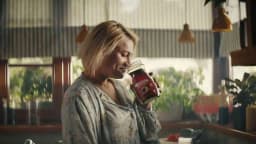
The first execution places a country musician in a Wild West setting, using the visual grammar of that genre — landscape, costuming, period-appropriate mise en scène — to establish stakes before the snack's compulsive logic disrupts the narrative. The second execution positions a professor figure within an adventure scenario referencing the Indiana Jones archetype, a choice that layers comedy onto intellectual authority in a way that broadens the campaign's audience range beyond a single demographic register. Both executions rely on the structural comedy principle of interrupted obligation: a character who should be doing something else cannot stop eating Kresko cookies long enough to do it, according to adsoftheworld.com.
The production approach prioritises cinematic production value as a carrier of comedic credibility. Genre parody collapses when the genre itself is not convincingly rendered, so the investment in period and adventure aesthetics is a functional creative decision rather than a purely aesthetic one. For a Ukrainian domestic confectionery brand competing in the same visual environment as multinational snack advertisers, the cinematic ambition of the Bart&Fink execution signals brand seriousness while the humorous payoff delivers the warmth that drives affinity in the cookies and snacks category.
 ARCHIVE
No verified performance data for the Kresko "A New Campaign for Cookies Kresko You Can't Stop Watching Until It's Over" campaign is publicly available. No independent awards entries, effectiveness citations, or documented commercial results have been identified across adsoftheworld.com, avk.ua, or any other publicly accessible source. The Clapboard Score for this campaign is 61 out of 100, which reflects the archive's editorial assessment of the work's creative and strategic merit relative to the broader confectionery and snacks category.
Structurally, the campaign's effectiveness case rests on the coherence between insight, format, and execution. The compulsive-consumption claim is not stated — it is demonstrated by the format, which withholds resolution until the final frame in the same way the product withholds satiation until the packet is empty. This self-referential logic is a mark of strategic craft that tends to perform well in awareness and brand linkage terms, two metrics that matter disproportionately for a brand like Kresko that was fewer than two years old at the time of the campaign's publication in Ukraine in March 2019, per avk.ua.
The dual-execution structure also represents a pragmatic effectiveness decision. Two distinct genre worlds double the campaign's potential audience entry points — a viewer unresponsive to Wild West comedy may engage with adventure-professor humour — without requiring two entirely separate strategic platforms. Whether that structural intelligence translated into measurable commercial impact for Kresko in the Ukrainian cookies and confectionery market remains undocumented in the public record.
Kresko's 2019 Ukrainian campaign uses two 30-second genre-parody films to argue that its cereal snack cookies are impossible to stop eating. Created by Bart&Fink, each film drops an atypical hero — a country musician and an adventure professor — into a cinematic world they cannot leave because they cannot stop eating Kresko, according to adsoftheworld.com.
Bart&Fink, a Kyiv-based agency, created the Kresko campaign published in March 2019. The team was led by creative director Oleg Tomin, with art directors Pierre Di Den and Ira Kozachenko, and copywriters Kate Chanysheva and Liza Rozhkova, as credited by adsoftheworld.com. The campaign comprised two cinematic film executions.
The Kresko campaign features a Wild West country musician in one execution and a professor modelled on an Indiana Jones-style adventure archetype in the other, according to adsoftheworld.com. Both characters are positioned as atypical snack-advertising protagonists, chosen to make the compulsive-consumption premise feel fresh and genre-specific rather than generic.
Kresko is a Ukrainian multigrain cereal snack and cookie brand manufactured by AVK, a Ukrainian confectionery company. AVK launched Kresko on 3 August 2017, according to avk.ua, meaning the 2019 Bart&Fink campaign represented a new creative direction for a product that had been on the Ukrainian market for fewer than two years.
The Kresko campaign received a Clapboard Score of 61 out of 100, according to Clapboard's editorial archive. That score reflects competent strategic and creative execution within the confectionery and snacks category without reaching the threshold of industry-leading distinction. No independent industry awards for this campaign have been identified in the public record.
Bart&Fink used genre parody because borrowed cinematic formats carry pre-loaded emotional associations, reducing the creative work needed to establish tone for a young brand in Ukraine's competitive snack market. Humorous subversion of those formats then generates the distinctiveness required to drive brand recall in a confectionery category where purchase behaviour is largely habitual and low-involvement.
.webp)
Creative Collaboration Platform: The Backbone of Modern Creative WorkWhat is a creative collaboration platform?Clapboard defines a creative collaboration platform as the operational core for today’s distributed creative teams. This is not a collection of digital collaboration tools stitched together; Clapboard’s system


Understanding the Creative Production MarketplaceWhat is a Creative Production Marketplace?Clapboard defines a creative production marketplace as a structured ecosystem where brands, agencies, and production talent converge to execute video, advertising, and branded content at scale. Unlike the legacy agency or freelanREAD FULL ARTICLE

The Urgent Need for a Creative Production Operating SystemWhy Traditional Creative Production Models Break DownClapboard sees the creative production landscape shifting under pressure. Content velocity is no longer a buzzword—it’s a mandate. Modern advertising demands relentless output across dozens of channels, each wREAD FULL ARTICLE