 ARCHIVE
Halloween - Audi | Clapboard Ad Archive
Audi’s Halloween campaign in Bulgaria from 2012, delivered by Saatchi & Saatchi, confronts the...
Honda's Invisible Car Stunt Puts Digital Craft in the Driver's Seat
Honda's 'Invisible Car' is a digital campaign created by Saatchi & Saatchi and published in Brazil in June 2014, using a visual camouflage technique to make a Honda Fit appear to disappear against its surroundings, drawing attention to the vehicle through the spectacle of its absence.
The campaign arrived at a moment of genuine commercial pressure in the Brazilian automotive market. According to MarkLines, new-vehicle sales in Brazil fell 7.6% year-over-year in the first half of 2014, reaching 1.66 million units, compounding a 0.9% annual decline recorded in 2013 when sales totalled 3.77 million units. That 2013 figure itself marked the first annual decline in a decade, signalling a structural shift rather than a temporary dip. MarkLines attributed the market pressures to a sluggish economy, high inflation, tighter consumer credit, and the disruption of additional public holidays during the 2014 FIFA World Cup.
Against that backdrop, Honda chose to invest in a digital execution designed to generate attention beyond traditional automotive advertising formats. The 'Invisible Car' campaign consists of a single media asset, a digital film in which the Honda Fit appears to vanish using what viewers interpreted as sophisticated camouflage wrapping or screen-based projection technology. The campaign's central mechanic is the tension between invisibility and desire: a car that cannot be seen becomes, paradoxically, the only thing the audience wants to look at. The strategy serves both brand awareness and product association, anchoring the Honda Fit name to a memorable and shareable digital moment in the Brazilian market.
Brazil's automotive industry entered 2014 under significant strain. According to MarkLines, ANFAVEA, the Brazilian automotive industry association, projected full-year 2014 sales of 3.56 million units, a figure that would represent a marked contraction from recent peaks. In that environment, brands competing for a shrinking pool of buyers faced pressure to work harder for consumer attention rather than simply riding demand. Honda's decision to pursue a digitally led, spectacle-driven campaign reflects a rational response to that competitive reality.
Honda's principal competitors in the Brazilian compact and subcompact segment include Volkswagen, whose dominant local manufacturing presence and deep dealer network have historically given it structural advantages in the market, and General Motors, whose Chevrolet brand maintains broad recognition across Brazil's urban and regional centres. According to WardsAuto, Volkswagen Group recorded 9.91 million vehicle sales globally in 2014, representing approximately 11.5% of the global market, underscoring the scale of the competitive pressure facing Honda in markets where Volkswagen operates with particular strength. In Brazil specifically, Volkswagen and General Motors have long competed for leadership in precisely the compact segments where the Honda Fit sits.
The strategic logic behind 'Invisible Car' is that earned digital attention, particularly in the form of social sharing and viewer conversation, extends the effective reach of a single-asset campaign far beyond what paid media placement alone could achieve. By constructing a visual puzzle around the product, Saatchi & Saatchi gave audiences a reason to watch, replay, and discuss the film, transforming the Honda Fit from a commodity offering into a conversation piece at a moment when automotive consumers in Brazil were making more cautious purchasing decisions.
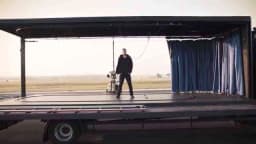
The 'Invisible Car' campaign deploys a single, unbroken visual idea executed with enough technical precision to generate genuine audience uncertainty about how the effect was achieved. The Honda Fit is presented in what appears to be a real-world environment, its body panels either wrapped or projected with imagery that mirrors its surroundings closely enough to create the impression of transparency. The effect sits in productive ambiguity: viewers debating whether they are watching a live-action camouflage technique, a post-production composite, or a projection-mapping demonstration are, in every case, paying close and active attention to a Honda vehicle.
That ambiguity is not incidental. It is the campaign's primary creative mechanism. Where conventional automotive advertising presents the car in aspirational motion or in the company of aspirational people, 'Invisible Car' presents the car as a technical and perceptual mystery. The Honda Fit, a model positioned in Brazil's competitive compact segment, is not typically the vehicle associated with spectacle. The campaign's creative argument is that the car's engineering is so refined it can effectively disappear, inverting the usual logic of automotive showmanship.
Production credits for the 'Invisible Car' campaign are not publicly documented in verifiable trade sources. The work was produced by Saatchi & Saatchi for Honda in Brazil, operating under the F/Nazca Saatchi & Saatchi agency relationship that Honda established in August 2010 following a competitive tender, as reported by saatchi.com. That appointment, which returned F/Nazca Saatchi & Saatchi to the automotive sector after an eight-year absence according to saatchi.com, gave the agency a mandate covering online advertising, offline advertising, and design services, making a digitally native execution like 'Invisible Car' a natural expression of the brief.
No verified performance data for the 'Invisible Car' campaign is publicly available in trade press sources including Campaign, Ad Age, Adweek, The Drum, or Contagious. The campaign did not appear in verifiable 2014 award show records accessible through named industry sources. A Reddit post in the community r/Damnthatsinteresting, surfaced in August 2024 and noted by reddit.com, received 519 votes and 41 comments referencing an 'invisible car' video, though the connection of that post to the 2014 Honda campaign specifically has not been confirmed.
Structurally, the campaign's effectiveness rests on a single-asset digital model whose success depends entirely on the quality and memorability of that one piece of content. The visual idea is strong enough to sustain viewer attention and prompt replay behaviour, both meaningful indicators of digital engagement quality. However, the absence of a broader campaign architecture, additional touchpoints, or documented media distribution strategy limits the confidence with which any structural assessment can be made. The campaign's reliance on the illusion itself means that once the trick is understood, the content's replayability diminishes, which constrains long-term brand recall.
Clapboard's editorial assessment gives 'Invisible Car' a Clapboard Score of 60 out of 100. The score reflects genuine creative invention in the central concept and competent execution of a technically demanding visual idea, balanced against the absence of verifiable reach data, the campaign's single-asset limitation, and the lack of documented strategic follow-through in the Brazilian market.
Honda's 'Invisible Car' is a digital campaign created by Saatchi & Saatchi and published in Brazil in June 2014. It features a Honda Fit appearing to vanish using a camouflage-style visual effect, designed to generate digital attention and social sharing in Brazil's contracting automotive market.
Saatchi & Saatchi created the Honda Invisible Car campaign, operating in Brazil under the F/Nazca Saatchi & Saatchi name. According to saatchi.com, Honda appointed the agency in August 2010 following a competitive tender, giving it responsibility for Honda's online, offline, and design advertising in Brazil.
Brazil's automotive market was contracting sharply in 2014. According to MarkLines, new-vehicle sales fell 7.6% year-over-year in the first half of 2014. A single high-impact digital asset offered Honda a cost-efficient way to generate earned attention for the Honda Fit against stronger-resourced competitors including Volkswagen and General Motors.
The Honda Invisible Car campaign features the Honda Fit, a compact model competing in one of Brazil's most contested vehicle segments. The campaign uses the Fit's visual disappearance as a creative argument for the car's engineering refinement, inverting conventional automotive advertising by making the product's absence its central selling point.
The Honda Invisible Car campaign receives a Clapboard Score of 60 out of 100. The score recognises genuine creative invention in the visual concept and competent technical execution, while reflecting the campaign's single-asset limitation, absence of documented reach metrics, and lack of verifiable trade press recognition from 2014.
.webp)
Creative Collaboration Platform: The Backbone of Modern Creative WorkWhat is a creative collaboration platform?Clapboard defines a creative collaboration platform as the operational core for today’s distributed creative teams. This is not a collection of digital collaboration tools stitched together; Clapboard’s system


Understanding the Creative Production MarketplaceWhat is a Creative Production Marketplace?Clapboard defines a creative production marketplace as a structured ecosystem where brands, agencies, and production talent converge to execute video, advertising, and branded content at scale. Unlike the legacy agency or freelanREAD FULL ARTICLE

The Urgent Need for a Creative Production Operating SystemWhy Traditional Creative Production Models Break DownClapboard sees the creative production landscape shifting under pressure. Content velocity is no longer a buzzword—it’s a mandate. Modern advertising demands relentless output across dozens of channels, each wREAD FULL ARTICLE