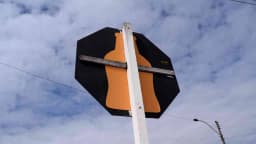
The Volkswagen Interactive Bus Back campaign, launched in Brazil in 2015 by AlmapBBDO, centers on demonstrating the practical value of the brand’s Adaptive Cruise Control (ACC) technology. This safety feature, designed to maintain a safe distance from vehicles ahead and reduce the risk of accidents, embodies Volkswagen’s promise of advanced, driver-centric innovation aimed at improving road safety. The campaign proposition highlights Volkswagen’s commitment to protective technology as an integral part of its automotive offering, positioning the brand not just as a vehicle manufacturer but as a leader in intelligent safety solutions.
Strategically, the campaign leverages a real-world, interactive engagement method that physically exemplifies how ACC functions. By placing the billboard on the back of buses—common vehicles frequently encountered on city streets—Volkswagen taps into everyday driving scenarios to illustrate the technology’s preventative benefit. This creative angle transforms a typical outdoor ad space into a live demonstration, targeting drivers, including those not yet owning Volkswagen models, who may be unfamiliar with ACC. The insight underpinning this approach recognizes that driver education about new automotive technologies often lacks tangible reference points; the interactive bus back provides immediate, contextual understanding of how ACC maintains a safe following distance. This method fosters trust and brand awareness through experiential learning, aligning Volkswagen’s safety innovation with everyday urban traffic experiences. Overall, the campaign strategically bridges technology communication and consumer experience, aiming to drive consideration among cautious or safety-conscious drivers in the Brazilian market.
FORMAT#1 DEMONSTRATION — Directly shows how a product works and highlights its benefits.
This campaign centers on the "Interactive Bus Back Billboard" to highlight Volkswagen's Adaptive Cruise Control (ACC) technology. The description emphasizes that the installation was engineered specifically to show—rather than simply tell—how the ACC sensor functions in real-life road situations, aiming to educate drivers who don’t own a Volkswagen. Rather than a narrative, testimonial, or symbolic approach, the essence of the campaign is a live, tangible demonstration of ACC’s key benefit: keeping a safe distance in traffic. This direct, experiential showcase of the product in context most clearly aligns with the Demonstration format.
ADVERTISING FORMATS EXPLAINED: https://www.clapboard.com/blog/branding-and-advertising/brand-strategy/12-advertising-creative-formats
1. Fiat – Positioned as an affordable, reliable, and locally adapted brand in Brazil, Fiat emphasizes value for money and a strong dealer network. It leverages compact, fuel-efficient models and tailors vehicles to Brazilian consumers’ needs, maintaining leadership through accessibility and mass-market appeal.
2. Chevrolet – Chevrolet focuses on a balance of modern design, advanced technology, and a broad product lineup. It positions itself as a trustworthy, innovation-driven brand offering vehicles with cutting-edge features that appeal to both young professionals and family buyers.
3. Ford – Known for its ruggedness and performance, Ford positions itself around durability and driving experience. Its marketing highlights robust build quality and technology, targeting mid- to upper-market segments with a mix of pickups, SUVs, and sedans.
4. Renault – Renault differentiates by focusing on stylish, affordable vehicles with a European design influence. It emphasizes comfort, safety, and fuel efficiency, targeting urban and young buyers seeking value without sacrificing modernity.
5. Honda – Honda positions itself on engineering excellence, fuel efficiency, and resale value. With a reputation for reliability and innovation, Honda appeals to consumers looking for well-built vehicles with strong performance and advanced safety features.
Q: What is Interactive bus back about?
A: Interactive bus back is a 2015 campaign created by AlmapBBDO for Volkswagen in Brazil, focusing on the brand’s Adaptive Cruise Control (ACC) technology. The campaign transformed the rear of public buses into interactive billboards that simulate how ACC sensors maintain a safe distance from vehicles ahead. By leveraging a real-world demonstration in a high-traffic urban environment, the campaign aimed to educate drivers—especially those unfamiliar with Volkswagen models—about the tangible safety benefits of ACC. This initiative positioned Volkswagen as an innovator in automotive safety, using out-of-home media to bridge technology and consumer experience.
Q: What creative device does Interactive bus back use?
A: Interactive bus back employs the Demonstration format, as classified by Clapboard’s 12-format taxonomy. This approach directly shows how Volkswagen’s Adaptive Cruise Control (ACC) technology functions in real-world traffic by turning the back of city buses into live, interactive billboards. Rather than relying on narrative or testimonial, the campaign delivers a tangible, experiential showcase of ACC’s core benefit: maintaining a safe distance in traffic. This format is designed to provide immediate, contextual understanding for drivers, aligning with Clapboard’s definition of Demonstration as a technique that highlights product benefits through direct, observable action.
Q: What is the campaign proposition for Interactive bus back?
A: The campaign proposition for Interactive bus back centers on Volkswagen’s commitment to advanced, driver-centric safety innovation in the Brazilian automotive market. By physically demonstrating how Adaptive Cruise Control (ACC) helps maintain a safe following distance, Volkswagen positions itself as a leader in intelligent safety solutions, not just vehicle manufacturing. The campaign targets drivers who may be unfamiliar with ACC technology, using an everyday traffic scenario to foster trust and awareness. This strategic move aims to drive consideration among safety-conscious consumers by making the benefits of Volkswagen’s protective technology immediately understandable and relevant.
Q: How does Interactive bus back rank in Clapboard's archive?
A: Interactive bus back holds a Clapboard Campaign Score of 79/100 in Clapboard’s global ad archive. This score reflects the campaign’s creative ambition, execution quality, and cultural relevance within the automotive and out-of-home advertising sectors.
Q: Who are the competitors in Volkswagen's category?
A: In Brazil’s automotive market, Volkswagen competes with Fiat, which emphasizes affordability and local adaptation through value-driven, compact models and a strong dealer network. Chevrolet is positioned as an innovation-focused brand, offering modern design and advanced technology to a broad audience. Ford highlights ruggedness and durability, targeting mid- to upper-market segments with robust vehicles. Renault appeals to urban and young buyers with stylish, affordable cars influenced by European design, while Honda is known for engineering excellence, reliability, and advanced safety features, attracting consumers seeking performance and long-term value.


 ARCHIVE
.webp)