Gillette Shaving Stereotypes and the Barbershop Girls of India
Gillette's Shaving Stereotypes — The Barbershop Girls of India is a 2019 film campaign created by Grey India that follows the true story of two sisters who became barbers in rural Uttar Pradesh, using the act of shaving to challenge gender norms and communicate that a razor does not distinguish between boys and girls.
Published in India in April 2019, the campaign centres on Jyoti and Neha Kumari from Banwari Tola, Uttar Pradesh. As documented by Contagious in a 2021 case study publication, the sisters initially cut their hair and adopted male names to be accepted in their trade before ultimately claiming the barbershop on their own terms. Grey India brought this real-world narrative to screen as a single film asset, grounding Gillette's product story inside a deeply human account of economic survival and social defiance. The campaign belongs to the personal care and health industry category and was submitted to the Clapboard archive approximately six years ago.
In India, where traditional barbershops remain an almost exclusively male professional space, the campaign's choice of subject was itself a strategic act. The film sat within Gillette's broader 2019 values-based repositioning, which saw the brand move away from its long-running performance platform toward work that engaged directly with cultural and gender stereotypes. That shift, according to reporting by The Drum and analysis published on digitaltrainingacademy.com, followed the global introduction of the revised tagline The Best Men Can Be in January 2019, replacing the three-decade-old The Best a Man Can Get that had anchored the brand since 1989. Shaving Stereotypes translated that global pivot into a specifically Indian narrative, making the campaign both a product communication and a cultural statement. Clapboard has assigned the campaign a score of 79 out of 100, reflecting its strong strategic coherence and cultural specificity.
Gillette entered 2019 facing a global brand that needed to reclaim relevance across multiple markets. In India, the personal care and grooming category was evolving rapidly, with consumer expectations shifting toward brands that demonstrated social awareness alongside product quality. The Shaving Stereotypes campaign was built on a single, precise insight articulated by Sandipan Bhattacharyya, Chief Creative Officer at Grey Group India, in a statement published by Outlook Business in May 2019: children always learn from what they see, and the examples set by adults carry consequences that reach far beyond the immediate moment.
Grey India identified the barbershop as a charged cultural space in the Indian context — a male-coded environment where the presence of women as skilled professionals rather than customers constituted a visible disruption of inherited norms. By anchoring the campaign to a verifiable real story rather than a constructed scenario, the agency gave Gillette's product claim concrete human weight. A razor, the narrative argues, is a tool indifferent to gender; the stereotypes surrounding it are social constructions, not physical ones.
The competitive landscape for Gillette in 2019 added further strategic urgency to the repositioning. According to data cited by Business Insider, Gillette's share of the United States men's razor market had declined from approximately 70% in 2010 to around 47% by 2018, with challengers including Schick, operated by Edgewell Personal Care, and Dollar Shave Club capturing meaningful ground. While these figures pertain to the US market rather than India specifically, they illustrate the broader brand pressure that made values-driven differentiation strategically essential for Gillette globally in this period. In India, aligning with a story of female economic agency offered a route to emotional distinction that product performance claims alone could not supply.
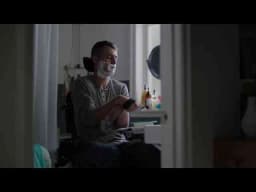
Grey India built the Shaving Stereotypes film around documentary authenticity rather than dramatised reconstruction. The decision to follow Jyoti and Neha Kumari — real sisters from Banwari Tola, Uttar Pradesh — meant the creative execution was shaped as much by observational filmmaking as by conventional advertising craft. The result is a narrative film that moves through the sisters' actual environment, grounding every frame in the texture of a working barbershop in rural India rather than a studio approximation of one.
Sandipan Bhattacharyya, Chief Creative Officer at Grey Group India, described the creative intent in a statement published by Outlook Business on 14 May 2019: through the story of these two girls, the campaign wished to highlight the deeply ingrained stereotypes in society and the subliminal ways they are passed on, while showing how examples can have a far-reaching effect on the mind of a child, for better or worse. That framing positioned the film not as an advertisement interrupting the viewer but as a story the viewer was invited to observe. The Drum, in coverage published on 8 May 2019, noted the campaign's central insight that children always learn from what they see, identifying this as the emotional axis around which the film's narrative tension turns.
The campaign was entered and recognised in the Music category at Cannes Lions 2019, according to the awards record attributed to Grey India Mumbai, suggesting that the film's sonic landscape was considered a distinct creative element rather than incidental accompaniment. The single film asset carries the full weight of the campaign's argument, a structural choice that demands tight narrative compression and precise tonal control across its running time. Beyond Bhattacharyya's documented creative leadership, production credits for additional crew on the Shaving Stereotypes film are not publicly documented in the sources available to Clapboard at the time of writing.
Shaving Stereotypes generated measurable commercial and cultural impact by the metrics Grey has disclosed. According to grey.com, double-edged razor sales increased by 10.6% following the campaign's release in India, and the campaign achieved a 95% consideration score among the audiences it reached. Grey has described Shaving Stereotypes as Gillette India's most successful campaign, a claim repeated across the agency's own published materials.
Additional performance figures appear in data cited by Social Samosa from Spikes Asia, which references a Nielsen track reporting sales increases of 500% and market share increases of 400%, alongside 763,000 hits attributed to the same measurement exercise. Social Samosa and the Spikes Asia citation note that the measurement period and exact geographic scope of these figures are not clearly defined, and Clapboard treats them as directionally significant rather than precisely comparable to the Grey-reported metrics above. According to reporting on digitaltrainingacademy.com, the campaign generated more than two and a half million dollars in earned media value, amplifying its reach well beyond its paid distribution.
At Cannes Lions 2019, the campaign won a Silver Lion in the Music category, according to the awards record attributed to Grey India Mumbai. This recognition placed Shaving Stereotypes within the company of the festival's most discussed work from that year and cemented its reputation as a benchmark for purpose-led personal care advertising in the Indian market. Structurally, the campaign's effectiveness rests on three durable foundations: the verifiability of its real-world story, the cultural specificity of its Indian setting, and the precision with which it connects a product attribute — the razor's gender neutrality — to a social observation with genuine resonance in 2019.
Shaving Stereotypes — The Barbershop Girls of India is a 2019 Gillette film by Grey India. It follows real sisters Jyoti and Neha Kumari from Uttar Pradesh who became barbers, using their story to argue that a razor does not distinguish between boys and girls and to challenge gender norms embedded in Indian society.
Grey India created Shaving Stereotypes for Gillette, with Sandipan Bhattacharyya serving as Chief Creative Officer at Grey Group India. Bhattacharyya described the campaign's intent in Outlook Business in May 2019 as highlighting deeply ingrained stereotypes and demonstrating how examples set by adults shape children's understanding of the world around them.
Shaving Stereotypes won a Silver Lion in the Music category at Cannes Lions 2019. The award was attributed to Grey India Mumbai, according to the official Cannes Lions 2019 record. The recognition placed the campaign among the most noted purpose-driven personal care advertising works from that year's festival.
According to grey.com, the campaign increased double-edged razor sales by 10.6% and achieved a 95% consideration score. Grey has described it as Gillette India's most successful campaign. Reporting on digitaltrainingacademy.com credits the film with generating more than two and a half million dollars in earned media value across its release period.
The film features Jyoti and Neha Kumari, real sisters from Banwari Tola, Uttar Pradesh. As documented by Contagious in a 2021 case study, the sisters initially adopted male names and cut their hair to gain acceptance as barbers before claiming their professional identity openly, providing the campaign its authentic narrative foundation.
Shaving Stereotypes formed part of Gillette's 2019 shift from performance-led messaging to a values-based platform. According to digitaltrainingacademy.com and reporting by The Drum, Gillette replaced its 1989 tagline The Best a Man Can Get with The Best Men Can Be in January 2019, and the Indian campaign translated that global repositioning into a culturally specific local narrative.
.webp)
Creative Collaboration Platform: The Backbone of Modern Creative WorkWhat is a creative collaboration platform?Clapboard defines a creative collaboration platform as the operational core for today’s distributed creative teams. This is not a collection of digital collaboration tools stitched together; Clapboard’s system


Understanding the Creative Production MarketplaceWhat is a Creative Production Marketplace?Clapboard defines a creative production marketplace as a structured ecosystem where brands, agencies, and production talent converge to execute video, advertising, and branded content at scale. Unlike the legacy agency or freelanREAD FULL ARTICLE

The Urgent Need for a Creative Production Operating SystemWhy Traditional Creative Production Models Break DownClapboard sees the creative production landscape shifting under pressure. Content velocity is no longer a buzzword—it’s a mandate. Modern advertising demands relentless output across dozens of channels, each wREAD FULL ARTICLE